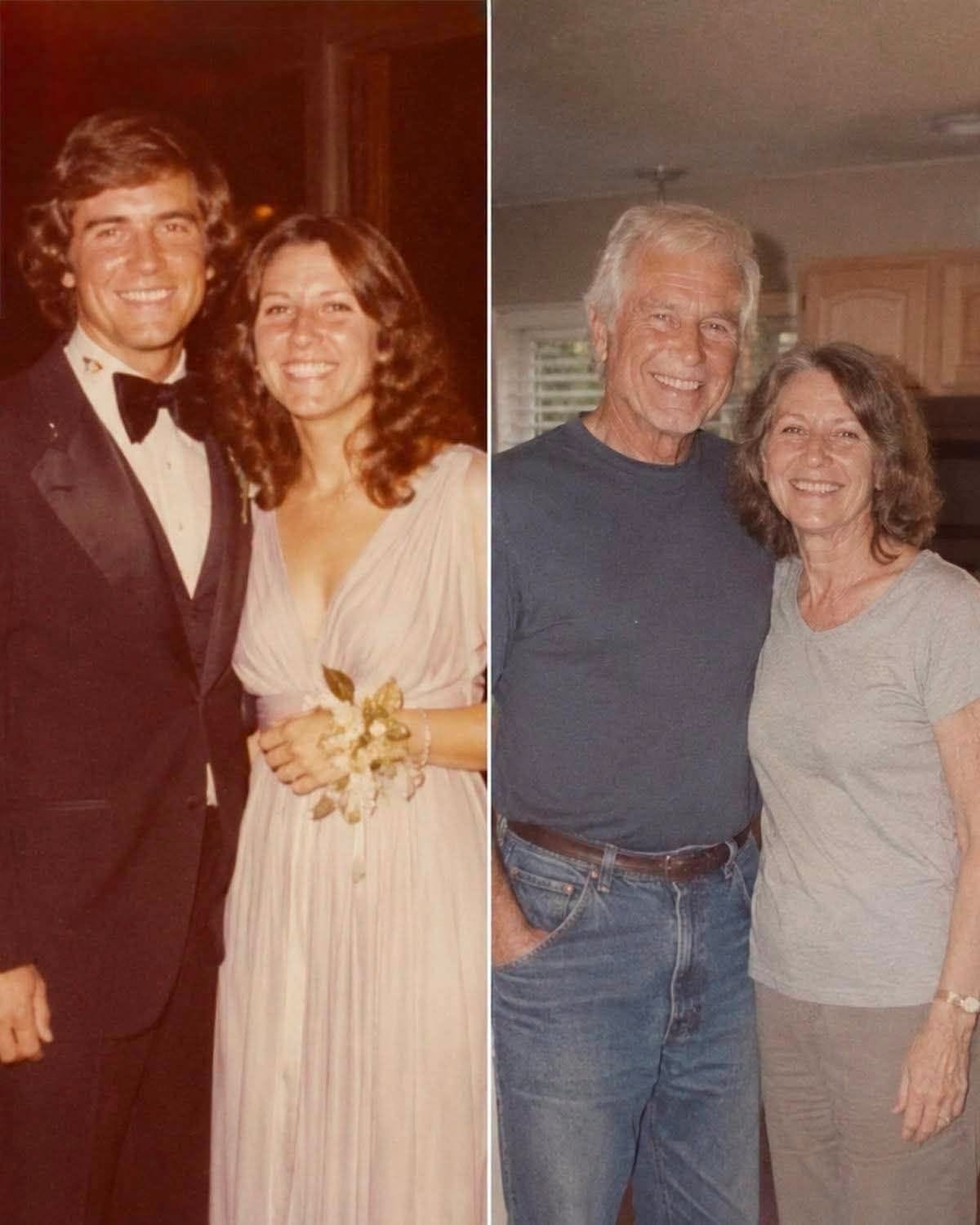
On the evening that should have marked fifty years of marriage, Sylvie stood in the doorway of their home watching her husband, Walter, walk away without looking back. Guests who had spent the afternoon celebrating their golden anniversary had barely finished saying goodbye when another car pulled into the driveway. Walter carried a single suitcase, climbed into the passenger seat beside another woman, and quietly closed the door. Before leaving, he stepped back inside for one last moment, placed a plain plastic bank card on the kitchen table, and looked at Sylvie with an expression she couldn’t quite read.
“There’s about two thousand dollars on it,” he said. “In case you ever need it.”
She stared at the card.
Then at him.
After fifty years together, that was all he had to offer.
No explanation.
No apology.
No attempt to repair what had been broken.
Only a bank card and a vague promise that there would be enough to get by.
Without saying a word, Sylvie picked it up, carried it to the kitchen, and tucked it inside an old cookie tin she kept above the stove. The tin had once held homemade biscuits for their children when they were young. Now it became the resting place for the final reminder of a marriage that had quietly ended.
“I’ll never touch it,” she whispered to herself after the front door closed behind him.
And for five years…
She didn’t.
Life became smaller, quieter, and more demanding than she had ever imagined.
At seventy-four, she learned to repair dripping faucets after watching online tutorials. She climbed ladders carefully to replace burned-out light bulbs because there was no one else to do it. Every grocery trip became an exercise in calculation, every utility bill another puzzle to solve.
She stretched leftovers into second and third meals.
She mended clothes instead of replacing them.
She canceled subscriptions, postponed vacations, and learned to live with less.
Her children visited often and helped whenever they could, but they had families, careers, and financial responsibilities of their own. Sylvie never wanted to become another burden.
Whenever one of them offered money, she smiled warmly.
“I’m managing.”
Most of the time…
That wasn’t entirely true.
Yet her pride refused to let her reach for the one thing Walter had left behind.
The cookie tin gathered dust.
The card remained untouched.
Five years passed before fate forced her to reconsider.
It began with shortness of breath.
At first she blamed age.
Then came dizzy spells.
Simple walks to the mailbox suddenly left her exhausted.
One afternoon she nearly fainted while watering flowers in the garden.
Her daughter insisted on taking her to the hospital.
After several days of testing, the cardiologist entered her room carrying a folder.
“There are problems with one of your heart valves,” he explained gently.
“The condition is treatable.”
“But you’ll need surgery.”
The room seemed to shrink around her.
“How soon?”
“We recommend scheduling it within the next few weeks.”
Although insurance would cover much of the procedure, there were still significant expenses related to recovery, medications, rehabilitation, and household support afterward.
That evening, sitting alone at her kitchen table, Sylvie looked toward the old cookie tin.
She stood on a chair.
Reached up.
And carefully brought it down.
Inside…
Exactly where she had hidden it years before…
Lay Walter’s bank card.
The following morning she walked into the local bank expecting disappointment.
Surely the account had been closed.
Perhaps the card had expired.
Maybe the two thousand dollars had long since disappeared.
The young teller inserted the card into the computer.
Her expression changed.
“One moment, please.”
A few minutes later, the branch manager approached.
“Mrs. Harris?”
“Would you come with me?”
Confused, Sylvie followed him into a private office.
He placed several papers on the desk.
Then slid a sealed envelope toward her.
“This was left with instructions that if you ever came to inquire about this account personally, it should be given to you.”
Her hands trembled.
“I don’t understand.”
The manager turned his computer monitor toward her.
The account balance appeared on the screen.
$48,216.73
She blinked repeatedly.
“There must be some mistake.”
“There were only two thousand dollars.”
The manager quietly shook his head.
“No, ma’am.”
He opened the transaction history.
Every month.
For five years.
A deposit.
Every single one labeled the same way.
“For Sylvie’s due.”
She stared in disbelief.
“He deposited money every month?”
“Yes.”
“Without missing one.”
Unable to process what she was seeing, she slowly opened the envelope.
Inside rested several handwritten pages.
Walter’s familiar handwriting filled every line.
Sylvie,
If you’re reading this, then something important finally made you use the card.
I knew you wouldn’t touch it simply because it came from me.
That’s why I lied about the amount.
If I had told you the truth—that I intended to keep adding money every month—you never would have accepted it.
Please understand something.
This isn’t charity.
It isn’t an apology either.
It’s repayment.
Over fifty years, you carried responsibilities I barely acknowledged.
You managed every budget.
Raised our children.
Balanced impossible months.
Gave up opportunities.
Remembered birthdays.
Stayed awake when someone was sick.
Made our house feel like a home.
You kept our family moving while I accepted the credit for stability I did very little to create.
The money doesn’t erase what happened.
It doesn’t undo the hurt I caused.
But I needed to acknowledge something I should have admitted years ago.
Much of what people admired about my life existed because of work no one ever saw you doing.
The deposits aren’t gifts.
They’re installments on a debt I’ll never completely repay.
Walter.
Tears blurred the words.
For years she had convinced herself Walter simply walked away without ever looking back.
Now she discovered he had been looking back every single month.
Just…
From a distance.
A week later, while preparing for surgery, Sylvie learned through a newspaper article that Walter would be receiving a community award recognizing decades of service and dedication to family values.
The headline made her pause.
She wasn’t angry because he was receiving recognition.
She was troubled because the story described only one version of their shared life.
One that left invisible the countless hours of work that had made that life possible.
That evening she invited her three adult children to dinner.
For the first time, she told them everything.
About her diagnosis.
About the surgery.
About the bank account.
About Walter’s letter.
Silence filled the room as each of them read the pages.
Their oldest son wiped away tears.
“I had no idea.”
Neither did I,” Sylvie admitted.
“I spent years believing none of it mattered.”
Her youngest daughter reached across the table.
“It always mattered.”
When the evening of the community gala arrived, Sylvie dressed carefully in a navy-blue dress she had not worn in years. Her children accompanied her, not to create a confrontation, but to support her in finally telling the truth she had carried alone for far too long.
Walter was midway through accepting the award when he noticed them entering the ballroom.
His voice faltered.
The applause slowly faded.
Sylvie stood.
She did not shout.
She did not accuse.
She simply spoke clearly enough for the room to hear.
“For many years,” she began, “people have congratulated Walter for the life we built together. Tonight, I only ask that we remember something important.”
She held up the letter.
“This was written by Walter himself.”
With his quiet nod of permission from across the room, she read several passages aloud—those acknowledging the invisible labor she had carried throughout their marriage and his regret for failing to recognize it while they were together.
The ballroom remained silent.
When she finished reading, she folded the letter carefully.
“I’m not here to take away your award,” she said.
“I’m here because too many people spend a lifetime supporting others without ever hearing that their work mattered.”
She looked toward Walter.
“Thank you for finally saying it.”
No one applauded immediately.
Many simply sat reflecting on what they had heard.
Walter lowered his head.
Then, without speaking into the microphone, he quietly said words only those nearest could hear.
“I’m sorry.”
Sylvie gave a small nod.
Not because everything had been repaired.
But because honesty had finally replaced silence.
The following week she underwent heart surgery.
Recovery was challenging, but each day brought small signs of progress.
Her children organized a schedule so someone visited every afternoon.
Neighbors delivered meals.
Friends stopped by with flowers and books.
One evening, while resting comfortably in her hospital room, Sylvie found herself thinking about the old cookie tin.
For years she had believed it held nothing more than forgotten money.
Now she understood it had held something else entirely.
Recognition.
Not enough to rewrite history.
Not enough to erase loneliness.
But enough to remind her that the countless unseen acts of care she had given throughout her life had always possessed value, even when no one spoke of them.
As her strength gradually returned, she stopped measuring her worth by how much she could sacrifice for everyone else. She accepted help without apology, allowed her children to care for her as she had once cared for them, and discovered that love did not have to be earned through constant exhaustion or silent endurance.
The money in the account helped pay for practical needs during her recovery, but it was never the greatest gift Walter left behind. His letter gave words to a truth that should have been spoken decades earlier: that the quiet work of building a family, supporting a household, and caring for others has immense value, even when it goes unnoticed.
Looking back, Sylvie realized the most important healing had little to do with her heart surgery. The operation repaired a physical condition, but the deeper recovery came from finally believing that her life had never been measured by how much she gave away. Surrounded by children who loved her simply because she was their mother—not because of everything she had done for them—she understood that real love does not demand endless sacrifice to prove its worth. Sometimes the greatest act of healing is finally accepting that you were enough all along.