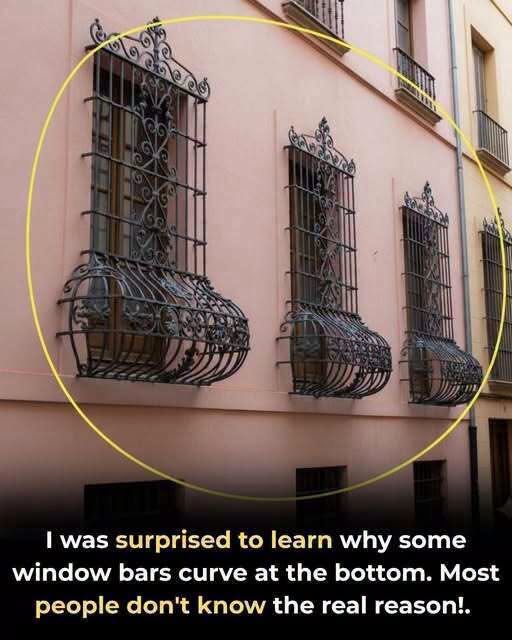
Have you ever walked through an older city neighborhood, looked up at an apartment building, and noticed window bars that bulge outward instead of sitting flat against the glass? At first glance, they can seem oddly shaped or purely decorative, almost as if someone made a mistake during construction. Many people pass them every day without giving them a second thought. Yet these unusual iron grilles are far more than an architectural curiosity. Their distinctive curved shape reflects generations of practical problem-solving, blending security, comfort, and efficient use of limited space into a single ingenious design.
For centuries, residents of crowded cities faced a difficult balancing act. They needed fresh air to cool their homes during hot summer months, especially long before air conditioning became common. At the same time, leaving windows wide open—particularly on ground floors or lower-level apartments—could increase the risk of burglary or unwanted visitors. Security bars provided protection, but they also introduced new challenges that affected everyday life inside the home.
Traditional flat window bars did an excellent job of preventing unauthorized entry, but they often limited how much a window could be opened. Depending on the style of window, the bars could make cleaning difficult, reduce ventilation, and create the feeling of living behind a solid barrier. In already compact apartments, that lack of openness could make rooms feel even smaller and darker than they really were.
Over time, skilled metalworkers began experimenting with new designs that offered greater practicality without sacrificing security. Instead of keeping the bars perfectly flat, they forged them with a gentle outward curve, creating extra space between the window and the protective grille. This simple adjustment transformed an ordinary security feature into something much more versatile.
The outward curve created a small protected area just beyond the window, allowing residents to enjoy additional usable space while keeping the security benefits of iron bars. Depending on the window style, this extra room often made it easier to open windows more fully, improving airflow and helping cooler air circulate through the home during warm weather. Better ventilation was especially valuable in densely populated neighborhoods where apartments often had limited access to fresh air.
One of the most popular uses for these curved window grilles was gardening. Residents placed flower pots, herbs, and small decorative plants inside the protected space, creating miniature window gardens that added color and greenery to otherwise crowded urban streets. Even in neighborhoods where private yards were impossible, families could still enjoy a small connection to nature just outside their windows.
Fresh herbs such as basil, mint, parsley, or rosemary often thrived in these protected spaces, providing convenient ingredients for everyday cooking. Bright flowers softened the appearance of brick and concrete buildings while bringing a sense of warmth to busy city blocks. These tiny gardens became expressions of personal style, allowing each family to add character to the outside of their home.
Beyond gardening, the additional space proved useful for many everyday tasks. Some residents used it to temporarily cool food or drinks in the evening air before refrigerators became widespread. Others placed decorative lanterns, bird feeders, seasonal decorations, or small storage containers within the enclosed area. While the space was modest, it extended the functionality of apartments where every square inch mattered.
In many historic cities across Southern Europe, Latin America, North Africa, and parts of the Middle East, these distinctive window grilles gradually became a recognizable architectural feature. Local blacksmiths often handcrafted each design, incorporating decorative scrollwork, floral patterns, and artistic details that reflected regional traditions. Rather than appearing identical from building to building, many carried the unique signature of the craftsman who created them.
As neighborhoods evolved, these iron grilles became part of the cultural identity of many historic districts. Walking through older streets today, visitors can often admire rows of beautifully crafted window bars, each slightly different from the next. Their graceful curves contribute not only to building security but also to the visual charm that makes historic architecture so memorable.
The designs also demonstrate an important principle of traditional architecture: solving several problems with a single solution. Instead of viewing security and comfort as competing priorities, these window grilles managed to provide both. They protected homes, improved ventilation, created space for plants, and enhanced the building’s appearance—all without requiring additional land or major structural changes.
Today, many newer buildings rely on modern security systems, reinforced windows, and advanced construction methods, reducing the need for heavy iron window bars. Even so, curved security grilles remain popular in many parts of the world because of their practicality and distinctive appearance. Homeowners continue to appreciate the combination of safety, extra space, and decorative appeal they provide.
Historic preservation efforts have also helped keep these traditional designs alive. Architects restoring older neighborhoods often preserve or recreate the original ironwork, recognizing that these details contribute significantly to the character and history of the buildings. What may appear to be a simple window feature often represents generations of craftsmanship and thoughtful urban design.
These curved grilles also remind us that innovation doesn’t always require advanced technology. Some of the most effective solutions emerge from carefully observing everyday challenges and making small but meaningful improvements. A slight bend in a piece of iron transformed an ordinary security barrier into a practical extension of the home, improving daily life for countless families living in crowded cities.
Perhaps that is why these window bars continue to fascinate people today. They are a quiet example of how necessity inspires creativity. Faced with limited space, concerns about security, and the need for better ventilation, earlier generations developed a solution that addressed all three while adding beauty to the streets around them.
The next time you notice those distinctive outward-curving window bars on an older building, you’ll know they are much more than decorative metalwork. They represent a clever blend of engineering, craftsmanship, and everyday practicality, showing how thoughtful design can make homes safer, more comfortable, and more beautiful at the same time. Sometimes the most remarkable innovations aren’t hidden inside museums or modern skyscrapers—they’re quietly built into the buildings we pass every day, waiting for someone curious enough to notice them.