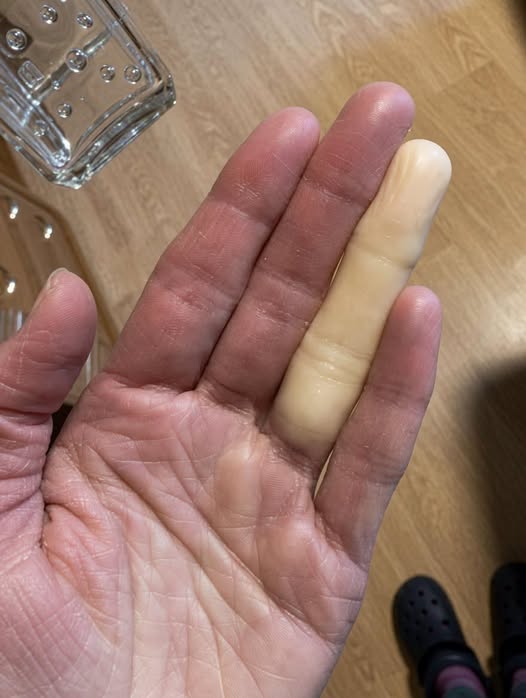
Waking up to discover one of your fingers has turned ghostly white can be genuinely alarming. In the dim light of early morning, it may look as though all the blood has suddenly disappeared from the finger, leaving it pale, numb, and strangely lifeless. Your first thoughts might race toward serious possibilities such as poor circulation, nerve damage, or a hidden medical emergency. After a quick search online, it’s easy to become even more frightened as dramatic headlines and social media posts suggest the worst. Fortunately, while a white finger should never be ignored completely, the explanation is often far less frightening than it first appears.
Our bodies constantly work to maintain a stable internal temperature, even while we sleep. When the environment becomes colder, blood vessels near the surface of the skin naturally narrow to reduce heat loss. This process, known as vasoconstriction, helps preserve warmth around vital organs such as the heart, lungs, and brain. Although this protective response is completely normal, it can occasionally become more noticeable in certain fingers or toes, especially if they are exposed to cold air or compressed during sleep.
One common reason a finger suddenly turns white is a temporary spasm of the small blood vessels supplying that area. During this brief episode, blood flow decreases dramatically, causing the skin to lose its normal pink color and appear pale or almost white. The finger may also feel cold, numb, or tingly because the surrounding tissues receive less oxygen-rich blood for a short period. Although the appearance can be dramatic, the condition is often temporary and resolves once normal circulation returns.
Bedroom temperature can play a surprisingly important role. Sleeping in a cool room, using strong air conditioning, or allowing one hand to remain uncovered outside the blankets may expose fingers to enough cold to trigger this response. Some people are naturally more sensitive to lower temperatures than others, making them more likely to experience temporary changes in circulation during the night.
Sleeping position may contribute as well. Resting your head or body weight on your hand for an extended period can place pressure on blood vessels or nerves. While this doesn’t usually stop circulation completely, it may reduce blood flow enough to create temporary numbness or unusual color changes. Once the pressure is relieved and movement resumes, circulation typically returns gradually over the next several minutes.
As blood flow returns, the finger often changes color again. Instead of remaining white, it may become bluish for a brief period before turning bright red or pink. During this stage, many people experience tingling, throbbing, warmth, or a pins-and-needles sensation. These changing colors reflect blood returning to the tissues and are generally part of the normal recovery process.
For some individuals, repeated episodes of white fingers may be related to a condition called Raynaud’s phenomenon. This condition causes the small arteries supplying the fingers or toes to temporarily narrow more than usual in response to cold temperatures or emotional stress. Episodes typically affect one or more fingers, producing a sequence of white, blue, and then red color changes as circulation decreases and later returns. Many people with Raynaud’s experience mild symptoms that can often be managed by avoiding cold exposure and keeping the hands warm.
It’s important to remember that not every white finger automatically indicates Raynaud’s phenomenon. Temporary circulation changes from cold rooms or awkward sleeping positions are common and usually harmless. The overall pattern provides much more useful information than a single isolated episode. Occasional symptoms occurring only after cold exposure often have a different significance than frequent episodes appearing without any obvious trigger.
Simple steps can often help reduce these episodes. Keeping the bedroom slightly warmer, wearing lightweight gloves during very cold nights, avoiding direct airflow from fans or air conditioners, and choosing sleeping positions that don’t place prolonged pressure on the hands may all improve nighttime circulation. Gentle movement and gradual warming usually help restore normal blood flow once an episode occurs.
Rather than rubbing the finger aggressively, allowing it to warm gradually is generally the safest approach. Placing your hand under comfortably warm—not hot—water or gently wrapping it in a blanket often encourages circulation to return naturally. Sudden exposure to very hot temperatures should be avoided because numb skin may not accurately sense heat, increasing the risk of burns.
Lifestyle habits may also influence circulation over time. Smoking, for example, causes blood vessels to narrow and can worsen circulation problems. Managing stress, staying physically active, and maintaining good overall cardiovascular health may help support healthy blood flow throughout the body. Regular exercise improves circulation and benefits many aspects of long-term health beyond the hands alone.
Although occasional isolated episodes are often harmless, certain warning signs deserve medical attention. If multiple fingers repeatedly change color, episodes become increasingly frequent, severe pain develops, skin sores appear, or symptoms occur alongside weakness, persistent numbness, swelling, or other concerning changes, it’s important to consult a healthcare professional. These symptoms may indicate an underlying medical condition that requires evaluation and appropriate treatment.
Healthcare providers can determine whether symptoms are related to simple cold sensitivity, Raynaud’s phenomenon, medication side effects, autoimmune diseases, vascular conditions, or other medical issues. Depending on the individual’s history and examination, additional testing may sometimes be recommended to identify underlying causes and guide treatment if necessary.
For many people, however, waking up with a temporarily white finger turns out to be nothing more than the body’s dramatic way of responding to cold or temporary pressure during sleep. While the appearance may be startling, the episode often resolves completely within minutes once circulation returns. Understanding why it happens transforms a frightening experience into one that is much easier to recognize and manage.
In the end, our bodies communicate through countless small signals, many of which are protective rather than dangerous. A pale finger can certainly capture your attention, but it is often your body’s temporary strategy for preserving warmth rather than evidence that something is seriously wrong. The key is not to panic, but also not to ignore recurring changes. Paying attention to patterns, making simple adjustments when appropriate, and seeking medical advice if symptoms become frequent or severe allows you to respond with confidence instead of fear. Sometimes the most reassuring knowledge comes from understanding that even our body’s most dramatic signals are often part of its remarkable ability to protect us.