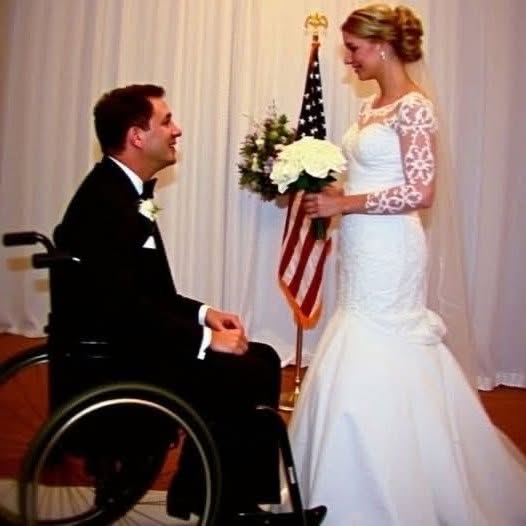
Later in life, I agreed to marry a man with a disability—not because of a whirlwind romance or a lifelong love story, but because life had brought us both to a place where companionship seemed more valuable than chasing impossible dreams. I never imagined that one decision would completely change the way I understood love, loyalty, and happiness.
By the time I met him, I had already accepted that marriage might never happen for me. Most of my friends had long since built families of their own, while I had spent years focusing on work, caring for relatives, and simply trying to make peace with the life I had.
He was kind, quiet, and lived with a physical disability that required him to approach everyday tasks differently. Although his condition presented challenges, it never defined the person he was. What stood out most was his patience, humility, and genuine respect for everyone around him.
When he asked if I would consider marrying him, I was surprised. There were no grand declarations of love, no dramatic promises, and no fairy-tale expectations. Instead, he spoke honestly about wanting a partner with whom he could build a peaceful life based on trust and mutual support.
I thought carefully before answering. Love, at least the kind celebrated in movies and novels, wasn’t what brought us together. We were two people who understood loneliness and believed that sharing life’s burdens might be better than carrying them alone.
Our wedding was simple. There were no extravagant decorations or luxurious celebrations. Surrounded by a small group of family members and close friends, we exchanged vows with quiet sincerity rather than overwhelming emotion.
The first months of marriage felt unfamiliar. We were learning not only each other’s routines but also how to support one another through daily challenges. Every day required patience, understanding, and honest communication.
His disability meant that certain tasks took longer or required assistance, but I quickly realized how determined he was to remain as independent as possible. Rather than expecting pity, he appreciated encouragement and partnership.
As time passed, I began noticing qualities that many people overlook when judging someone only by appearances. His strength wasn’t measured by physical ability but by the grace with which he faced every obstacle.
He never allowed frustration to become bitterness. Even on difficult days, he found reasons to smile, laugh, and express gratitude for the smallest blessings. His optimism slowly changed the way I viewed my own life.
The affection between us didn’t appear overnight. It grew quietly through shared meals, long conversations, small acts of kindness, and countless ordinary moments that slowly became extraordinary because we experienced them together.
Whenever I faced my own struggles, he listened without judgment. He reminded me that every person carries invisible burdens, regardless of whether the world can see them.
Friends who once questioned my decision gradually began to understand our relationship. They saw not a marriage built on obligation, but one strengthened by mutual respect, loyalty, and genuine friendship.
People often assume that happiness depends on finding the perfect partner. Our experience taught me something different. Happiness often grows from choosing to care for someone wholeheartedly and allowing them to care for you in return.
There were still difficult days. Medical appointments, unexpected setbacks, and moments of exhaustion tested both of us. Yet facing those challenges together only deepened the bond we had slowly built.
Looking back, I realized that what had begun as a practical decision had evolved into something far more meaningful. Love had entered our lives quietly, without dramatic speeches or unforgettable first kisses.
I stopped comparing our marriage to anyone else’s. Every relationship follows its own path, and ours became a reminder that genuine connection often develops in unexpected ways.
My husband taught me that courage isn’t always loud. Sometimes it’s found in getting out of bed despite pain, refusing to lose hope after disappointment, and continuing to believe that life still holds beauty.
He also taught me that dignity has nothing to do with physical ability. True character is revealed through compassion, resilience, honesty, and the willingness to face life’s challenges with grace.
Years later, when people ask whether I regret marrying a man with a disability, my answer is always the same. I didn’t marry his disability—I married the remarkable person behind it. What began without romance became a partnership built on trust, respect, unwavering support, and a love that quietly grew stronger with every passing year.