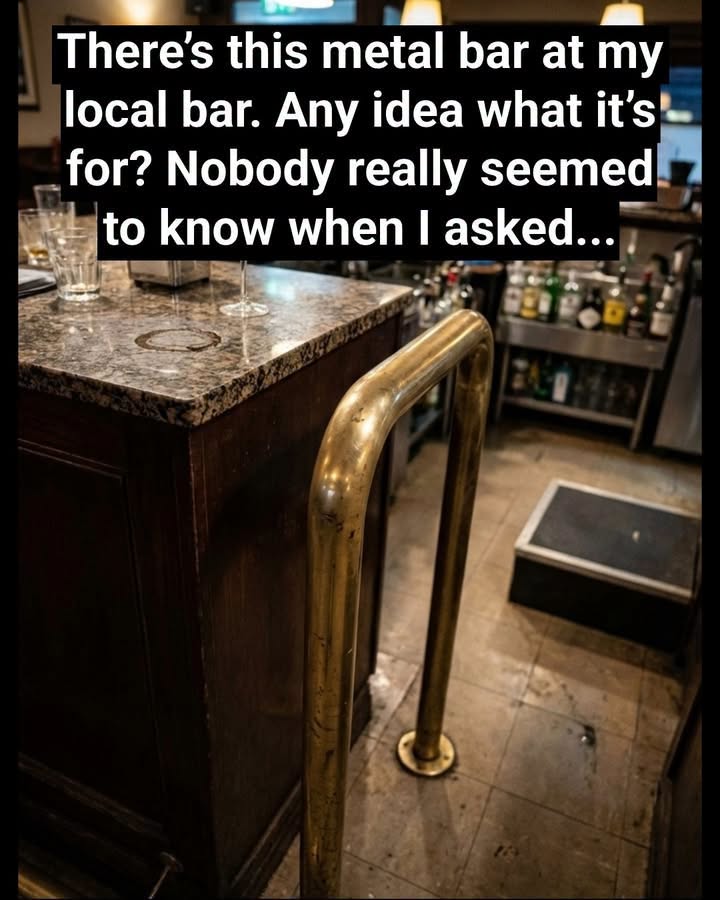
Have you ever wrapped your hand around that cool, polished metal bar running along the edge of a counter and wondered why it was there? Most people barely notice it, assuming it’s nothing more than an attractive design feature. There’s no sign explaining its purpose, no obvious clue that it serves a practical function. Yet that simple piece of metal quietly influences where customers stand, how employees move, and even how efficiently drinks and food reach the people waiting to be served. Once you understand its purpose, you’ll never look at a bar counter the same way again.
At first glance, the rail appears to be purely decorative. Its shiny finish complements the wood, stone, or marble of the countertop, giving the bar a polished and sophisticated appearance. Because it blends so naturally into the design, countless customers rest their hands against it without ever questioning why it exists. In reality, though, every inch of that rail has been carefully placed for a reason. It isn’t simply there to make the bar look elegant—it plays a surprisingly important role in keeping everything organized behind the scenes.
That metal bar is known as a service bar rail, and despite its simple appearance, it performs several essential functions throughout the day. It creates a subtle but effective boundary between customers and the employees working behind the counter. Unlike ropes, signs, or barriers that loudly announce where people should or shouldn’t stand, the rail communicates its message almost silently. Most guests instinctively stop at the rail without realizing they’ve responded to an intentional design feature.
This invisible boundary becomes especially valuable during the busiest hours of the day. Restaurants and bars can quickly become crowded with people ordering drinks, waiting for friends, or simply gathering around the counter. Without a clearly defined edge, customers might naturally drift closer to the bartenders, unintentionally blocking the workspace. The service rail gently discourages that movement while preserving an open and welcoming atmosphere.
Behind the counter, bartenders and servers rely on every bit of available space to do their jobs efficiently. They constantly move between bottles, taps, cash registers, sinks, and refrigerators while preparing multiple orders at once. Every unnecessary obstacle slows the process, increasing the chances of mistakes, delays, or even accidents. The rail helps preserve a safe working lane where employees can move confidently without weaving around customers.
Servers carrying heavy trays also benefit from the extra room created by the rail. They often need to approach the counter quickly, collect several drinks at once, and head back into a crowded dining room. If customers were standing too close, servers would be forced to squeeze through narrow gaps, increasing the risk of collisions or spilled drinks. That small strip of space makes a surprisingly big difference during a busy shift.
The rail also helps organize the flow of service inside the establishment. Experienced bartenders know exactly where customers should wait, while servers know precisely where they can step in to collect completed drink orders. This predictable layout reduces confusion and allows multiple employees to work together without constantly getting in each other’s way.
Another important feature often sits just beside the rail: a small opening beneath the counter that allows staff members to enter and leave the bar area. While customers may barely notice it, employees use this entrance dozens or even hundreds of times during a single shift. The rail subtly signals that this section should remain clear, allowing workers to pass through quickly whenever needed.
In many restaurants, a designated waitress station sits behind this protected area. This is where bartenders place completed beverages for servers to pick up before delivering them to waiting guests. Keeping this station free from crowds ensures that orders continue moving smoothly from the bar to the dining room without unnecessary delays.
The rail’s effectiveness comes from its simplicity. Instead of relying on warning signs or verbal reminders, it quietly shapes people’s behavior. Most guests naturally remain on the customer side without consciously thinking about it. Good design often works this way—it solves problems so seamlessly that people rarely realize it is guiding their actions.
Although functionality is its primary purpose, appearance also plays an important role. Most service rails are made from brass, a material that has been associated with traditional bars and restaurants for generations. Brass offers a warm, elegant finish that complements both classic and modern interiors while maintaining exceptional durability.
The choice of brass isn’t strictly required. Stainless steel and other metals can serve the same practical purpose. However, brass has remained popular because it creates a timeless look that many establishments prefer. Over the years, it has become part of the visual identity of countless bars around the world.
The service rail is usually paired with another familiar feature located near the floor—the brass foot rail. Together, these two elements frame the bar while creating a balanced and cohesive appearance. The upper rail manages customer positioning, while the lower rail provides a comfortable place for seated guests to rest their feet, making long conversations and leisurely drinks more enjoyable.
Beyond convenience, the rail contributes to workplace safety. Bartenders often carry glass bottles, ice buckets, and trays filled with drinks. Giving them a protected workspace reduces the chances of collisions that could result in broken glass or injuries. What seems like a decorative detail actually supports a safer environment for both employees and customers.
Many people only recognize the importance of the rail after watching a busy bar during peak hours. Bartenders move with remarkable speed, preparing multiple orders simultaneously while communicating with coworkers and serving customers. The clear space maintained by the rail allows this carefully coordinated routine to unfold with impressive efficiency.
Professional bar designers carefully consider the placement of every fixture, including the service rail. Even a slight adjustment in its position can influence customer flow, employee movement, and the overall experience inside the establishment. It’s one of those design choices that blends into the background while quietly improving the operation of the entire space.
Customers rarely think about the countless details that make good service possible. They notice friendly staff, quick drinks, and a comfortable atmosphere, but they seldom realize that thoughtful design plays an equally important role. The service rail is one of those hidden contributors that helps everything run smoothly without drawing attention to itself.
The next time you find yourself standing at a bar, take a closer look at that polished metal rail. Notice how naturally people stop at its edge, how bartenders move freely behind it, and how servers step in and out without interruption. You’ll begin to see that what once appeared to be a simple decorative accent is actually an essential part of an efficient workspace.
Sometimes the most effective designs are the ones people hardly notice at all. A single metal bar, carefully positioned and quietly doing its job, helps organize movement, protect employees, improve safety, and speed up service every single day. It’s a reminder that even the smallest architectural details can have a surprisingly powerful impact on how a space functions.
So the next time you wrap your hand around that cool brass rail while waiting for your drink, you’ll know you’re touching far more than a decorative feature. You’re holding onto a carefully designed tool that has quietly shaped the rhythm of bars and restaurants for generations, helping create the smooth, effortless experience that customers enjoy without ever realizing why.