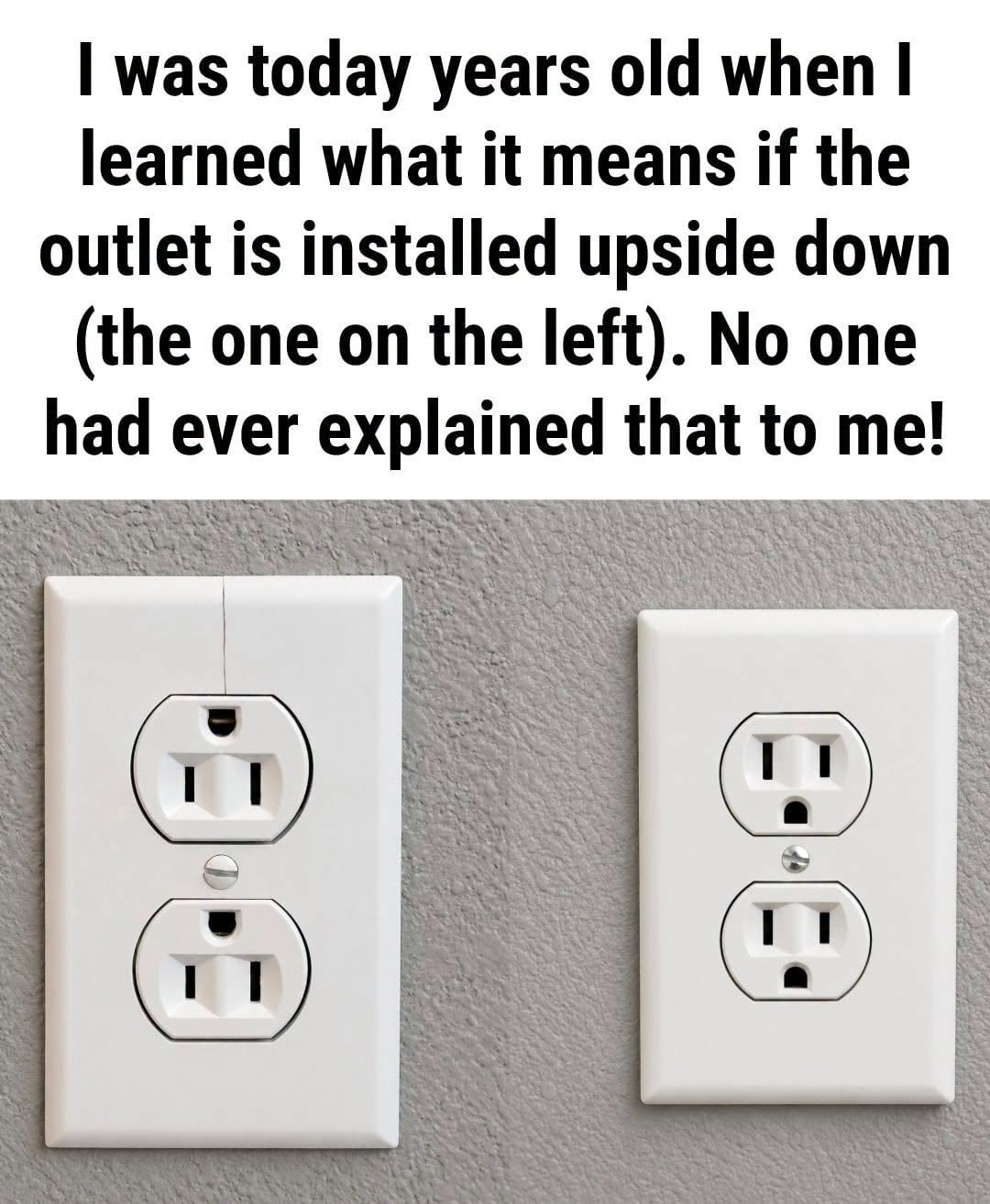
That upside-down electrical outlet on your wall may look like a mistake, but in many homes it actually serves a practical purpose. While most people never give it a second thought, the unusual orientation can sometimes provide a clue about how the room’s electrical system was designed. In certain houses, especially older ones, a flipped outlet may indicate that a nearby wall switch controls part of the receptacle rather than a ceiling light. Understanding what it means can save you from unnecessary confusion the next time an outlet appears to have “stopped working.”
Many homes were built without permanent ceiling light fixtures in bedrooms or living rooms. Instead, builders often installed a switched receptacle so homeowners could plug in a floor lamp or table lamp and control it using the wall switch near the entrance. This arrangement allowed a room to be illuminated immediately upon entering without requiring overhead lighting. In some cases, electricians turned the outlet upside down as a simple visual reminder that it functioned differently from a standard receptacle.
In many of these installations, only one half of the duplex outlet is connected to the wall switch. The other half remains energized at all times, allowing you to keep devices such as clocks, phone chargers, or internet equipment plugged in without losing power whenever the switch is turned off. This design provides both convenience and flexibility, especially in rooms where a single switch is expected to control the primary source of light.
However, it’s important to remember that an upside-down outlet does not always indicate a switched receptacle. There is no nationwide electrical code requiring electricians to install switch-controlled outlets in that orientation. Some electricians prefer mounting outlets with the ground pin at the top for safety reasons, believing it reduces the chance of a metal object accidentally contacting the energized prongs of a partially unplugged cord. Others simply install outlets according to personal preference or local building practices.
Because there is no universal standard, the orientation alone cannot tell you exactly how an outlet is wired. A receptacle mounted upside down may be switch-controlled, permanently powered, installed that way for safety, or simply positioned according to the preferences of the builder or a previous homeowner. The only reliable way to determine its function is to plug in a lamp or outlet tester and operate the nearby wall switches to see whether power changes.
If you discover that an outlet is controlled by a switch, it can become a useful feature rather than a source of frustration. Instead of assuming the outlet is faulty whenever it doesn’t provide power, you’ll know to check the wall switch first. Many homeowners spend years believing an outlet is broken when it has actually been operating exactly as intended all along.
Taking a few minutes to identify which outlets in your home are switch-controlled can make everyday life a little easier. It also helps when arranging furniture, setting up lamps, or troubleshooting electrical issues. Sometimes the smallest details inside a home—like the direction an outlet faces—can quietly reveal how the entire room was designed to function.