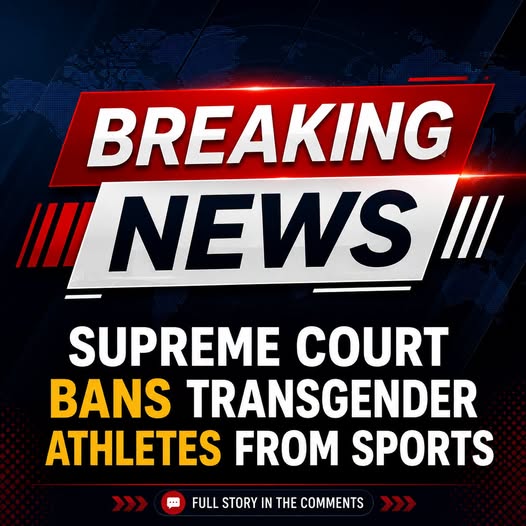
The political aftershocks were immediate. With a single decision, the Supreme Court delivered what many viewed as a major symbolic win for Donald Trump while reigniting one of the nation’s most emotionally charged cultural battles. The ruling has intensified debates over fairness, identity, and participation, leaving many parents anxious, transgender youth heartbroken, and political leaders on both sides eager to use the issue to advance their agendas. What began as a legal dispute over athletics has once again become a national conversation about belonging, rights, and recognition.
By allowing Idaho and West Virginia to enforce laws preventing transgender girls and women from competing on female sports teams, the Court did more than resolve two state cases—it established a precedent that could encourage many other states to adopt similar policies. The decision affirms that states may limit participation in women’s sports to athletes classified as biological females. Supporters of Donald Trump see the outcome as reinforcing a position that has been central to his criticism of what he calls “gender ideology.” Meanwhile, many transgender young people and their families view the ruling as another signal that their identities remain subject to political and legal debate, leaving them uncertain about where they belong.
Rather than bringing the controversy to a close, the decision is expected to deepen existing divisions. Schools, athletic organizations, coaches, parents, and local officials will increasingly find themselves navigating difficult choices in communities already split over the issue. Beyond the courtroom arguments and political messaging are young athletes whose primary goal is simply to participate in the sports they love without becoming the focus of a nationwide cultural conflict.