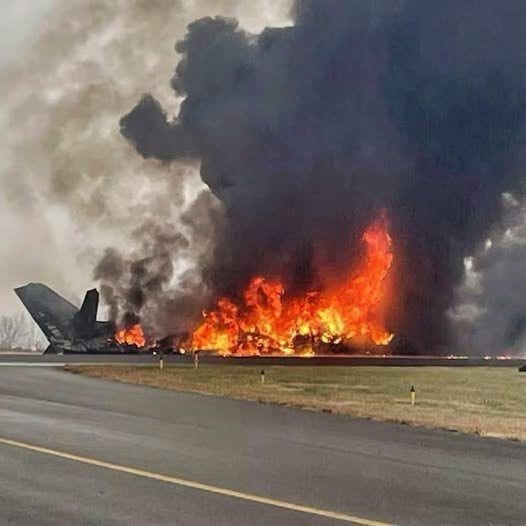
What began as a routine international flight quickly turned into one of the most dramatic aviation emergencies in recent memory. Emirates Flight EK521, traveling from Thiruvananthapuram, India, to Dubai International Airport, encountered a critical situation during its landing on August 3, 2016. Within moments of touching down, the aircraft burst into flames, sending thick black smoke billowing across the runway and forcing hundreds of passengers and crew members into a desperate evacuation.
The Boeing 777 was carrying 282 passengers and 18 crew members when the incident occurred. Although the aircraft was severely damaged by the fire, every person on board managed to escape safely through the emergency exits. Flight attendants and cabin crew acted quickly, directing passengers toward evacuation slides while emergency responders rushed to contain the rapidly spreading blaze. Their calm and disciplined actions prevented what could have become one of aviation’s worst tragedies.
Despite the successful evacuation, the disaster claimed the life of one firefighter who was responding to the emergency. The first responder was killed while battling the intense fire surrounding the aircraft, a heartbreaking reminder that even when passengers survive, rescue operations often place emergency personnel in extraordinary danger. Several other people sustained minor injuries and received medical treatment following the evacuation.
Investigators immediately launched a comprehensive inquiry to determine what caused the accident. Early evidence indicated that the aircraft encountered a challenging weather phenomenon known as wind shear during its final approach. Wind shear involves a sudden change in wind speed or direction that can significantly affect an aircraft’s performance, particularly during takeoff and landing when there is little margin for recovery. Investigators also analyzed cockpit recordings, flight data, maintenance records, weather conditions, and communications with air traffic control to build a complete picture of the events leading up to the accident.
The official investigation later concluded that the crew’s attempted go-around after touchdown, combined with the effects of wind shear and the aircraft’s automated flight systems, contributed to the accident. The aircraft failed to climb as intended, struck the runway, and eventually came to rest before the fire erupted. The findings led to important recommendations aimed at improving pilot training, operational procedures, and awareness of complex landing scenarios involving rapidly changing weather conditions.
The accident temporarily disrupted operations at Dubai International Airport, one of the busiest aviation hubs in the world. Flights were delayed, diverted, or canceled while emergency crews secured the scene and investigators began documenting the wreckage. Although airport operations gradually returned to normal, the incident remained a significant event within the global aviation community.
The successful evacuation highlighted the importance of rigorous safety training for both flight crews and emergency responders. Airline personnel regularly practice emergency procedures through realistic simulations, preparing them to make rapid decisions under extreme pressure. The professionalism displayed by the Emirates crew played a major role in ensuring that every passenger escaped the burning aircraft safely.
The loss of the firefighter also underscored the often-overlooked risks faced by emergency services working in aviation incidents. Their willingness to move toward danger while others are fleeing remains an essential part of airport safety operations. Tributes following the accident honored the courage and sacrifice of the responder who gave his life protecting others.
Today, Flight EK521 remains an important case study in aviation safety. The lessons learned from the investigation have been incorporated into pilot training programs and operational guidance across the industry, reinforcing the continuous commitment to improving flight safety. While the passengers were fortunate to survive, the accident serves as a lasting reminder that aviation safety depends on constant learning, preparation, and the dedication of countless professionals both in the air and on the ground.