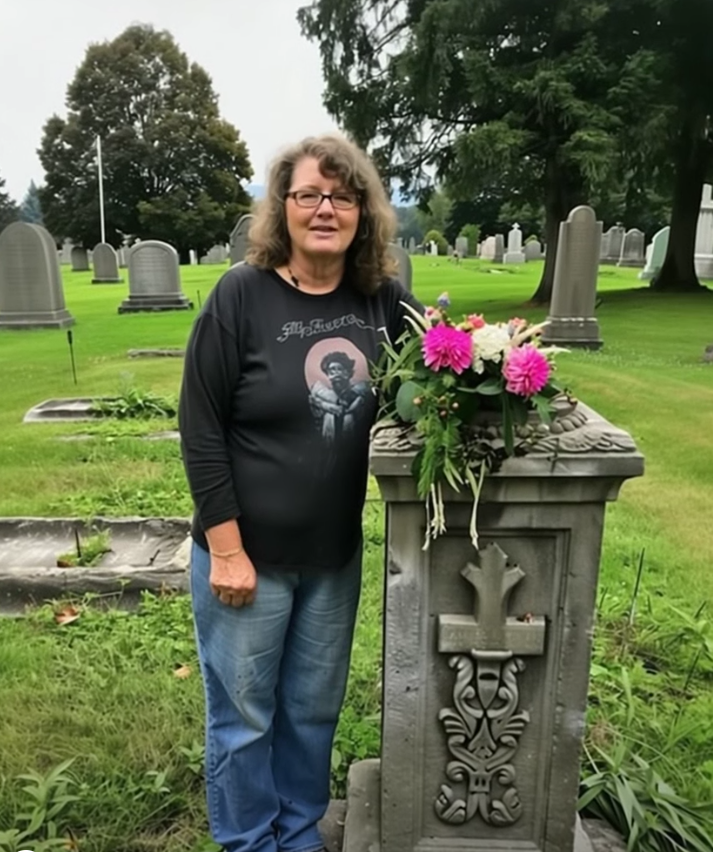
For three years, Margaret never missed a single Thursday. Every week, before the sun had fully risen, she stopped at the same neighborhood bakery and bought the same warm cinnamon pastry her son Daniel had loved since he was a little boy. She carried it carefully through the cemetery gates, placed it beside his headstone, whispered a few quiet words, and walked away with tears she no longer tried to hide. It was the only ritual that made the silence of losing him bearable.
Daniel had died in a tragic car accident at just thirty-two years old. Margaret often replayed their final conversation in her mind, wishing she had hugged him a little longer before he left that morning. Friends encouraged her to move on, insisting Daniel would want her to be happy, but grief rarely follows advice. Visiting his grave became the closest thing she had to spending time with her son.
Every Thursday looked almost exactly the same.
She cleaned the headstone with a soft cloth, pulled tiny weeds from around the flowers, and set the fresh pastry beside his photograph before quietly telling him everything that had happened during the week. She talked about the changing weather, the neighbors, family birthdays, and even the birds that nested in the old oak tree nearby. It comforted her to imagine Daniel somehow listening.
One rainy morning, however, something was different.
After placing the pastry on the grave, Margaret realized she had forgotten the fresh flowers in her car. She hurried back to the parking lot, grabbed the bouquet, and returned only a few minutes later.
The pastry was gone.
At first, she simply stared in confusion.
No crumbs.
No wrapper.
Nothing.
Instead, resting carefully against Daniel’s headstone was a folded piece of paper.
Her hands trembled as she picked it up.
On the front were two simple words.
**”Thank you.”**
Margaret’s heart pounded.
Slowly she unfolded the note.
Inside, someone had written:
*”I’m sorry for taking the pastry. I was hungry, and I hadn’t eaten in two days. I noticed you leave one here every week. Today I couldn’t resist. Please forgive me. Your kindness fed someone who desperately needed it.”*
Tears immediately filled Margaret’s eyes.
For several minutes she stood completely still.
She had come expecting to mourn her son.
Instead, she had unknowingly helped keep another person alive.
The following Thursday, Margaret returned carrying two pastries instead of one.
She placed the first beside Daniel’s grave as always.
The second she left on the nearby bench with another handwritten note.
*”If you’re still hungry, this one is for you too. Please don’t be ashamed. Everyone deserves to eat.”*
She waited quietly inside her car.
Nearly an hour passed before a thin young man cautiously emerged from behind a row of trees.
His clothes were worn.
His face looked exhausted.
He glanced around nervously before picking up the pastry.
Then he noticed the note.
For the first time in what looked like years, he smiled.
Margaret stepped out slowly.
The young man immediately apologized.
“I never wanted to steal,” he whispered.
“I just didn’t know what else to do.”
His name was Ethan.
He explained that after losing his construction job, he had fallen behind on rent and eventually became homeless. Too embarrassed to ask for help, he had been sleeping in an abandoned storage building near the cemetery. Hunger had driven him to take the pastry he believed no one would miss.
Margaret listened quietly.
Then she asked a simple question.
“When was the last time someone asked how you were doing?”
Ethan lowered his eyes.
“I honestly don’t remember.”
That afternoon, instead of going home alone, Margaret invited him to lunch.
Over sandwiches and hot coffee, Ethan shared the story of how one tragedy after another had slowly unraveled his life.
Margaret realized something remarkable.
Daniel had always been the first person to help strangers.
As a child, he shared his lunch with classmates who forgot theirs.
As an adult, he regularly volunteered at homeless shelters without telling anyone.
Helping Ethan felt strangely familiar.
It felt like something Daniel himself would have done.
Over the following months, Margaret connected Ethan with local charities, helped him prepare job applications, and introduced him to people willing to give him another chance.
Slowly, his life began changing.
He found steady work.
Moved into a small apartment.
Started rebuilding the confidence he had nearly lost forever.
One year later, Ethan returned to the cemetery carrying a bouquet of white lilies.
He placed them beside Daniel’s grave.
Then he looked at Margaret.
“I never met your son,” he said quietly.
“But because of him… because you kept bringing those pastries… I’m still alive.”
Margaret smiled through tears.
For the first time since Daniel’s funeral, her grief felt lighter.
She finally understood that love doesn’t stop at a headstone.
Sometimes the kindness we offer in memory of those we’ve lost finds someone still fighting to survive.
Every Thursday, Margaret still visits Daniel.
She still brings his favorite cinnamon pastry.
Only now, she always buys two.
One for the son she’ll never stop loving.
And one for anyone who might need a reminder that even in the darkest seasons of life, compassion can arrive wrapped in something as simple as a warm pastry and two handwritten words:
**”Thank you.”**