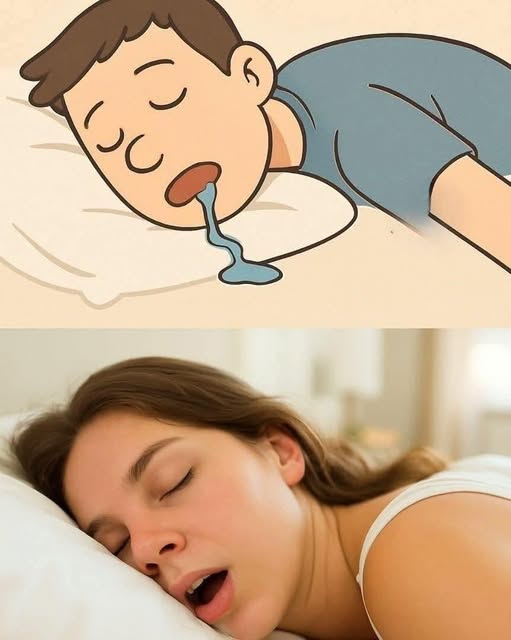
Waking up to a damp pillow can be unpleasant, and many people dismiss it as nothing more than an embarrassing habit. In many cases, nighttime drooling is completely harmless and simply reflects the way someone sleeps. However, persistent or suddenly worsening drooling can occasionally be associated with underlying health conditions that deserve medical attention, especially if it appears alongside other symptoms. While there is usually no reason to panic, paying attention to changes in your body can help identify problems early. Sometimes what seems like a small inconvenience is simply a normal part of sleep, while other times it may be one piece of a larger picture worth discussing with a healthcare professional.
Nighttime drooling, known medically as sialorrhea, occurs when saliva escapes from the mouth during sleep instead of being swallowed. Throughout the day, we constantly swallow saliva without thinking about it. During sleep, however, the muscles of the face, mouth, and throat naturally relax. This relaxation makes swallowing less frequent, allowing saliva to collect inside the mouth. If your mouth falls open while sleeping—particularly when lying on your side or stomach—gravity can cause saliva to flow onto your pillow. For countless people, this is simply part of their normal sleep pattern and does not indicate illness.
Sleeping position is one of the biggest factors influencing nighttime drooling. Side sleepers and stomach sleepers are much more likely to notice wet pillows than people who sleep on their backs. Gravity naturally encourages saliva to move toward the edge of the mouth, making leakage more likely. In contrast, back sleepers generally keep saliva pooled toward the back of the mouth, where it is swallowed more easily. A simple change in sleeping position can sometimes reduce drooling without requiring any medical treatment.
Breathing patterns during sleep also play an important role. If your nose is blocked because of seasonal allergies, a cold, sinus congestion, or structural issues such as a deviated septum, your body often compensates by breathing through your mouth. Mouth breathing naturally keeps the lips apart, making it easier for saliva to escape. Many people notice increased drooling during allergy season or while recovering from a respiratory infection, only to find the problem disappears once normal nasal breathing returns.
Even temporary congestion can make a noticeable difference. Swollen nasal passages force extra airflow through the mouth, reducing the normal seal created by closed lips. Over the course of several hours of sleep, that small change can leave a surprisingly wet pillow by morning. Treating the underlying congestion—whether through hydration, allergy management, or medical guidance—often improves the problem.
Certain medications can also contribute to increased drooling. Some prescription drugs may stimulate saliva production, while others affect muscle control or swallowing. Medications used for neurological conditions, some psychiatric disorders, and certain infections have all been associated with changes in saliva production. If nighttime drooling begins shortly after starting a new medication, it is worth discussing the symptom with the prescribing healthcare provider. In many cases, an adjustment in dosage or medication type may help reduce the problem without compromising treatment.
Dental health can influence drooling as well. Ill-fitting dentures, orthodontic appliances, oral infections, inflamed gums, or irritation inside the mouth may stimulate additional saliva production. Because saliva helps protect the mouth and aid healing, the body naturally produces more of it when tissues become irritated. Regular dental checkups can identify problems that might otherwise go unnoticed while contributing to excessive nighttime saliva.
Stress and fatigue may indirectly play a role too. People experiencing significant physical or emotional exhaustion often sleep more deeply, making them less aware of saliva accumulating during the night. While stress itself does not directly cause drooling, changes in sleep quality, muscle relaxation, and nighttime breathing patterns may contribute to it in some individuals.
One condition commonly associated with nighttime drooling is obstructive sleep apnea. Sleep apnea occurs when breathing repeatedly stops and starts during sleep because the airway becomes partially or completely blocked. People with sleep apnea often snore loudly, breathe through their mouths, wake up gasping, experience poor-quality sleep, and feel unusually tired during the day. Mouth breathing and repeated airway obstruction can increase drooling. While drooling alone does not mean someone has sleep apnea, persistent drooling combined with loud snoring, witnessed pauses in breathing, morning headaches, or excessive daytime sleepiness should prompt a medical evaluation, as untreated sleep apnea can have significant long-term health consequences.
Neurological disorders may also affect saliva control, although these conditions are much less common than simple sleeping-position issues. Diseases such as Parkinson’s disease, certain forms of motor neuron disease, or the effects of a stroke can interfere with the muscles responsible for swallowing. In these situations, drooling results not because the body produces too much saliva, but because swallowing becomes less efficient. Importantly, these disorders almost always involve additional neurological symptoms rather than drooling alone. Difficulty speaking, muscle weakness, tremors, balance problems, or changes in facial movement would typically accompany the drooling and warrant prompt medical assessment.
Vitamin deficiencies may occasionally contribute indirectly as well. Severe vitamin B12 deficiency, for example, can affect nerve function throughout the body. While drooling by itself is not a typical sign of vitamin deficiency, neurological changes related to prolonged deficiency could influence swallowing in some individuals. Blood tests can help identify nutritional deficiencies when healthcare providers suspect they may be contributing to broader neurological symptoms.
The digestive system can also influence saliva production. Gastroesophageal reflux disease (GERD), commonly known as acid reflux, may trigger increased saliva as the body attempts to neutralize stomach acid entering the esophagus. Some people notice nighttime drooling alongside heartburn, sour-tasting fluid in the mouth, chronic coughing, or discomfort when lying flat. Managing reflux through lifestyle changes, medication, or medical guidance may improve both reflux symptoms and excessive salivation.
Pregnancy represents another situation in which increased saliva production may occur. Some pregnant individuals experience a condition called ptyalism gravidarum, characterized by excessive saliva production, particularly during the first trimester. Hormonal changes, nausea, and heightened sensitivity within the digestive system all contribute. Although often uncomfortable, this condition usually improves as pregnancy progresses and is generally not considered dangerous.
Children experience nighttime drooling much more frequently than adults. During infancy and early childhood, developing swallowing reflexes, teething, and immature muscle control make drooling completely normal. As children grow, nighttime drooling usually decreases naturally. However, persistent excessive drooling in older children may sometimes warrant evaluation for enlarged tonsils, nasal obstruction, sleep-disordered breathing, or certain developmental conditions.
The most important factor when evaluating nighttime drooling is recognizing changes from your usual pattern. If you have drooled occasionally throughout your life without any other symptoms, it may simply reflect your normal physiology. On the other hand, if drooling begins suddenly, becomes significantly worse, or is accompanied by additional symptoms such as difficulty swallowing, changes in speech, facial weakness, frequent choking, persistent heartburn, loud snoring, interrupted breathing during sleep, or unexplained neurological symptoms, seeking medical advice is appropriate.
Keeping track of when the drooling occurs can also provide useful information. Does it happen only during allergy season? After drinking alcohol? When sleeping on one particular side? After starting a new medication? Identifying patterns can help healthcare professionals determine whether the cause is likely related to sleep habits, medications, respiratory issues, digestive conditions, or another medical concern.
Fortunately, many cases can be improved through relatively simple changes. Sleeping with the head slightly elevated, managing allergies, maintaining good oral hygiene, treating nasal congestion, staying well hydrated, and discussing medication side effects with a healthcare provider may all reduce nighttime drooling. If sleep apnea or another underlying medical condition is identified, appropriate treatment often improves not only drooling but overall sleep quality and long-term health.
Ultimately, a wet pillow is usually more of an inconvenience than a medical emergency. However, our bodies often communicate through subtle changes, and paying attention to persistent new symptoms can be valuable. Rather than ignoring recurring problems—or assuming the worst—it is best to view nighttime drooling in context. Most cases are harmless, but when combined with other concerning symptoms or significant changes in health, it deserves a thoughtful medical evaluation. Listening to your body, recognizing patterns, and seeking professional advice when appropriate remain the most effective ways to protect your overall health and well-being.