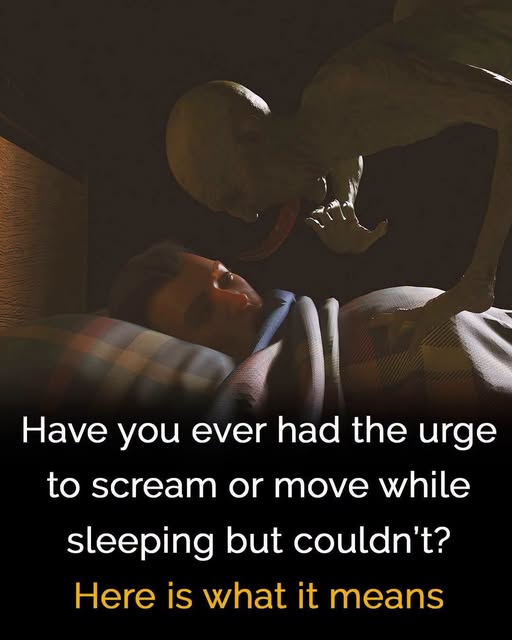
Imagine opening your eyes in the middle of the night and instantly realizing something is wrong. Your mind is awake. You can hear the faint sounds around you. You know exactly where you are. Yet no matter how hard you try, your body refuses to respond. Your arms won’t move. Your legs feel frozen in place. Even calling for help seems impossible. Then a crushing sensation settles over your chest, and suddenly it feels as though someone—or something—is standing nearby, watching from the darkness. It is one of the most terrifying experiences a person can endure, and it has a name: sleep paralysis.
For most people, sleep represents comfort, recovery, and escape from daily stress. But for those who have experienced sleep paralysis, the bedroom can briefly become a place of fear. The condition creates a disturbing state where consciousness returns before the body has fully awakened. As a result, individuals find themselves trapped between sleep and wakefulness, unable to move while remaining fully aware of their surroundings.
What makes the experience especially frightening is that it often feels incredibly real. Victims frequently describe seeing shadowy figures, hearing strange sounds, sensing a presence in the room, or feeling pressure against their chest. These sensations can be so vivid that many people initially believe they have encountered something supernatural.
The explanation, however, lies within the biology of sleep itself.
During Rapid Eye Movement (REM) sleep—the stage associated with vivid dreaming—the brain temporarily disables most voluntary muscle movement. This natural process prevents us from physically acting out our dreams and potentially harming ourselves. Under normal circumstances, the paralysis disappears as soon as we wake.
Sleep paralysis occurs when that timing becomes disrupted.
The brain regains awareness before the body has fully exited REM sleep. As a result, the mind becomes conscious while the muscles remain temporarily inactive. This creates the unsettling feeling of being awake but unable to move.
Because part of the brain is still operating in a dream-like state, hallucinations often accompany the episode. The brain attempts to interpret the fear and confusion, sometimes creating visual figures, unusual sounds, or sensations of pressure and presence.
Throughout history, these experiences have inspired countless myths and legends. Different cultures attributed them to spirits, demons, curses, or supernatural visitors. Before modern science provided explanations, many people genuinely believed they were experiencing encounters with otherworldly forces.
Today, researchers understand that sleep paralysis is a neurological phenomenon rather than a paranormal event.
Although the condition itself is usually harmless, it can feel overwhelmingly intense. Many people describe it as one of the most frightening moments of their lives because it combines physical helplessness with vivid sensory experiences.
Several factors can increase the likelihood of an episode occurring.
Sleep deprivation is one of the most common triggers. When individuals consistently fail to get enough rest, the brain struggles to transition smoothly between sleep stages, increasing the chances of becoming conscious during REM paralysis.
High stress levels can also play a significant role. Emotional pressure, anxiety, and ongoing worries can disrupt normal sleep patterns and make episodes more frequent.
Irregular sleeping schedules are another major contributor. Shift workers, students with inconsistent sleep habits, and individuals who frequently stay awake late often report higher rates of sleep paralysis.
Certain sleep disorders may increase susceptibility as well. Conditions such as narcolepsy, insomnia, and chronic sleep disturbances can interfere with normal sleep architecture and create opportunities for paralysis episodes to occur.
Lifestyle habits can contribute too. Excessive caffeine consumption, alcohol use before bed, and poor sleep hygiene may all disrupt healthy sleep cycles.
Despite how frightening sleep paralysis feels, it is important to remember that the experience is temporary. Episodes typically last only a few seconds or minutes, even though they often feel much longer.
One of the most effective ways to cope during an episode is to remain calm. Panic tends to intensify the fear and can make the experience feel even more overwhelming.
Instead, focus on slow, controlled breathing. Reminding yourself that the condition is temporary and harmless can help reduce anxiety while waiting for the paralysis to pass.
Many people also find success by concentrating on moving a small part of the body. Attempting to wiggle a finger, move a toe, blink repeatedly, or shift the tongue can sometimes help break the paralysis and restore normal movement.
Preventing future episodes often begins with improving sleep habits. Maintaining a consistent bedtime, reducing stress, limiting stimulants before sleep, and prioritizing adequate rest can significantly lower the likelihood of recurrence.
Ultimately, sleep paralysis serves as a powerful reminder of how complex and delicate the human sleep cycle truly is. While the experience may feel like something from a nightmare, it is actually the result of a temporary disconnect between the brain and body during the transition between sleep and wakefulness.
The next time you hear someone describe a shadow figure standing at the edge of their bed or a terrifying inability to move, remember that the explanation may not be supernatural at all. Sometimes the most frightening experiences are simply the brain’s extraordinary mechanisms momentarily falling out of sync.
And while those few moments can feel endless, they always pass—leaving behind not danger, but a deeper appreciation for the mysterious workings of the sleeping mind.