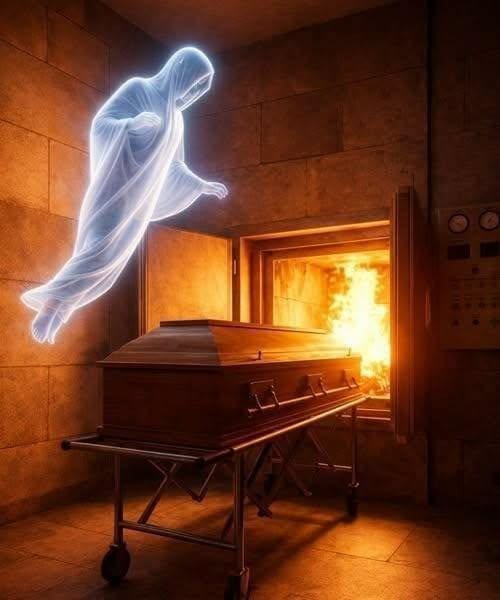
Could the decision you make about your body after death determine your eternal fate? For generations, Christians have embraced burial as a sacred tradition, believing the human body to be a holy vessel that deserves to rest in the earth. Yet as cremation becomes increasingly common, questions continue to arise about whether the practice conflicts with biblical teachings. Some wonder if reducing the body to ashes somehow undermines the promise of resurrection, while others believe such concerns are rooted more in tradition than theology. The debate touches on deep spiritual convictions, prompting many believers to seek clarity about what Scripture truly teaches regarding the final disposition of the body.
Over the last several decades, cremation has shifted from an uncommon choice to one of the most popular methods of handling human remains throughout much of the Western world. A variety of practical factors have contributed to this trend, including rising funeral expenses, limited cemetery space, and growing environmental concerns. While many families view cremation as a dignified and sensible option, uncertainty remains among some Christians. For believers who place great value on biblical customs and historical practices, cremation can raise important questions concerning respect for the body, the meaning of resurrection, and the relationship between physical remains and eternal life.
At the heart of the discussion lies the contrast between longstanding tradition and theological interpretation. Burial occupies a prominent place throughout biblical history. From figures such as Abraham and Moses to events recorded in the New Testament, burial consistently appears as the customary way of honoring the dead. This practice reflects a worldview in which the body is seen as more than a temporary shell; it is regarded as something sacred, destined for future restoration by God. The burial of Jesus Christ serves as the most significant example within Christianity. His entombment and subsequent resurrection have stood for centuries as a powerful symbol of hope, illustrating the belief that what is laid to rest will one day be raised in glory. The writings of the Apostle Paul further reinforced this imagery by comparing burial to the planting of a seed that will ultimately emerge transformed. For many generations, this understanding helped establish burial as the preferred Christian practice.
At the same time, a careful reading of Scripture reveals that the Bible never explicitly condemns cremation. Instances involving burned remains generally occurred under extraordinary circumstances, such as warfare, judgment, or concerns related to public health, rather than as direct moral teachings regarding funeral practices. Because of this, many contemporary theologians maintain that although burial remains a meaningful and honorable tradition, cremation itself should not be viewed as a violation of biblical doctrine. Instead, they argue that it falls within the realm of personal conviction and Christian freedom.
Much of the concern surrounding cremation comes from the biblical description of the body as the temple of the Holy Spirit. Those who oppose the practice sometimes fear that turning a body into ashes may communicate disrespect or suggest a diminished belief in bodily resurrection. They contend that burial better reflects the expectation of future glory and restoration. Others respond by emphasizing a fundamental truth about God’s power: resurrection does not depend upon the physical condition of human remains. Whether a body returns to the earth through burial, is consumed by fire, or is lost through natural circumstances, God’s ability to restore life remains unchanged. The hope of resurrection rests in divine power rather than the preservation of physical matter.
The historical roots of this debate also provide valuable context. In many ancient cultures, cremation was associated with pagan beliefs that rejected or ignored the concept of bodily resurrection. Early Christians often chose burial as a visible expression of their faith in life after death and in God’s promise to raise the dead. Within that cultural environment, burial became a powerful testimony of Christian belief. Modern circumstances, however, are very different. Today, most people who choose cremation do so because of practical concerns such as financial limitations, family preferences, geographic mobility, or environmental considerations. In the overwhelming majority of cases, the decision is not intended as a rejection of Christian teaching or an act of spiritual defiance.
As a result, many Christian denominations now agree that the method used to care for earthly remains does not determine a person’s salvation or affect God’s promise of resurrection. The central message of Christianity focuses not on preserving the physical body exactly as it exists today, but on the expectation of a glorified and transformed body through God’s power. The hope of eternal life extends beyond the limitations of earthly existence and is grounded in faith rather than funeral customs.
In the end, whether someone chooses burial in a cemetery or cremation followed by the keeping or scattering of ashes, Christian hope remains centered on the resurrection of Jesus Christ. The location or condition of the body is ultimately secondary to the greater promise of eternal life. Neither fire, decay, nor the passage of time can diminish God’s ability to fulfill His promises. For most believers, the decision comes down to personal convictions, family circumstances, and practical considerations rather than questions of salvation. The destiny of the soul is not determined by the manner in which the body returns to the earth, but by faith in the One who promises life beyond death.