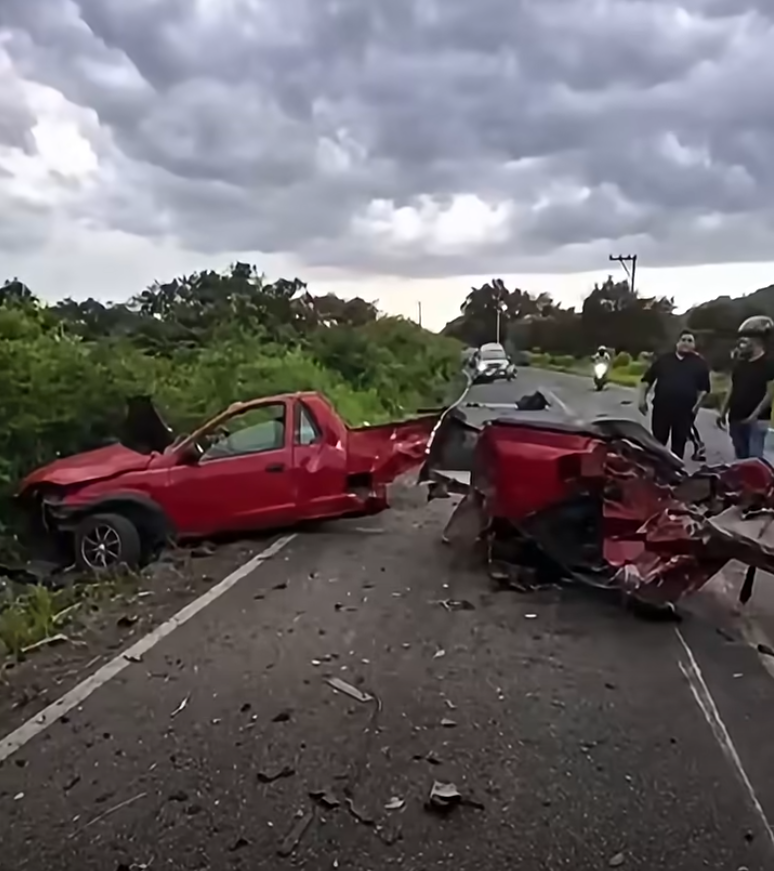
A peaceful afternoon in Manhattan turned into chaos in a matter of seconds. What began as an ordinary day filled with commuters, tourists, and residents quickly transformed into a scene of panic when a vehicle suddenly left the roadway and crashed into pedestrians along a crowded sidewalk. By the time the dust settled, two people had lost their lives, three others were fighting for survival, and countless witnesses were left trying to process what they had just seen.
According to early reports, the incident unfolded without warning. People were walking, checking their phones, chatting with friends, and going about their daily routines when a vehicle unexpectedly veered off course. Witnesses described hearing screams before realizing a car had mounted the sidewalk, sending people scrambling in every direction. Some rushed to safety, while others froze in shock as the vehicle tore through the crowded area.
The immediate aftermath was heartbreaking. Bystanders dropped shopping bags and briefcases to help the injured. Restaurant workers ran outside carrying towels and water. Strangers knelt beside victims, attempting to provide comfort until emergency crews arrived. Within minutes, police officers, firefighters, and paramedics flooded the scene, transforming a busy Manhattan block into an active emergency zone.
Authorities quickly detained the 61-year-old driver believed to have been behind the wheel. Yet despite the arrest, investigators remain focused on a much larger question: why did this happen?
At this stage, officials have not reached a final conclusion. Detectives are examining every possibility, including a sudden medical emergency, mechanical failure, driver impairment, distraction, or human error. Modern vehicles contain electronic systems capable of recording crucial information, and investigators are expected to analyze braking patterns, steering inputs, speed data, and other evidence that could reveal what occurred in the moments before the crash.
Surveillance footage from nearby businesses may also provide critical clues. Manhattan’s streets are heavily monitored by security cameras, traffic cameras, and private recording systems. Investigators hope those recordings will help reconstruct the exact sequence of events and determine whether the driver attempted to avoid the collision or lost control unexpectedly.
For the families affected, however, technical explanations offer little comfort. Two families are now mourning loved ones who left home expecting a normal day and never returned. Others remain at hospital bedsides, waiting anxiously for updates on relatives who were critically injured. Their lives changed forever in an instant.
The tragedy has also reignited broader concerns about pedestrian safety in major cities. New York has spent years implementing traffic-calming measures, redesigning intersections, lowering speed limits, and expanding pedestrian zones. Yet incidents like this serve as a painful reminder that even the most densely protected urban environments cannot eliminate every risk.
As investigators continue their work, city officials are urging patience while facts are gathered. Speculation often spreads rapidly after high-profile incidents, but authorities stress that determining the true cause requires careful examination of evidence rather than assumptions.
For now, a city known for its resilience is once again confronting grief and uncertainty. The sidewalk has been cleared, traffic has resumed, and the physical signs of the crash are beginning to disappear. But for those who witnessed the horror firsthand—and for the families whose lives were shattered—the memory of those few devastating moments will remain long after the investigation is complete.
The answers may eventually emerge through forensic analysis, medical evaluations, and surveillance footage. Until then, Manhattan is left with the same haunting question echoing through the city: how could an ordinary afternoon end in such unimaginable tragedy?