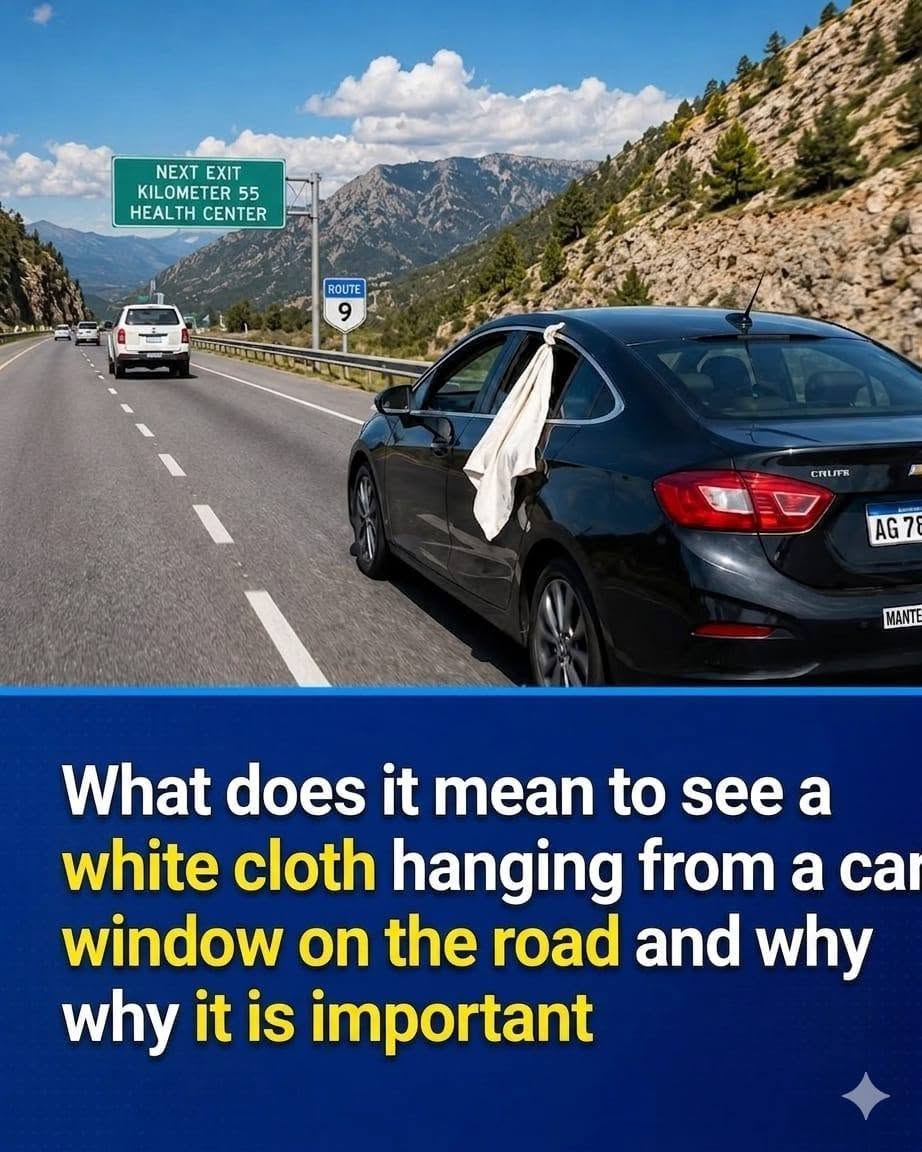
A strip of white fabric hanging from a car window can instantly grab your attention.
At first glance, it may seem harmless, but for many drivers it raises immediate questions. Is the vehicle in trouble? Is someone inside experiencing an emergency? Should other motorists react or simply continue on their way?
The truth is that a white cloth has traditionally been used as an informal signal when drivers need help or want to alert others that something unusual is happening.
In some situations, it may indicate a mechanical problem, an empty fuel tank, or a vehicle that has broken down unexpectedly. In other cases, it can be used during a medical emergency when occupants are trying to attract attention while waiting for assistance. Certain groups traveling together may also use a visible white cloth to identify members of their convoy.
However, it’s important to understand that this signal carries no official legal status. A private vehicle displaying a white cloth does not receive special traffic privileges, cannot ignore road laws, and does not gain the rights granted to emergency vehicles.
For other drivers, the best response is simple: remain calm and observant.
Reduce your speed if necessary, maintain a safe distance, and assess the situation carefully. If the vehicle appears disabled or someone seems to be in distress, contacting emergency services or roadside assistance may be the most helpful action.
The small piece of fabric itself is not what matters most. What matters is recognizing that it may be a request for attention from someone facing an unexpected problem.
In a world governed by traffic signs, signals, and regulations, a white cloth remains a basic human message—an improvised way of saying, “Something is wrong, and I may need help.”
Understanding that message can make roads safer for everyone.