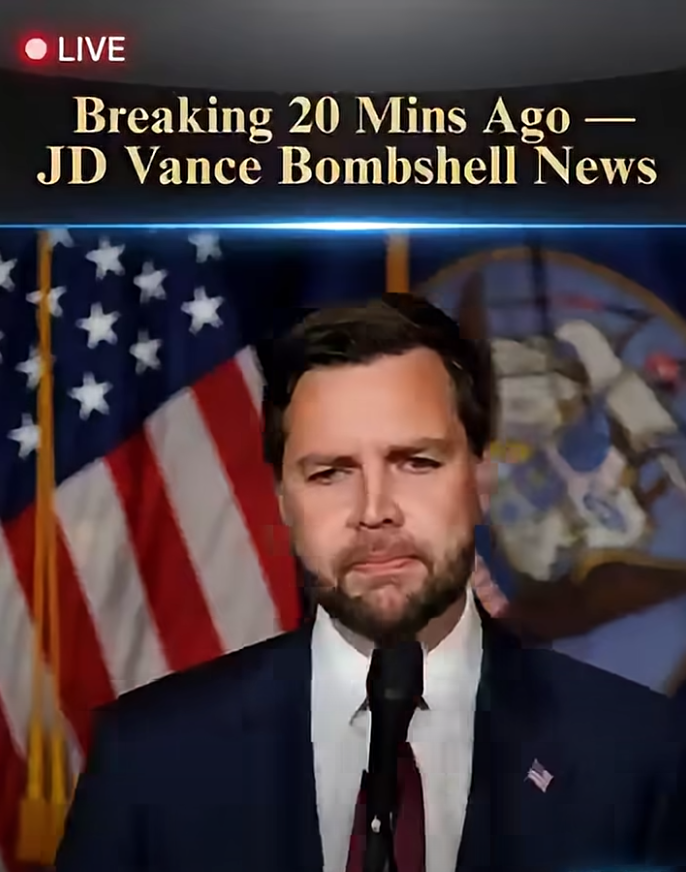
The warning signs are impossible to ignore for those paying close attention. Yet many political observers continue to dismiss them, treating them as temporary enthusiasm, media hype, or another passing moment in an increasingly unpredictable political era. Meanwhile, beneath the noise of daily headlines, a significant shift appears to be taking place within the Republican Party. At the center of that shift stands Vice President JD Vance, whose political influence has grown steadily and methodically, transforming him from a rising figure into one of the most closely watched names in American politics.
What makes Vance’s rise particularly noteworthy is that it has not relied on dramatic announcements or sudden breakthroughs. Instead, it has been built through a disciplined strategy focused on strengthening relationships within the Republican base, expanding his national profile, and positioning himself as a leading voice for a movement seeking direction beyond the immediate Trump era. While critics continue to focus on familiar attacks and old assumptions, supporters argue that Vance has been quietly assembling the foundations of a future presidential campaign.
Recent polling and grassroots enthusiasm have only intensified that perception. Within many Republican circles, Vance is increasingly viewed not as a fringe possibility or compromise candidate, but as a natural successor to the populist political movement that reshaped the party over the past decade. His supporters see him as someone capable of carrying forward key themes associated with that movement while presenting them in a way that appeals to both loyal supporters and a broader national audience.
The significance of this development extends beyond simple popularity numbers. Political movements are often sustained not only by policy positions but also by emotional connection. Many voters are drawn to candidates who embody a larger story about identity, purpose, and belonging. In that regard, Vance appears to have tapped into something deeper than ordinary political support. For many Republicans, he represents continuity, stability, and the promise that the movement they helped build will continue long after current political battles fade from the headlines.
Events such as AmericaFest have reinforced that perception. Supporters point to enthusiastic crowds, strong polling performances, and growing visibility as evidence that Vance has already passed important political tests. What may have appeared to outsiders as a routine conference or rally is viewed by many activists as a preview of future leadership contests. In their eyes, these gatherings function as early indicators of who can inspire enthusiasm, mobilize supporters, and unite various factions within the party.
The emotional dimension of Vance’s support may be one of the most important factors driving his momentum. Political movements often gain strength during periods of uncertainty, especially when voters feel their values, identity, or priorities are under threat. In such moments, supporters frequently gravitate toward leaders who offer not only policy proposals but also a sense of meaning and direction. Vance’s message has resonated with many conservatives who believe the country is undergoing significant cultural, economic, and political change.
Some analysts argue that his appeal reflects a broader transition occurring within the Republican Party. As new generations of voters and activists emerge, questions about leadership succession become increasingly important. While Donald Trump remains an enormously influential figure, many supporters are already thinking about the future. They are asking who will carry the movement forward, who can translate its priorities into long-term political success, and who can maintain the loyalty of a highly energized base.
Supporters increasingly view Vance as one possible answer to those questions.
At the same time, his critics remain skeptical. Opponents argue that early polling numbers and activist enthusiasm do not guarantee future success. American political history is filled with candidates who appeared dominant years before an election only to face unexpected challenges later. They contend that national campaigns expose weaknesses that are not always visible during the early stages of political development.
Nevertheless, dismissing Vance entirely may carry risks for political opponents. Throughout history, many successful candidates were initially underestimated by those who viewed them through outdated assumptions or partisan stereotypes. Critics who focus solely on past narratives may fail to recognize changing political realities and shifting voter attitudes.
This dynamic has fueled growing debate about how Democrats and other opponents should approach Vance politically. Some continue to portray him as an unelectable figure whose appeal is limited to a specific segment of the electorate. Others warn that such a strategy could prove ineffective if his support continues expanding beyond its current base. They argue that underestimating a candidate often becomes easier than understanding why that candidate resonates with millions of voters.
What makes the situation especially significant is that it remains early. The next presidential election cycle is still taking shape, alliances continue to evolve, and political conditions can change rapidly. Yet the trends emerging today may help determine who enters that future contest with momentum, organization, and credibility.
For now, one thing appears increasingly clear: JD Vance is no longer merely a politician with potential. He has become a central figure in conversations about the future direction of the Republican Party. Whether that future ultimately leads to the White House remains uncertain. Politics has a way of surprising even the most confident observers.
But as the political landscape continues to evolve, those who ignore the signals emerging from within the Republican base may find themselves reacting to developments that were visible long before they became impossible to overlook. The debate surrounding Vance is no longer simply about one politician. It is about who will define the next chapter of American conservatism—and whether the rest of the political world recognizes that chapter is already being written.