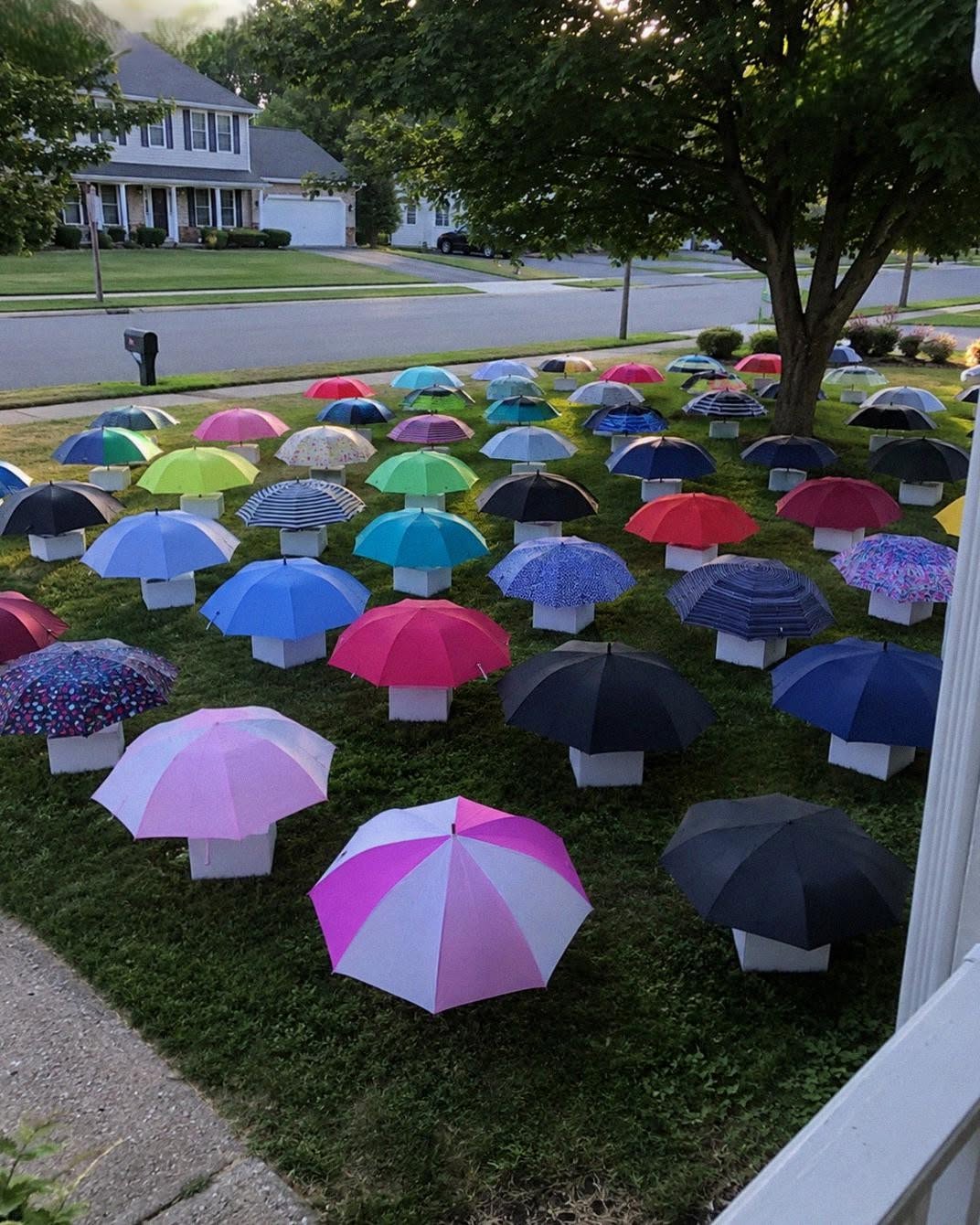
The ceramic mug slipped from my hands and shattered across the floor the moment I opened the front door. The sharp sting in my ankle barely registered. My attention was fixed on the sight unfolding outside. The lawn was covered with umbrellas—dozens of them, all open despite the clear sky. Bright colors stretched across the grass in every direction. I counted them twice before believing it: forty-seven umbrellas standing quietly in front of our house.
Only a few days earlier, my twelve-year-old son had returned home drenched from the rain. He was cold, miserable, and carrying a loss that seemed much larger than a misplaced object. The blue umbrella he had taken with him that morning was gone. To anyone else, it might have been just an umbrella. To us, it was different. It had been the last gift his father, Darren, had ever given him. Losing it felt like losing another piece of someone we already missed every day.
When Eli explained what had happened, I struggled to know how to react. He had given the umbrella to a woman standing at a bus stop in the middle of a storm. She had no protection from the rain, and without hesitation he handed over the only thing keeping him dry. I wanted to be proud of his kindness, but part of me couldn’t ignore the ache that came with knowing that particular umbrella was gone.
The woman, whose name was Jenelle, never forgot what happened. Moved by the generosity of a young boy willing to sacrifice something so meaningful, she shared the story online in hopes of finding him and thanking him. What began as a simple message quickly spread far beyond what anyone expected. Strangers were touched by the story, and before long, people from different places began reaching out with their own gestures of appreciation.
That unexpected wave of kindness arrived on our lawn in the form of forty-seven umbrellas and forty-seven small packages. Each one carried something different—a handwritten note, a gift card, a message of encouragement, or an apology from someone who wished they could have done more for others in their own lives. It was overwhelming, heartfelt, and far more attention than our family had ever sought.
At first, we hesitated. We did not want our grief turned into a public spectacle, nor did we want Eli to feel responsible for carrying everyone else’s emotions. So we took our time. We set limits. We decided carefully what to accept and what to redirect toward something more meaningful.
Eventually, an idea emerged. Together with Eli, Jenelle, and Mr. Collins, the local bus driver who knew many of the people who waited at that stop each day, we created something called the Route 47 Rain Rack. It was a simple blue stand placed near the bus stop, stocked with umbrellas, rain ponchos, gloves, and bus passes for anyone caught unprepared during bad weather. What had begun as one act of generosity became a resource for countless others.
Among all the umbrellas that arrived, one mattered more than the rest. Darren’s original blue umbrella eventually found its way back to us. We kept it. It remained a personal reminder of the man we loved and the memories we refused to let fade. A different blue umbrella now hangs on the Rain Rack, ready for the next person who needs it.
Over time, I realized something important. The true legacy Darren left behind was never contained in a piece of fabric stretched over metal ribs. His greatest gift lived in our son—the compassion, empathy, and willingness to help others even when it came at a personal cost. Every time Eli chooses kindness, a part of his father lives on.
The umbrella may have started the story, but it was never really about the umbrella. It was about the quiet power of generosity and the way one small act can ripple through countless lives. Sometimes the things we fear losing forever return to us in a different form, carrying lessons we never expected to learn.