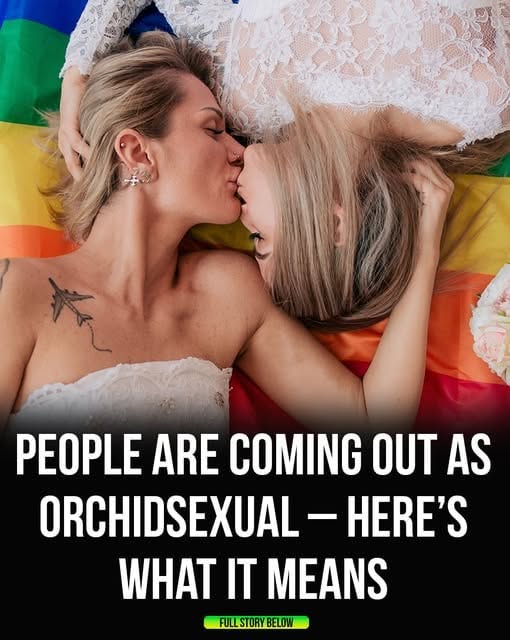
The language people use to describe sexuality and identity continues to evolve, and each new term tends to spark both curiosity and controversy. One of the latest labels attracting attention is orchidsexual, a microlabel that exists within the broader asexual spectrum. Its growing visibility has prompted many people to rethink long-held assumptions about attraction, desire, intimacy, and what it truly means to be sexually interested in someone. For some individuals, discovering this term feels profoundly validating, finally providing language for experiences they struggled to explain for years. For others, it represents yet another addition to an already expanding vocabulary surrounding identity and human sexuality. Regardless of where people stand, the conversations surrounding orchidsexuality reveal just how complex and diverse human experiences can be.
At its core, orchidsexual describes a person who experiences sexual attraction but does not feel a genuine desire to act on that attraction or pursue sexual relationships. In other words, an orchidsexual individual may recognize someone as sexually attractive or appealing, yet have little or no interest in engaging in sexual activity with that person. They may appreciate attractiveness in much the same way someone admires a beautiful painting, an impressive landscape, or a captivating piece of music without feeling compelled to possess or interact with it in a physical way.
Supporters of the label emphasize an important distinction between orchidsexuality and celibacy. Celibacy generally involves making a conscious decision not to engage in sexual activity despite potentially experiencing a desire for it. Orchidsexuality, by contrast, is described as an inherent orientation or pattern of attraction. It is not necessarily a choice, a religious commitment, a reaction to trauma, or a temporary lifestyle decision. Rather, those who identify with the label often describe it as the most accurate way to explain how attraction and desire function differently within their own lives.
The emergence of terms like orchidsexual has generated considerable debate. Critics sometimes argue that such labels create unnecessary complexity or divide human experiences into increasingly specific categories. They believe attraction and desire exist on broad spectrums that do not always require highly detailed definitions. Others feel that an ever-growing list of identity labels can become confusing, especially for people unfamiliar with modern discussions surrounding sexuality.
However, supporters view these labels very differently. For many, having a specific term can be incredibly empowering. Language allows people to communicate experiences that might otherwise feel isolating or misunderstood. Someone who has spent years wondering why they experience attraction differently from friends, partners, or family members may find enormous comfort in discovering that others share similar feelings. The existence of a label can transform confusion into understanding and loneliness into community.
Within online communities and discussions about asexual-spectrum identities, various metaphors are often used to explain orchidsexual experiences. One popular comparison describes attraction as noticing a beautifully scented candle. You can appreciate its appearance, admire its scent, and recognize its appeal without having any desire to consume it or interact with it in a different way. While no metaphor perfectly captures every individual experience, these comparisons help many people communicate feelings that are often difficult to describe.
The discussion surrounding orchidsexuality also highlights a broader truth about human sexuality itself. Attraction, desire, romance, intimacy, and relationships do not always align in predictable ways. Some people experience strong sexual attraction but little romantic interest. Others experience romantic attraction without sexual desire. Some experience both intensely, while others experience neither. Human experiences rarely fit into simple categories, which is why conversations about identity continue to evolve.
Ultimately, whether someone chooses to identify as orchidsexual or has never heard the term at all, its existence reflects an ongoing effort to better understand the vast range of human experiences. For those who connect with the label, it offers recognition, validation, and a sense of belonging. For those who do not, it serves as a reminder that people experience attraction and relationships in remarkably different ways. The growing conversation is less about creating endless labels and more about acknowledging a simple reality: human sexuality is deeply personal, highly diverse, and far more complex than any single definition can fully capture.