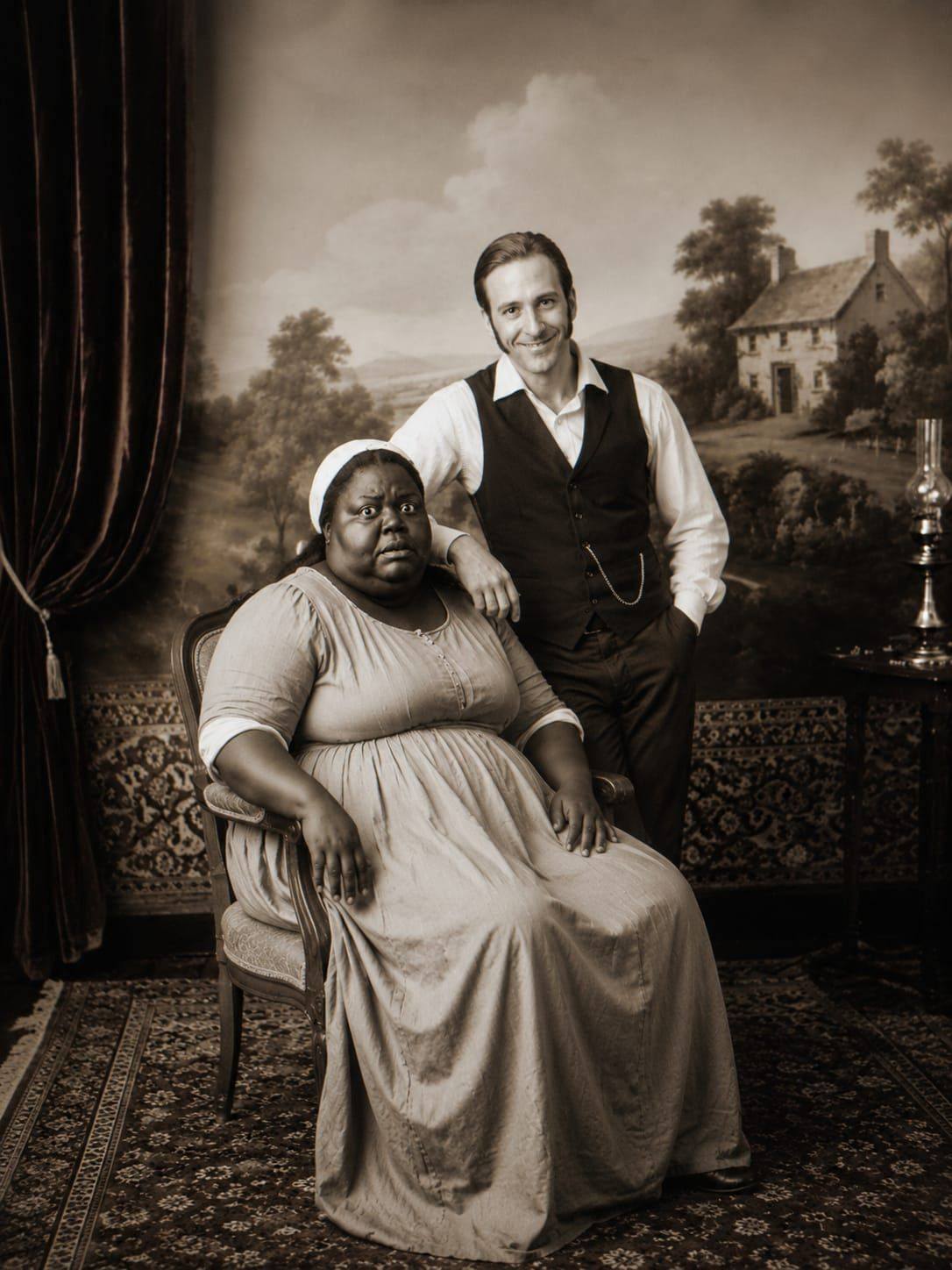
They paraded her before the crowd as if she were a problem no one wanted to solve. Beneath the harsh sun of 1857 Vassouras, surrounded by buyers, traders, and spectators who viewed human lives through the cold lens of profit, Benedita stood waiting for strangers to determine her fate. To those gathered around the auction block, she was not treated as a woman with fears, memories, dreams, or dignity. She was reduced to a number, a price, an asset to be evaluated and exchanged. Yet even within a system built on cruelty, Benedita seemed to occupy an especially difficult position. Her unusual height, powerful build, and commanding presence made people uneasy. Instead of increasing her value in the eyes of potential buyers, those qualities often inspired suspicion and fear.
The atmosphere around her carried a particular kind of humiliation. People stared. They whispered. Some laughed openly. Others exchanged skeptical glances as if discussing livestock rather than a human being. Every comment reinforced the same cruel message: she was different, and in a society obsessed with control, different was dangerous. The crowd did not see resilience in her strength. They did not see survival in her posture. They saw only what frightened them—a woman who did not fit neatly into the expectations imposed upon her.
For Benedita, rejection was nothing new. Long before that auction day, her life had been shaped by forces beyond her control. Like countless enslaved people throughout Brazil, she lived under a system designed to strip away identity, autonomy, and hope. Yet standing before the crowd that day introduced another layer of pain. Even within a marketplace built on human exploitation, she was being singled out as undesirable. One by one, potential buyers hesitated. Conversations ended in dismissive gestures. Interested faces turned away. Each rejection seemed to confirm what others were already saying—that she was more trouble than she was worth.
The whispers spread quickly.
Too strong.
Too stubborn.
Too intimidating.
Too difficult to control.
The words varied, but the conclusion remained the same.
Many buyers saw risk where they should have seen humanity.
As the bidding continued, something unusual happened. Instead of climbing higher, the price began to collapse. The lack of enthusiasm from potential buyers created an uncomfortable silence. Those gathered expected competition, negotiation, and escalating offers. Instead, they watched as interest evaporated. The lower the price fell, the heavier the atmosphere became. It was not merely a financial judgment. To Benedita, it must have felt like a public declaration that she was unwanted.
The silence that followed carried its own cruelty.
No laughter.
No bids.
No excitement.
Only the uncomfortable realization that even within a system that treated people as property, she was being rejected.
For many in the crowd, the moment likely seemed insignificant. Just another transaction moving toward an unremarkable conclusion. But for Benedita, it represented a crossroads. Human lives under slavery were often redirected by decisions made in moments like these. A single sale could determine where someone lived, how they worked, and what hardships awaited them. As the auction slowed and uncertainty filled the air, her future hung in the balance.
Then came a voice.
Not loud.
Not dramatic.
Not accompanied by applause or attention.
Just a quiet bid from a man named Joaquim Lacerda.
In an instant, the silence broke.
The offer itself may not have seemed remarkable to those watching, but its consequences would prove significant. While others saw a burden, Lacerda appeared to see something different. He did not view Benedita solely through the fears and assumptions circulating through the crowd. He recognized strength where others saw threat. He recognized potential where others saw inconvenience. Whether motivated by practicality, intuition, or something more complex, his decision interrupted what had seemed like an inevitable outcome.
That moment did not transform slavery into something humane. It did not erase the violence, injustice, or degradation embedded within the system. No purchase, regardless of intent, could undo the reality that a human being’s fate was being bought and sold. The cruelty of the institution remained unchanged. Yet within that reality, individual decisions still had the power to alter lives.
For Benedita, Lacerda’s bid became one of those decisions.
The significance of his choice extended beyond the transaction itself. In a world determined to define her according to fear and prejudice, someone had chosen to see beyond those labels. While others focused on what made her different, he appeared willing to consider what those differences might mean. Her strength, height, and commanding presence no longer existed solely as reasons for rejection. They became qualities capable of carrying a different meaning.
History is often shaped by grand events—wars, revolutions, political movements, and sweeping social changes. Yet individual lives are frequently altered by far smaller moments. A conversation. A decision. A gesture. A choice made by one person when everyone else remains silent. For Benedita, that auction represented such a moment. The forces surrounding her were enormous and oppressive, but the direction of her life shifted because someone made a different choice than the crowd expected.
What makes her story resonate is not the suggestion that kindness existed within slavery. The institution itself was fundamentally brutal and dehumanizing. Rather, the story highlights the resilience of human dignity even in environments designed to destroy it. Despite rejection, humiliation, and objectification, Benedita remained a person whose life carried meaning beyond the labels imposed upon her.
The crowd saw a problem.
The whispers saw a threat.
The system saw property.
Yet somewhere beneath those distortions stood a woman whose value could never truly be measured by bids or coins.
Joaquim Lacerda’s choice did not free her from oppression. It did not undo the suffering she had already endured. But it altered the course ahead, proving that even within history’s darkest systems, people are often far more than the roles society assigns to them.
And perhaps that is the lasting power of Benedita’s story. Not that cruelty existed—that part is sadly familiar. It is that a woman dismissed by nearly everyone around her refused, simply by continuing to exist, to become what others expected. The crowd believed they were witnessing the end of a story about rejection and worthlessness. In reality, they were standing at the beginning of a chapter they could not yet imagine.
Sometimes history changes not when the world suddenly becomes just, but when someone chooses to see a human being where everyone else sees only a label. And sometimes that single act of recognition is enough to begin rewriting what a life is allowed to become.