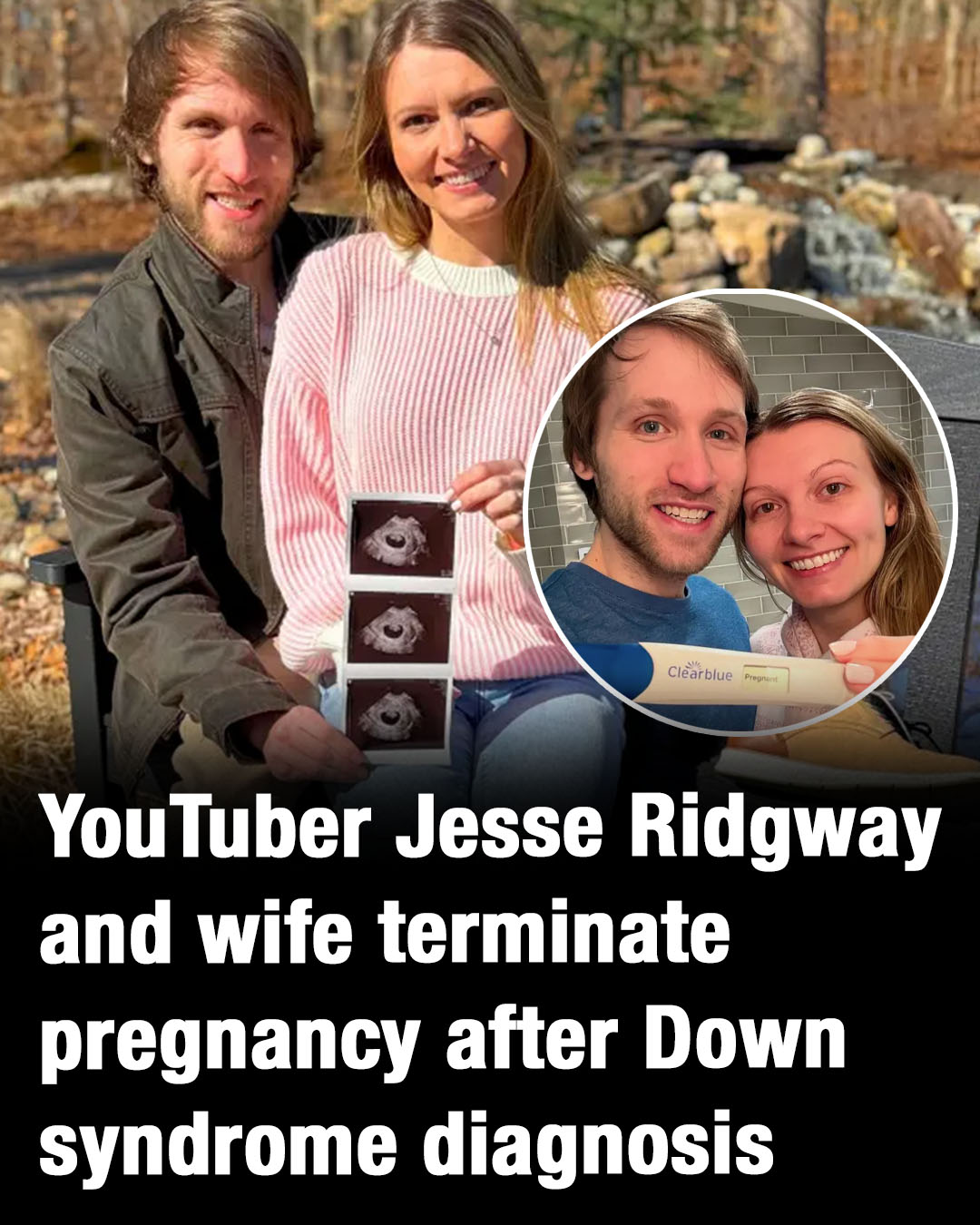
The excitement of becoming parents can transform every ordinary day into something extraordinary. Future plans suddenly feel real. Empty rooms become nurseries. Conversations shift from dreams to names, milestones, and possibilities. For content creator Jesse Ridgway and his wife Ashley, that excitement was something they openly shared with millions of followers who watched their journey unfold online. Their anticipation was visible in every update, every conversation about the future, and every glimpse into the life they hoped to build together.
Then everything changed.
A medical result arrived carrying information neither parent expected to hear. What had been months of celebration and optimism quickly became a period of uncertainty, fear, and impossible decisions. According to Jesse’s public account, doctors informed them that their unborn baby had a very high likelihood of having Trisomy 21, more commonly known as Down syndrome. The news immediately forced them into conversations they never imagined having and decisions they never expected to face.
What followed was not a single moment of clarity, but a prolonged period of emotional struggle. Medical consultations, research, discussions, and sleepless nights replaced the excitement that had previously defined the pregnancy. Like many parents confronted with difficult prenatal diagnoses, Jesse and Ashley found themselves trying to understand not only a medical condition but also what life might realistically look like for their child, their family, and their future.
They reportedly examined medical information about Down syndrome, including the wide range of outcomes associated with the condition. Some individuals with Down syndrome live relatively independent lives, build meaningful relationships, and participate actively in their communities. Others face significant health complications, developmental challenges, and lifelong support needs. The uncertainty itself became part of the burden. No chart, test result, or expert opinion could fully predict the future of a specific child.
As they searched for answers, they also encountered deeply personal stories from families raising children with Down syndrome. Some described immense joy, resilience, and love. Others spoke candidly about medical procedures, financial strain, emotional exhaustion, and ongoing caregiving responsibilities. Rather than providing a simple answer, these stories highlighted the complexity of the decision they faced.
Ultimately, Jesse and Ashley chose to terminate the pregnancy.
The decision immediately became a source of intense public debate after Jesse shared details of their experience. Supporters expressed sympathy for a couple navigating what they viewed as an extraordinarily difficult situation. Critics questioned the decision, arguing that a diagnosis should not determine whether a life is given a chance. Predictably, social media became a battleground of opinions, emotions, and moral arguments.
Lost within much of that debate was the reality that the decision itself was not described as a relief or an easy solution. Jesse spoke openly about grief, guilt, and trauma, referring to the experience as one of the most painful events of their lives. His statements suggested that the choice did not eliminate suffering but instead created a different kind of suffering—one they continue to carry.
One aspect of his account that drew significant attention was his admission that his initial reaction had been to find a way forward regardless of the diagnosis. According to Jesse, he believed they could simply adapt and handle whatever challenges came their way. However, as he learned more about the potential medical complications and long-term realities some families face, his perspective became more conflicted. The decision eventually emerged from that conflict rather than certainty.
His comments also highlighted a broader issue surrounding reproductive decisions and prenatal diagnoses. Few subjects generate stronger emotions or deeper disagreements. For some people, the decision centers on quality of life, caregiving realities, and medical considerations. For others, it raises profound ethical, religious, and philosophical questions. The result is a discussion where deeply held values often collide, making consensus nearly impossible.
Throughout his public statements, Jesse repeatedly emphasized that people often judge situations they have never personally experienced. He argued that many observers see only the outcome while remaining unaware of the months of fear, confusion, and emotional turmoil leading up to it. Whether people agree with his decision or not, his comments reflected the reality that life-changing choices are often far more complicated than they appear from the outside.
Perhaps the most emotional part of his message came when addressing people living with Down syndrome and autism, as well as their families. He made clear that his decision was not intended as a statement about the worth or value of those individuals. On the contrary, he expressed admiration for families navigating extraordinary challenges and acknowledged the love, dedication, and resilience often required in those circumstances. His remarks revealed a man attempting to reconcile grief, compassion, and personal conviction all at once.
That tension remains at the heart of the story. It is not simply a debate about medicine or personal choice. It is a story about expectations shattered by reality, about parents forced to make decisions under circumstances they never wanted, and about the lasting emotional consequences that can follow regardless of the path chosen.
Even now, as public arguments continue across comment sections and social media platforms, the most important part of the story may be the one that rarely generates headlines: grief. Not political grief. Not ideological grief. Human grief. The grief of parents mourning a future they once imagined and a child they never had the opportunity to know.
The internet may continue debating whether the decision was right or wrong. People will continue bringing their own beliefs, experiences, and values into the conversation. Yet behind every opinion remains a reality that is much harder to discuss. Two people who spent months preparing to welcome a child are now living with the aftermath of a choice they describe as deeply painful, deeply personal, and impossible to forget.
For Jesse and Ashley, the controversy may eventually fade. The headlines will move on. Public attention will shift elsewhere. But the emotional weight of the decision—and the questions that accompanied it—are likely to remain part of their story for a very long time.