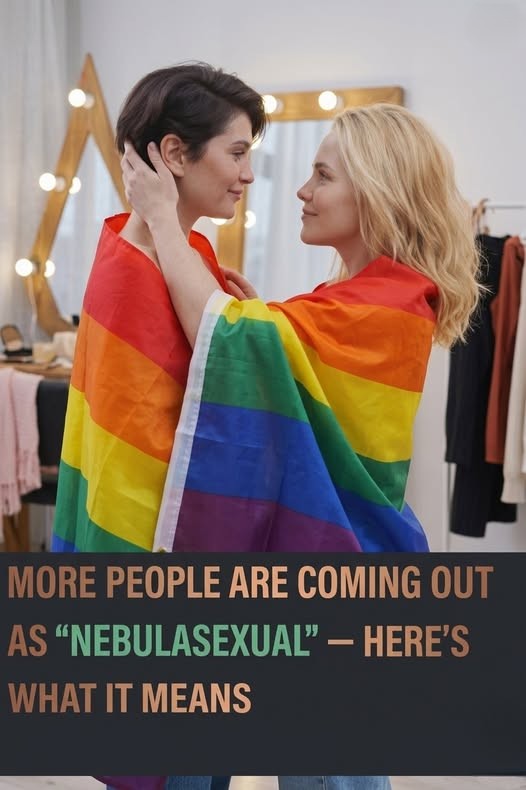
As society’s understanding of identity, attraction, and human relationships continues to expand, new terms are emerging to describe experiences that many people feel have never been fully captured by traditional labels. One concept that has recently attracted increasing attention online is **nebulasexuality**, a term often discussed within neurodivergent communities and spaces dedicated to conversations about attraction, identity, and self-understanding. For those who identify with it, the term provides language for experiences that can feel difficult to explain using more familiar categories.
### Understanding the Term
The word *nebulasexual* is derived from the concept of a nebula—a vast cloud of gas and dust in space whose boundaries are difficult to define clearly. Supporters of the term use this imagery to describe a similar uncertainty surrounding attraction.
Within some online communities, nebulasexuality is considered part of the broader quoisexual spectrum, which includes people who find it difficult to distinguish, define, or categorize their experiences of attraction. Rather than fitting neatly into commonly recognized labels, some individuals describe their feelings as complex, blurred, or impossible to separate into distinct categories.
### The Connection to Neurodivergence
A significant aspect of discussions surrounding nebulasexuality involves neurodivergence.
Many individuals who identify with the label also identify as neurodivergent, including people with conditions such as ADHD, autism spectrum disorder, or OCD. According to those who use the term, neurological differences can influence how attraction, emotions, and personal connections are experienced and interpreted.
Some describe difficulty distinguishing between romantic attraction, sexual attraction, aesthetic appreciation, emotional attachment, or even intrusive thoughts. As a result, experiences that might seem straightforward to others can feel far more complex and difficult to define.
### Beyond Traditional Categories
One of the key ideas behind nebulasexuality is that attraction does not always fit into conventional frameworks.
People who identify with the term often explain that they may desire close emotional relationships and meaningful connections while remaining uncertain about how sexual attraction fits into those experiences. Others report strong feelings toward individuals but struggle to categorize those feelings using traditional labels.
Importantly, advocates emphasize that nebulasexuality is not simply a temporary phase of questioning or confusion. Instead, they describe it as an ongoing way of experiencing attraction that remains difficult to define clearly over time.
### Why Labels Matter to Some People
For many individuals, having language to describe their experiences can be deeply validating.
People who identify as nebulasexual often explain that discovering the term helped them understand feelings they had struggled to explain for years. Rather than feeling pressured to fit into categories that never seemed entirely accurate, they found a label that better reflected their lived experiences.
Supporters argue that terminology can provide more than just a definition. It can create community, reduce feelings of isolation, and help people communicate their experiences more effectively to friends, family members, and romantic partners.
### Ongoing Debate
Like many newer identity terms, nebulasexuality has also generated debate.
Some critics question whether increasingly specific labels are necessary or helpful. They argue that uncertainty about attraction is a common human experience and that creating additional categories may complicate discussions surrounding identity.
Others view the emergence of such terminology as part of a broader evolution in how society understands human psychology and personal identity. They believe that providing language for diverse experiences helps people better understand themselves and connect with others who share similar perspectives.
### Attraction and Human Diversity
Regardless of where someone stands in the debate, the discussion surrounding nebulasexuality reflects a larger cultural shift.
People are increasingly recognizing that attraction, relationships, and identity can be experienced differently from person to person. What feels clear and easily defined for one individual may feel much more complex for another.
For those who identify with the term, nebulasexuality is not about creating unnecessary complexity. Rather, it is about finding language that accurately describes their reality and helps them navigate relationships in a way that feels authentic and understood.
### Looking Ahead
As conversations about neurodiversity, sexuality, and identity continue to evolve, terms like nebulasexuality will likely remain part of broader discussions about how people understand themselves and their relationships with others.
Whether widely adopted or not, the concept highlights an important truth: human experiences of attraction and connection are often more varied and nuanced than traditional categories suggest.
For many people, having the freedom to describe those experiences in their own words is not about redefining everyone else’s reality—it is about finding a way to express their own. And as society continues exploring the diversity of human experience, those conversations are likely to become even more detailed and inclusive in the years ahead.