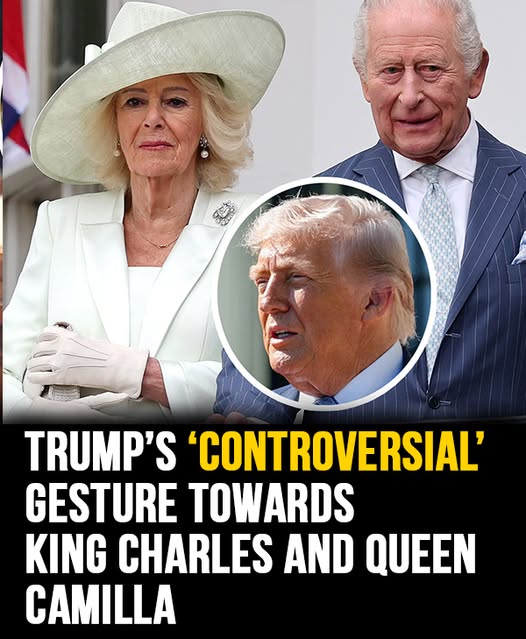
Recent appearances involving Donald Trump, Melania Trump, King Charles III, and Queen Camilla have generated widespread discussion, not because of what was said, but because of what many observers noticed in the interactions themselves. While official photographs and public statements presented the meetings as cordial and friendly, a series of highly visible moments sparked debate among royal watchers, political commentators, and etiquette enthusiasts regarding diplomatic protocol and appropriate conduct.
### A Visit Shaped by Larger Tensions
The significance of the meeting extended beyond ceremonial appearances. At a time when relations between the United States and the United Kingdom have faced challenges over foreign policy disagreements and international conflicts, every public gesture carried additional weight. Recent disagreements regarding military strategy and international diplomacy had already created visible tension between leaders on both sides of the Atlantic.
Against that backdrop, the visit by King Charles and Queen Camilla represented more than a routine diplomatic engagement. State visits often serve as opportunities to reinforce alliances, reduce friction, and highlight shared interests between nations. Symbolism, presentation, and public messaging are carefully considered because even small moments can shape public perceptions.
### King Charles Emphasizes Shared History
During his remarks, King Charles focused heavily on the historical relationship connecting the two countries. He highlighted centuries of shared history, democratic traditions, and cultural ties that continue to influence the partnership between Britain and the United States.
His speech emphasized mutual respect and friendship, drawing attention to the long-standing relationship that has endured through wars, political changes, and shifting global circumstances. By focusing on common values and historical connections, the King sought to reinforce a message of unity during a period when geopolitical challenges have tested international relationships.
### The Etiquette Question
Despite the positive messaging surrounding the visit, public attention quickly shifted toward a separate issue: physical interaction between Trump and members of the Royal Family.
While there is no strict requirement that guests bow or curtsy when meeting British royals, longstanding royal customs generally discourage unnecessary physical contact. Traditional etiquette suggests that physical interaction should be limited and typically initiated by the royal family member rather than by a visitor or dignitary.
Photographs from the event became the center of the controversy.
Several widely circulated images appeared to show Trump placing a hand on King Charles’s back during one moment of the visit. Other photographs showed him touching the King’s knee while engaged in conversation and placing a hand on Queen Camilla’s arm during another interaction.
Although brief and seemingly friendly, these gestures immediately became subjects of discussion across television programs, newspapers, and social media platforms.
### Public Opinion Splits
As often happens with highly visible public figures, reactions varied dramatically.
Critics argued that the physical contact demonstrated a disregard for traditional royal protocol. Some viewed the gestures as inappropriate, claiming they crossed boundaries that have historically been respected during interactions with monarchs. Others suggested that such actions reflected a broader tendency to disregard established conventions and ceremonial traditions.
Supporters saw the situation differently.
Many interpreted the interactions as signs of warmth, friendliness, and genuine comfort between leaders. They argued that modern diplomacy does not always require strict adherence to centuries-old customs and that a relaxed atmosphere can sometimes strengthen personal connections between world figures.
For these observers, the photographs reflected familiarity and goodwill rather than disrespect. They viewed the meeting as a positive demonstration of cooperation and mutual respect between allies.
### Tradition Versus Modern Expectations
The debate highlights a larger conversation about how traditional protocol fits into contemporary diplomacy.
Royal etiquette is rooted in centuries of history and symbolism. Many of its customs were developed during eras when monarchs occupied a very different role within society. As a result, some people continue to see strict observance of these traditions as an important sign of respect.
Others believe that modern international relationships benefit from a less formal approach. In a world where leaders often prioritize accessibility and personal connection, rigid ceremonial rules can sometimes feel outdated or less relevant.
Neither perspective has fully replaced the other.
Instead, public opinion remains divided whenever high-profile figures interact with institutions that continue to value tradition.
### More Than a Question of Protocol
Ultimately, the discussion surrounding the visit reveals something larger than whether a particular gesture was appropriate.
For some observers, respect is demonstrated through careful adherence to tradition.
For others, respect is shown through friendliness, openness, and personal warmth.
The differing interpretations explain why the same photographs generated such dramatically different reactions.
As international diplomacy continues evolving, moments like these serve as reminders that public perception is often shaped not only by official statements but also by the smallest details of human interaction.
Whether viewed as a breach of protocol or a harmless display of friendliness, the debate illustrates how deeply symbolism continues to influence politics, diplomacy, and public opinion in the modern world.