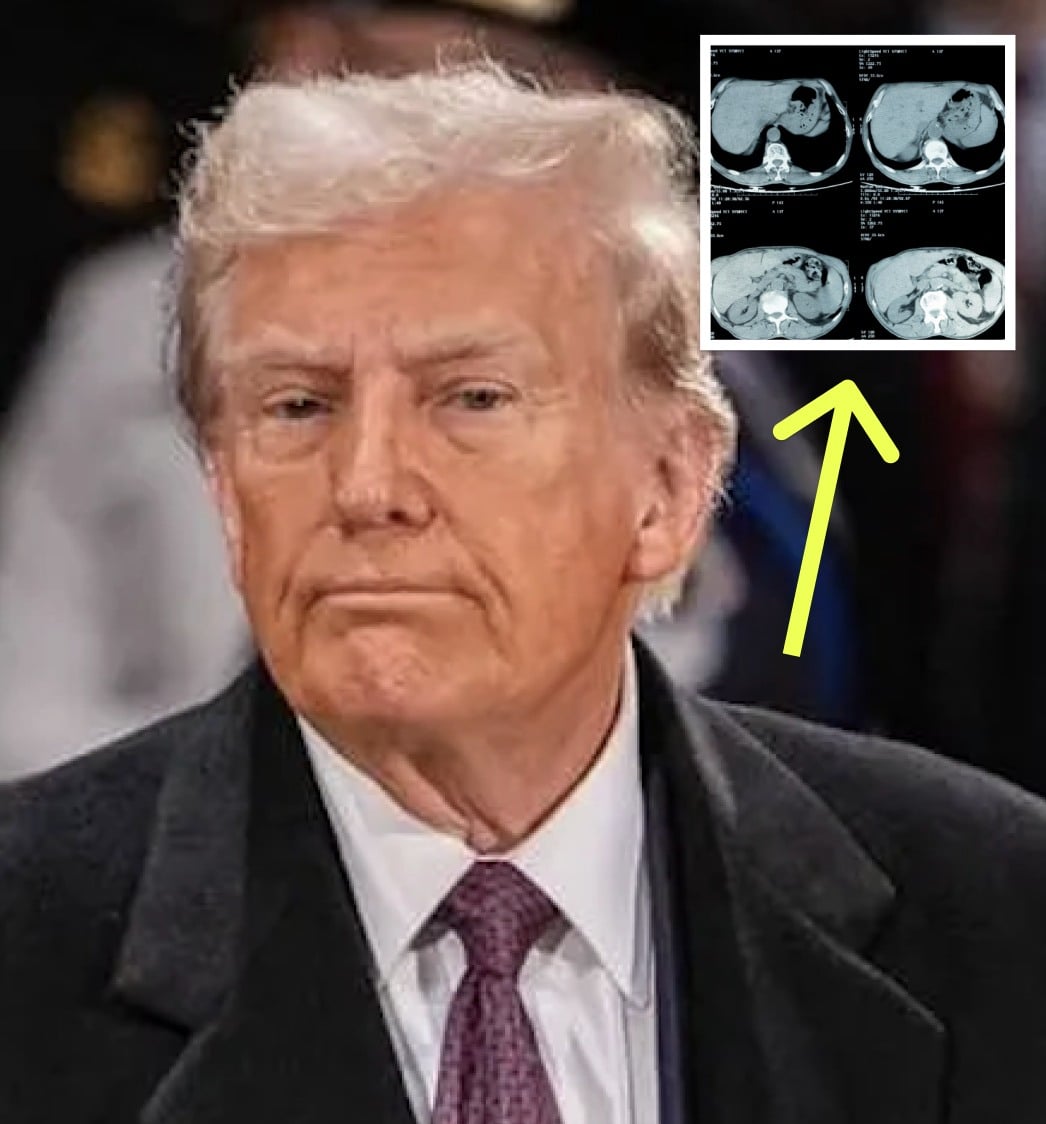
Questions continue to swirl around Donald Trump’s recent hospital visit, and much of the attention stems not from what was said, but from what remains unclear.
What should have been a straightforward discussion about a routine medical appointment quickly evolved into a topic of public fascination after Trump described the results of an MRI using a series of glowing superlatives while offering few concrete details about the procedure itself.
During a conversation aboard Air Force One, reporters asked why advanced imaging had been performed if the visit was simply part of a standard physical examination. Rather than explaining the specific purpose of the scan, Trump repeatedly praised the outcome, describing the results as exceptional and emphasizing how positively doctors had reacted.
His answers, however, left many questions unanswered.
When pressed for details, he spoke enthusiastically about the quality of the results but did not clearly explain what area of the body had been examined or why the imaging had been considered necessary in the first place.
That ambiguity immediately became the story.
For supporters, the remarks reinforced a familiar message: that Trump remains healthy, energetic, and capable of handling the demands of public office. They viewed the comments as confirmation that the examination revealed no significant concerns.
Critics saw something different.
To them, the lack of specific information only intensified curiosity about what had actually occurred during the medical visit. The more vague the explanations became, the more attention focused on the unanswered questions.
The White House has maintained that there is no underlying health issue and has characterized the appointment as part of a broader wellness evaluation conducted in preparation for a demanding schedule that includes extensive travel and public appearances.
Officials insist there is no cause for concern.
Yet the absence of a detailed medical report has fueled continued speculation.
Unlike some presidential health disclosures that include extensive summaries from physicians, this visit produced limited publicly available information. No detailed imaging report was released, and no comprehensive explanation accompanied the discussion surrounding the MRI.
As a result, public debate has expanded beyond the examination itself.
Health transparency has long been a politically sensitive issue, particularly for presidents and presidential candidates. Questions regarding age, stamina, cognitive ability, and overall fitness frequently become central topics during election cycles, regardless of political affiliation.
Trump’s situation is no exception.
Because he remains one of the most recognizable and closely scrutinized political figures in the world, even routine medical appointments attract extraordinary attention. Every statement is analyzed, every omission becomes a topic of discussion, and every unanswered question generates additional speculation.
Social media quickly amplified the controversy.
Commentators, comedians, political opponents, and online users across multiple countries seized on the unusual exchange. Memes circulated widely. Jokes spread rapidly. Discussions emerged about transparency, privacy, and whether public officials have an obligation to disclose more detailed information about their health.
At the same time, supporters argued that medical privacy should still apply and that a favorable evaluation should be sufficient unless evidence suggests otherwise.
The broader debate reflects a larger tension that often emerges during election years.
How much medical information does the public deserve to know?
Where is the line between personal privacy and public accountability?
And how much uncertainty are voters willing to accept when evaluating a candidate’s fitness for office?
Those questions remain unresolved.
For now, the central issue is not necessarily the MRI itself but the uncertainty surrounding it. The examination may have been entirely routine. The results may indeed have been excellent. Yet because specific details remain limited, speculation continues to fill the gaps.
In politics, unanswered questions often attract more attention than clear answers.
And until additional information is provided—or the conversation fades from public focus—the mystery surrounding Trump’s hospital visit is likely to remain a subject of debate.
For many observers, the issue comes down to a simple reality: when leaders ask the public to trust reassuring conclusions without providing complete explanations, curiosity naturally grows.
Whether that curiosity eventually produces answers remains to be seen.