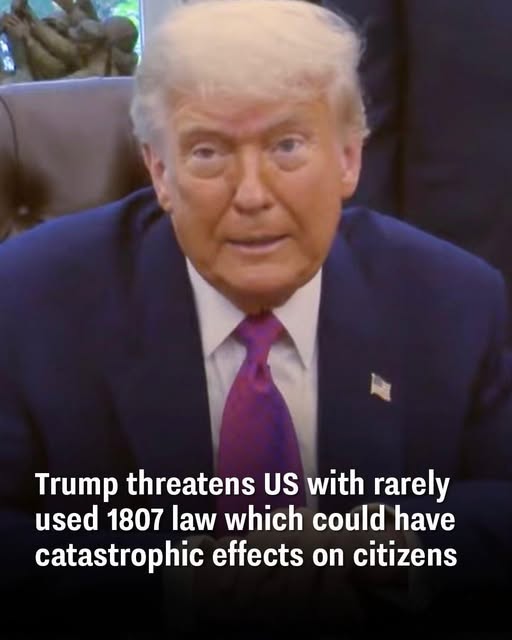
The sound of sirens echoed across Los Angeles long before most residents understood the scale of what was unfolding. What began as a series of immigration enforcement operations quickly escalated into a city gripped by tension, anger, and uncertainty. Demonstrators flooded major streets, traffic ground to a halt, storefront windows were shattered, and entire neighborhoods found themselves under an intense law-enforcement presence.
Then came an even more dramatic development.
National Guard vehicles appeared throughout the city.
Soon afterward, Marines were assigned to supporting roles, transforming what had started as a local response into a national political flashpoint. Almost overnight, Los Angeles became the center of a fierce debate about authority, civil liberties, and the limits of federal power.
The initial immigration operations focused largely on Latino communities, triggering fear and frustration among many residents who viewed the raids as more than routine enforcement actions. What followed was not simply a reaction to immigration policy. For many protesters, it became a broader confrontation over identity, belonging, and whether certain communities were being unfairly targeted.
Crowds gathered in increasing numbers, demanding accountability and transparency. Demonstrators questioned not only the raids themselves but also the larger issues they believed those raids represented. As protests expanded, tensions between local leaders and federal authorities intensified.
The situation escalated further when federal forces increased their presence in the city.
Guard units appeared first.
Then came the announcement that Marines would assist in limited support capacities.
Although officials emphasized that military personnel would not take on traditional policing roles, the move immediately sparked controversy. Images of military vehicles and uniformed troops operating near civilian demonstrations fueled concerns about the growing role of federal force in domestic affairs.
At the center of the dispute stood two of the country’s most prominent political figures.
California Governor Gavin Newsom and President Donald Trump engaged in a highly visible confrontation over who possessed the authority to direct the response. Their disagreement played out publicly through press conferences, interviews, and official statements, turning Los Angeles into the focal point of a nationwide debate about federal and state power.
For supporters of the administration, the deployment represented a necessary effort to restore order and protect public safety amid escalating unrest. They argued that the destruction of property, disruptions to daily life, and threats to public security required a strong response.
Critics saw something very different.
They viewed the growing military presence as an alarming expansion of federal authority into civilian affairs. To them, the deployment raised serious questions about democratic norms, constitutional limits, and the potential consequences of using military resources in response to public demonstrations.
Away from television cameras and protest lines, legal experts and constitutional scholars began examining every aspect of the government’s actions.
Much of the discussion centered on longstanding laws governing military involvement in domestic matters.
Attention quickly turned to the Posse Comitatus Act, a law designed to restrict the use of federal military forces in civilian law enforcement. Analysts also debated the circumstances under which the Insurrection Act could be invoked, a powerful and historically controversial tool that grants presidents broader authority during periods of significant unrest.
These legal questions soon became just as important as the events unfolding on the streets.
Supporters argued that extraordinary circumstances sometimes require extraordinary measures.
Opponents warned that normalizing military involvement in civilian situations could create precedents with far-reaching consequences.
As demonstrations continued, Los Angeles evolved into more than a city experiencing unrest.
It became a national case study.
The events unfolding there forced Americans to confront difficult questions about public safety, civil rights, immigration policy, and the balance of power between state governments and Washington.
Can a government maintain order without undermining constitutional freedoms?
How much authority should federal officials possess during periods of unrest?
Where is the line between protecting communities and overreaching into civilian life?
Those questions remain unresolved.
Meanwhile, residents continue living amid ongoing demonstrations, political conflict, and intense public scrutiny. The images emerging from Los Angeles—protesters facing lines of security personnel, elected leaders exchanging accusations, and legal experts debating constitutional limits—have become symbols of a broader national struggle.
What began as immigration enforcement operations has grown into something much larger: a defining debate over power, accountability, and trust in democratic institutions.
As the situation develops, Los Angeles remains at the center of that debate, serving as a powerful reminder that conflicts over law, rights, and government authority rarely stay confined to a single city. The outcome may shape not only how future unrest is handled, but also how Americans understand the relationship between security, liberty, and the rule of law in the years ahead.