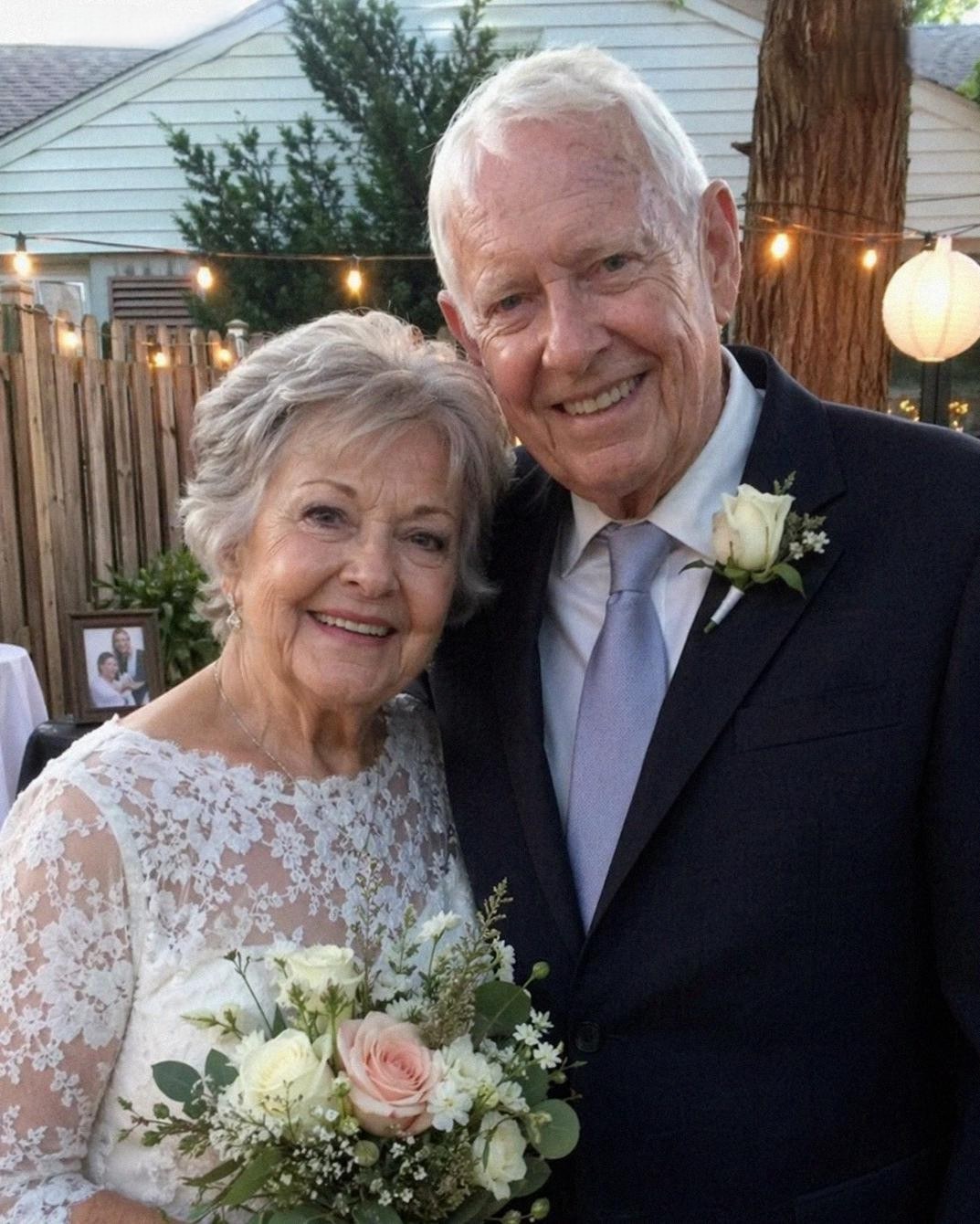
At seventy-two, I truly believed life had already surprised me enough. After losing my husband Daniel following thirty-five years of marriage, I thought the emotional part of my story was over. Grief settled into my life slowly and permanently, turning my home into a museum of memories. For years, I moved through empty rooms touching his old books, breathing in the fading scent of his cologne, and learning how to exist without the man who had shaped nearly my entire adulthood.
I never expected to fall in love again.
Then I met Arthur.
We first spoke at church. He was quiet, reserved, and carried sadness in a way I immediately recognized because I carried the same thing myself. Week after week, we started talking after services. Coffee turned into long walks, and long walks turned into hours of conversation about loss, loneliness, aging, and the strange emptiness that follows surviving the people you love most.
Arthur told me he had raised his daughter Linda alone after his wife died many years earlier. He spoke gently, thoughtfully, and with the kind of emotional understanding only deeply wounded people usually possess.
Over time, I trusted him completely.
A year later, he proposed.
At our age, the idea of finding companionship again felt miraculous, almost fragile. I said yes because I believed we were two broken people helping each other heal.
Still, there were moments that unsettled me.
Once, while we were eating at a restaurant, an older man approached Arthur excitedly and mentioned not having seen him in over twenty-five years. Arthur instantly became pale and uncomfortable. Instead of continuing the conversation, he abruptly paid the bill and rushed us out.
At the time, I ignored it.
I ignored many things because happiness felt too precious to risk with difficult questions.
Then I met Linda.
I expected warmth from the daughter of the man I planned to marry, but instead she watched Arthur constantly with strange tension in her eyes. She treated him less like a loving father and more like someone she was trying to understand—or expose.
On our wedding day, everything finally collapsed.
The ceremony itself was beautiful. The garden glowed with flowers and candlelight, and for the first time in years I genuinely felt joyful again. But throughout the reception, I kept noticing Linda staring at me from across the room.
Eventually, she quietly approached and asked me to follow her downstairs.
She led me into the basement of the house.
In one dark corner sat an old metal lockbox. Linda opened it with trembling hands and pulled out several old photographs and documents. One photo immediately caught my attention.
It showed two identical young men.
Twins.
One was clearly the Arthur I recognized. The other looked harder somehow—more restless, more dangerous.
Linda explained that her father, Arthur, had a twin brother named Michael. According to the family, Michael had spent years involved with criminal people and eventually disappeared from their lives completely.
Then Linda handed me another document.
A death certificate.
Arthur Vance.
Dead twenty years earlier.
I stared at the paper unable to breathe properly.
If Arthur died two decades ago, then who had I just married?
Linda finally explained the truth she had carried for years.
When she was eighteen, her father supposedly left on a business trip. But when he returned, something about him felt wrong. He forgot private family memories, developed different habits, and behaved like a completely different person wearing Arthur’s face.
Whenever she questioned him, he convinced her she was imagining things due to grief over her mother’s death.
For twenty years, she believed she might actually be losing her mind.
Until she discovered the lockbox.
I felt physically sick.
Every memory I shared with Arthur suddenly became contaminated by lies. Every conversation, every kiss, every promise now felt unreal.
I walked upstairs carrying the death certificate in shaking hands.
Arthur—no, Michael—was standing near the reception tables laughing with guests when he saw my face and immediately understood the truth had surfaced.
The color drained from him instantly.
I held up the death certificate and asked the only question that mattered.
“How did I just marry a dead man?”
The room went silent.
And then, finally, he stopped pretending.
He admitted everything.
He was Michael.
Twenty years earlier, the real Arthur had been dying from a severe heart condition. At the same time, Michael was running from debts and dangerous people. According to Michael, Arthur begged him to take his place after death so Linda wouldn’t lose both parents so close together.
So Michael became Arthur.
He assumed his brother’s identity, raised Linda under a lie, and spent two decades living inside another man’s life.
Linda confronted him through tears and anger, accusing him of stealing not just Arthur’s identity but her entire reality. She told him he allowed her to grieve a father who had technically been standing beside her the entire time.
Then Michael turned toward me.
And despite everything, he insisted his feelings for me had been real.
But in that moment, I realized something painful.
Love built on deception can never truly feel safe.
I looked at the man I thought I knew and finally understood that every comforting thing about him existed beside an enormous lie.
So I removed my wedding ring and placed it back into his hand.
“You didn’t just deceive me,” I told him quietly. “You asked me to build my life on a ghost.”
Then I walked away.
The aftermath became messy and public. Lawyers got involved. Authorities investigated the identity fraud and other secrets connected to Michael’s past. Our marriage was eventually annulled.
Today, life has become quiet again.
But now it’s an honest quiet.
Oddly enough, Linda and I became close after everything happened. We meet regularly for coffee, bonded by the same betrayal and the same complicated grief. Recently, she told me I was the only genuinely good thing that came from the entire situation.
And maybe she was right.
Because despite the heartbreak, I learned something important even this late in life:
Love alone is not enough.
Without truth, even the deepest affection eventually becomes another form of loneliness.
At seventy-two years old, I finally understand that honesty is not separate from love—it is the very thing that makes love real in the first place.