For twenty-three years, Ross lived the kind of life built on routine and hard work. Every morning he walked through the factory gates believing loyalty still meant something. But at fifty-five years old, that belief shattered the day he arrived to find the textile plant locked shut, chains wrapped around the entrance like a final goodbye. No warning. No appreciation. Just silence. After decades of dedication, the company moved on without him, leaving Ross standing in an empty parking lot wondering where men like him still belonged.
Ross was never loud or demanding. He was the kind of man who kept his head down, worked overtime without complaint, and believed honesty still mattered. But the world around him had changed, and suddenly there was no place left for people who thought effort alone guaranteed stability.
Eventually, he found another job—not glamorous, but enough to survive. He started working nights at a small gas station off Highway 52. The place sat alone beside the road like a forgotten checkpoint for travelers drifting through the darkness. Most customers barely looked at him. They paid for fuel, grabbed snacks, and disappeared back into the night. Compared to the busy energy of the factory, the station felt empty and quiet, filled only with flickering lights and the constant hum of refrigerators.
Still, Ross accepted it. A paycheck was a paycheck.
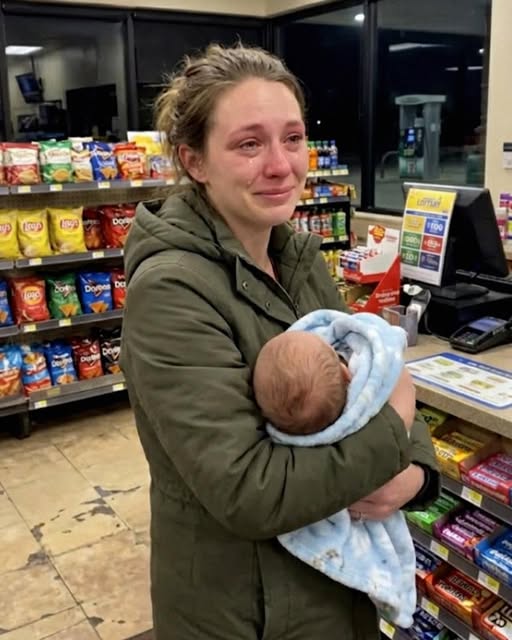
One cold night around two in the morning, the front bell rang and a woman walked inside carrying a sleeping toddler on her shoulder. Ross immediately noticed something unusual about her. She wasn’t just exhausted—she looked emotionally drained, like someone forcing herself to keep moving despite being completely overwhelmed inside.
She walked quickly through the aisles, ignoring everything unnecessary. No candy. No drinks. No extra purchases. She picked up only essentials: milk, bread, and diapers.
At the counter, Ross scanned the items while the woman dug through her purse counting wrinkled dollar bills and loose change. When the register displayed the total—$22.40—her expression changed instantly.
She recounted the money several times before quietly realizing she didn’t have enough.
She was four dollars short.
Embarrassed, she looked down and softly asked whether she should return the bread or the milk.
Ross glanced at the sleeping child resting against her shoulder and saw pure exhaustion written across the woman’s face. In that moment, she stopped looking like a customer to him. She looked like someone barely holding her life together.
Without making a scene, Ross pulled a five-dollar bill from his own wallet and slipped it into the register.
“You’re okay,” he told her calmly. “The register’s been acting strange all night. Looks like you got a discount.”
The woman froze for a second, clearly understanding what he had done. Tears filled her eyes, but she simply whispered thank you, gathered her bags, and walked back into the cold darkness outside.
Ross didn’t think much of it afterward. To him, it wasn’t some heroic act. He had simply helped somebody who needed help.
About a week later, while getting ready for work, Ross received a call from his manager saying someone had left an envelope for him at the station.
Inside was a handwritten letter and a check for five hundred dollars.
The letter came from the woman that night—Emily.
She explained that she hadn’t just been shopping for groceries. She had been escaping an abusive relationship. After secretly saving small amounts of money for months, she finally found the courage to leave with her child and drive across several states to reach her parents’ home.
By the time she arrived at Ross’s gas station, she was mentally and physically exhausted. Being four dollars short felt like proof that she couldn’t make it on her own. She admitted she had seriously considered turning around and going back because she felt hopeless and alone.
But Ross’s small act of kindness changed that.
It wasn’t really about the money. It was about the fact that a complete stranger noticed her struggle and helped without humiliating her. That moment gave her enough strength to keep driving until she safely reached her family.
Ross felt uncomfortable accepting the check and tried to refuse it. Eventually, he spoke with Emily’s father, who explained that the money wasn’t repayment—it was gratitude. Their family simply wanted Ross to understand how much his kindness meant during the worst night of Emily’s life.
Ross eventually accepted the gift but donated much of it to a local shelter for women escaping abuse.
After that experience, something inside him changed. Losing the factory job no longer felt like the end of his purpose. He realized his value wasn’t tied to a building or a company. Even behind the counter of a lonely gas station, he still had the ability to affect people’s lives in ways he never expected.
The station itself never changed much. The lights still flickered. Cars still rushed down Highway 52 in the middle of the night. But Ross started seeing people differently. He paid closer attention to tired faces, nervous voices, and quiet struggles hidden behind ordinary conversations.
He understood that the biggest moments in life rarely arrive with applause or recognition. Sometimes they happen silently—in a nearly empty gas station, during a four-dollar shortage, when one person chooses kindness instead of indifference.
And Ross learned something important: even if you can’t fix the entire world, you might completely change the world for one person at exactly the moment they need it most.