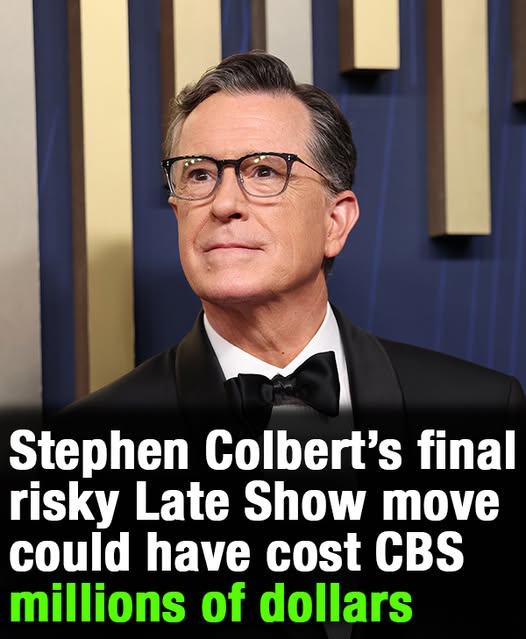
The television industry was thrown into chaos after Stephen Colbert transformed his final episode of The Late Show into what many viewers saw as an open act of rebellion against CBS. During the closing moments of the broadcast, Colbert delivered a sharp joke that instantly ignited reactions across social media and entertainment circles, with many interpreting it as a direct attack on the network that had employed him for years. What looked like a simple punchline on the surface quickly became one of the most talked-about television moments in recent memory because of the tension and frustration many believed were hidden behind it.
As the audience laughed inside the studio, Colbert’s delivery carried a level of bitterness that viewers immediately noticed. For months, CBS executives had publicly insisted that decisions surrounding the future of the show were tied to business strategy, financial concerns, and changing priorities within the network. But Colbert’s sarcastic line—“Oh no, I hope this does not cost CBS any money”—felt to many like a direct challenge to that carefully controlled narrative. Instead of ending his tenure with a polished farewell, he used the moment to hint at deeper frustrations behind the scenes.
Fans and media insiders quickly connected the joke to growing speculation about tensions between Colbert and network leadership. Many believed the host had become increasingly frustrated with corporate pressure surrounding political commentary and controversial topics involving Donald Trump. Critics of the network argued that CBS had benefited financially from the attention and controversy generated by Colbert’s monologues for years, only to become uncomfortable when those same jokes created political headaches and public scrutiny. By making the comment during his final broadcast, Colbert appeared to many viewers as someone finally speaking without fear of consequences.
What made the moment especially powerful was how brief yet calculated it seemed. In only a few seconds, Colbert managed to thank his audience, mock the corporate structure behind the show, and leave viewers with a lasting impression that overshadowed the official messaging surrounding his departure. While CBS may still own the branding, stage, and broadcast rights connected to The Late Show, many fans felt Colbert walked away with something more important—the emotional loyalty of the audience and control over how his exit would be remembered.
Behind the scenes, reports suggested that the final broadcast caused immediate concern among network executives and legal teams. Because late-night television involves massive advertising revenue and carefully managed corporate partnerships, even a short unscripted remark can create major public relations problems. Colbert’s decision to openly joke about the network’s financial concerns reportedly intensified fears about reputational damage and added more tension to an already strained relationship between the host and the company.
The incident also highlighted the growing shift in power between television networks and major on-air personalities. In the past, networks typically controlled the image and messaging surrounding their stars. But modern hosts with massive fanbases and online influence often hold power that extends far beyond traditional television contracts. Colbert’s final remarks reflected that reality. By using his last moments on air to openly challenge the network, he demonstrated that his connection with viewers mattered more than maintaining corporate approval.
Many observers believe the conflict had been building quietly for a long time. As late-night comedy became increasingly political and divisive, networks reportedly began pushing for safer, less controversial programming that would avoid upsetting advertisers and stakeholders. Colbert, however, built much of his reputation on direct political satire and outspoken commentary. Over time, those competing priorities appear to have created growing friction between the creative direction of the show and the business interests of the network.
Looking back, some fans now believe the warning signs were visible in Colbert’s increasingly sharp monologues and more aggressive tone during recent episodes. His final joke did not feel spontaneous to many viewers—it felt like the culmination of years of frustration with corporate oversight and creative restrictions. Rather than delivering a sentimental goodbye, he chose to leave behind a statement that forced people to question what had truly been happening behind closed doors.
The fallout from the broadcast is expected to influence future television contracts and network relationships for years to come. Media executives are now being reminded how risky it can be to place powerful personalities in front of live audiences, especially when tensions with management already exist. One unexpected moment can instantly reshape public perception and create headlines that overshadow years of carefully managed branding.
By the time the cameras stopped rolling, Colbert had ensured that his departure would not be remembered as a quiet exit. Instead, it became a symbolic confrontation between creative independence and corporate control. Whether viewers saw him as reckless or courageous, one thing became undeniable: he left the stage on his own terms, refusing to soften his voice even in his final moments on air.