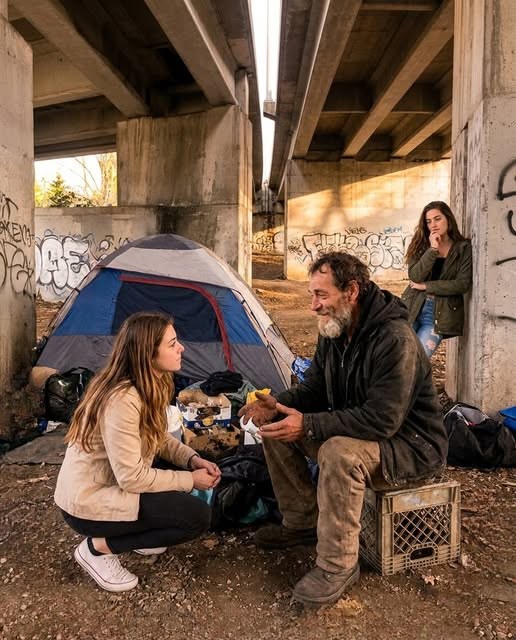
For more than thirteen years, I lived beneath a borrowed identity with no memory of who I truly was or where I had come from. My life began again one freezing morning under a concrete overpass beside a roaring highway, waking with blood on my jacket, unbearable pain in my head, and absolutely no recollection of my own past. I did not know my name, my age, whether I had family, or even what city I belonged to. Every detail that normally forms a person’s identity had vanished completely. All I had were passing cars overhead and the terrifying realization that even my reflection looked unfamiliar to me.
In the beginning, I believed someone would eventually come searching.
I spent months scanning faces in crowded streets, staring through bus windows, and studying strangers walking past me convinced that eventually someone would recognize me. I imagined a dramatic moment where a person would stop suddenly, call out my name, and explain the life I had somehow lost.
But no one ever did.
As time passed, survival slowly replaced hope. The people living near the encampment eventually started calling me “Fred” because I could not offer them a real name. Over time, even I began answering to it automatically.
Life beneath that overpass hardened me in ways I never expected. I refused to beg for money, not because I judged those who did, but because some instinct buried deep inside me pushed me toward independence even when I had nothing left. I cleaned parking lots before sunrise, painted fences, unloaded trucks at warehouses, and accepted whatever labor I could find in exchange for cash. Some nights I ate enough to sleep comfortably. Other nights hunger twisted through my stomach until morning.
Winter was especially brutal.
Cold air pushed through every layer of clothing I owned while rainwater leaked beneath the concrete overhead. Summers brought insects, unbearable heat, and the smell of stagnant water drifting from the nearby river. People looked through me the way society often looks through homeless individuals — aware of my existence but unwilling to truly see me.
Still, I created rules for myself.
Work whenever possible.
Stay clean when you can.
Accept only what you earn.
Never allow suffering to convince you that you are worthless.
Those rules became the only identity I had left.
Then, three days ago, everything changed.
I had taken a temporary job helping repaint a small roadside diner with faded signs and dirty windows. The owner, a quiet man named Niles, asked very few questions about my background, which suited me perfectly. But throughout the day, I kept catching him staring at me strangely. Not suspiciously. More like someone struggling to place a memory that refused to fully return.
Finally, near closing time, he spoke quietly.
“Have we met before?”
I gave the same answer I always gave whenever people asked questions I could not answer.
“If we did,” I joked weakly, “I don’t remember it.”
But he didn’t laugh.
He kept looking at me with an expression I couldn’t stop thinking about afterward. Something in his eyes unsettled me deeply because for the first time in years, I allowed myself to wonder if my forgotten past might still exist somewhere beyond the life I had built under the overpass.
The next morning, I woke to the sound of tires crunching across gravel near my shelter.
Normally, vehicles only came that close when police wanted to clear the area. But when I unzipped the canvas flap of my tent, I saw a pale SUV parked nearby.
Then two teenage girls suddenly ran toward me.
They looked around sixteen or seventeen years old, both crying openly as they crossed the gravel. Something about them hit me immediately — not recognition exactly, but a strange emotional pull I couldn’t explain.
One of the girls stopped only a few feet away, trembling violently.
Then she whispered a single word.
“Dad?”
The sound shattered something inside me.
A woman stepped slowly from the vehicle behind them, gripping the door for support because she was shaking so badly she could barely stand. Standing beside her was Niles, pale and visibly emotional.
“I had to call them,” he said quietly.
The woman looked directly into my face with tears streaming down her cheeks.
Then she spoke a name that hit my chest like a forgotten heartbeat returning after years of silence.
“Mark,” she whispered. “Oh God… it’s really you.”
Nothing about the next several minutes felt real.
The two girls were my daughters.
Mia and Sophie.
The woman was my wife — Nora.
Thirteen years earlier, I had disappeared after a car accident near the river. Emergency crews found the wrecked vehicle and evidence of severe injuries at the scene, but my body was never recovered. Everyone believed I had died.
But somehow I survived.
Disoriented, injured, and suffering from severe memory loss, I had wandered away from the crash and eventually disappeared completely into another life beneath the overpass.
As Nora explained the years she spent searching for answers, fragments of memory finally started surfacing inside my mind like broken pieces floating upward through dark water.
Birthday candles glowing softly.
A yellow raincoat.
Little girls laughing in a kitchen.
Warm hands wrapped around mine.
None of it fully connected yet, but enough emotion returned to nearly crush me.
Nora explained that eventually she had remarried because life forced her to move forward somehow. But she admitted she had never stopped wondering what happened to me or hoping for answers.
Meanwhile, my daughters — no longer little children but nearly grown young women — wrapped their arms around me like no amount of lost time mattered anymore.
Standing there beside my tent with tears freezing against my face, surrounded by people I barely remembered yet somehow still loved deeply, I finally understood something I had stopped believing long ago.
I had never truly been forgotten.
My memories may still remain incomplete.
My past may still exist in fragments.
But the people who loved me never stopped carrying me with them.
And for the first time in thirteen years, I walked away from that overpass not as a nameless man surviving day by day — but as someone finally finding his way home again.