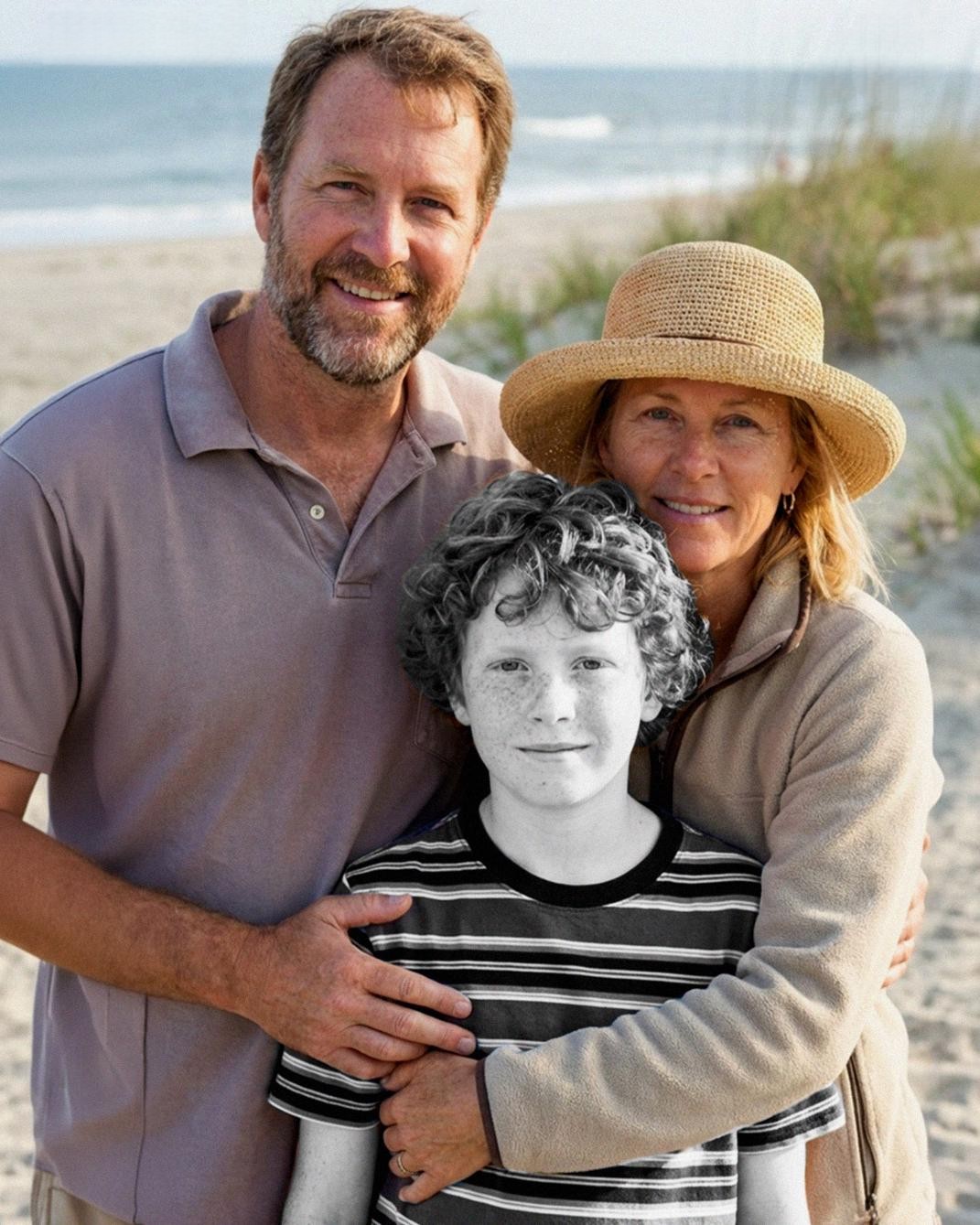
The air inside Owen’s bedroom felt unbearably heavy, thick with silence and the stale scent of clothes that hadn’t been touched since the day everything changed. I sat quietly on the edge of his bed holding his favorite blue camp shirt in trembling hands, gripping the fabric so tightly my knuckles hurt. It still carried the faintest trace of him — detergent, fresh air, summer afternoons outdoors. My son had been gone for weeks, swallowed by the dark waters of the lake during a sudden storm that nobody saw coming, and somehow the world already expected life to continue as though grief obeyed schedules. But how do you move forward when there’s no body to bury? How do you accept loss when the last memory you have is your child rolling his eyes over burnt pancakes and complaining that you worry too much?
Then my phone rang.
Sharp. Sudden. Violent against the silence.
I almost ignored it. The outside world had started feeling intrusive, exhausting, impossible to tolerate. But the phone kept ringing insistently until I finally glanced at the screen and saw the name: Mrs. Dilmore.
Owen’s math teacher.
The woman who somehow made algebra feel exciting enough that my son actually enjoyed homework for the first time in his life.
The moment I answered, I could hear something strange in her voice.
Nervousness.
Emotion.
She explained that while cleaning out an old desk drawer at school, she had discovered an envelope addressed to me in Owen’s unmistakable handwriting — slightly messy, rushed, impossible to mistake. My heart immediately climbed into my throat. Owen had battled cancer for two years before the accident at the lake stole him from us anyway. Even after doctors told us he was recovering, part of him must have known life was still fragile. Somehow, impossibly, my son had left behind a message waiting to find me after he was gone.
I drove to the school in a haze of grief and adrenaline.
When Mrs. Dilmore handed me the envelope, it felt strangely heavy in my hands, as though paper alone couldn’t possibly account for the emotional weight inside it. I locked myself inside a quiet faculty room before finally opening it.
The first lines shattered me instantly.
Owen didn’t write about fear. Or dying. Or how much he loved me.
He wrote about his father.
He told me Charlie had been hiding something enormous for years. And before I confronted him, Owen begged me to uncover the truth myself. The instructions were strangely specific: follow Dad after work. Watch where he goes. Then look beneath the loose floor tile under the small table in Owen’s bedroom.
By the time I finished reading, my grief had transformed into something sharper.
Suspicion.
Ever since the lake accident, Charlie had become emotionally unreachable. He barely spoke. Left early. Came home late. Flinched whenever I touched him, as though human closeness physically hurt. I had assumed it was grief destroying him internally the same way it was destroying me.
But Owen’s letter suggested something else entirely.
That evening, I waited across the street from Charlie’s office inside my car while rain clouds gathered over the city. When I texted asking if he’d be home for dinner, his reply came immediately:
“Late meeting. Don’t wait up.”
The lie hit me instantly.
Because minutes later, I watched him leave the office parking lot.
I followed his silver sedan through traffic for nearly forty minutes expecting the worst — another woman, a bar, somewhere he escaped while pretending to grieve beside me at home. But instead, he pulled into the parking lot of the regional children’s hospital.
The same hospital where Owen spent months fighting cancer.
I sat frozen behind the steering wheel watching Charlie open his trunk and remove colorful bags stuffed with toys, balloons, and supplies. He walked through the hospital entrance with the familiarity of someone who belonged there.
Confused and trembling, I followed him inside from a distance.
Then everything changed.
Charlie disappeared briefly into a supply room before emerging looking completely unrecognizable. Oversized neon suspenders hung awkwardly over a ridiculous checkered blazer. A foam red clown nose sat on his face. My quiet, emotionally shattered husband—the man who could barely look me in the eye anymore—had somehow transformed into a clown.
I followed him silently toward the pediatric oncology ward.
And there, through the glass of the children’s playroom, I saw something I will never forget for the rest of my life.
Charlie became someone entirely different.
He stumbled dramatically across the room making children erupt with laughter. He performed magic tricks badly on purpose just to hear exhausted little voices squeal with excitement. He handed out stickers and tiny toys to pale children sitting beneath chemotherapy blankets. A passing nurse smiled warmly and called him “Professor Giggles,” a nickname he accepted with a grin so genuine it physically hurt to see because I hadn’t witnessed that smile in years.
The anger I carried dissolved instantly.
All that remained was confusion, heartbreak, and overwhelming awe.
I couldn’t stay hidden any longer.
When Charlie stepped into the hallway to refill a bag of toys, I walked out from around the corner holding Owen’s letter tightly in my hands. The moment he saw me standing there, the color drained completely from his face.
And in that sterile hospital hallway, beneath fluorescent lights and surrounded by echoes of sick children laughing behind closed doors, my husband finally told me the truth.
During Owen’s cancer treatments, our son had confessed something to him privately.
He told Charlie the hardest part of being sick wasn’t the pain. Not the needles. Not the nausea.
It was watching the other children look so afraid all the time.
Owen wished someone would make them laugh.
Even for one hour.
So Charlie secretly became Professor Giggles.
For two years he visited the oncology ward quietly without telling anyone—not even Owen at first—because he didn’t want attention or praise. He wanted frightened children to feel joy in the middle of terrifying hospital days.
After Owen died, Charlie couldn’t stop.
Continuing the visits became the only way he still felt connected to our son. But every time he made children laugh at the hospital, guilt consumed him afterward when he returned home to a house drowning in grief. He thought happiness itself had become betrayal.
That’s why he pulled away from me.
Why he avoided touch.
Why he looked haunted.
We drove home together in silence afterward, but for the first time in weeks the silence felt softer instead of empty.
Then we went into Owen’s room.
Together, we lifted the loose floor tile exactly where the letter instructed. Hidden underneath was a small velvet box containing a hand-carved wooden sculpture of three figures — a mother, a father, and a child holding hands in a circle. Beside it sat one final note from Owen.
He confessed that he had discovered Charlie’s secret months earlier and intentionally kept it hidden. He wanted me to find out this way because he knew grief was slowly separating us. He wanted me to see “Dad’s heart” for myself before sadness destroyed what remained of our family.
Then came the line that broke me completely:
“Sometimes love doesn’t look like tragedy. Sometimes it looks like a man wearing a red nose making strangers smile.”
Charlie sat quietly on the floor afterward before slowly unbuttoning his shirt.
Over his heart was a fresh tattoo of Owen’s face.
Still healing.
Still red around the edges.
He admitted he’d been avoiding my touch because he feared I would hate how permanent his grief had become. But looking at that crooked smile inked above his heart, I didn’t feel horror.
I felt love.
The lake had taken our son’s body.
Cancer had tried to steal his future.
But somehow, through a hidden letter, a clown costume, and one final act of emotional courage, Owen reached back through unimaginable loss and saved his parents from disappearing into grief completely.
Because he understood something even many adults never learn:
Grief isolates people into separate rooms.
Love is what helps them find the door back to each other again.