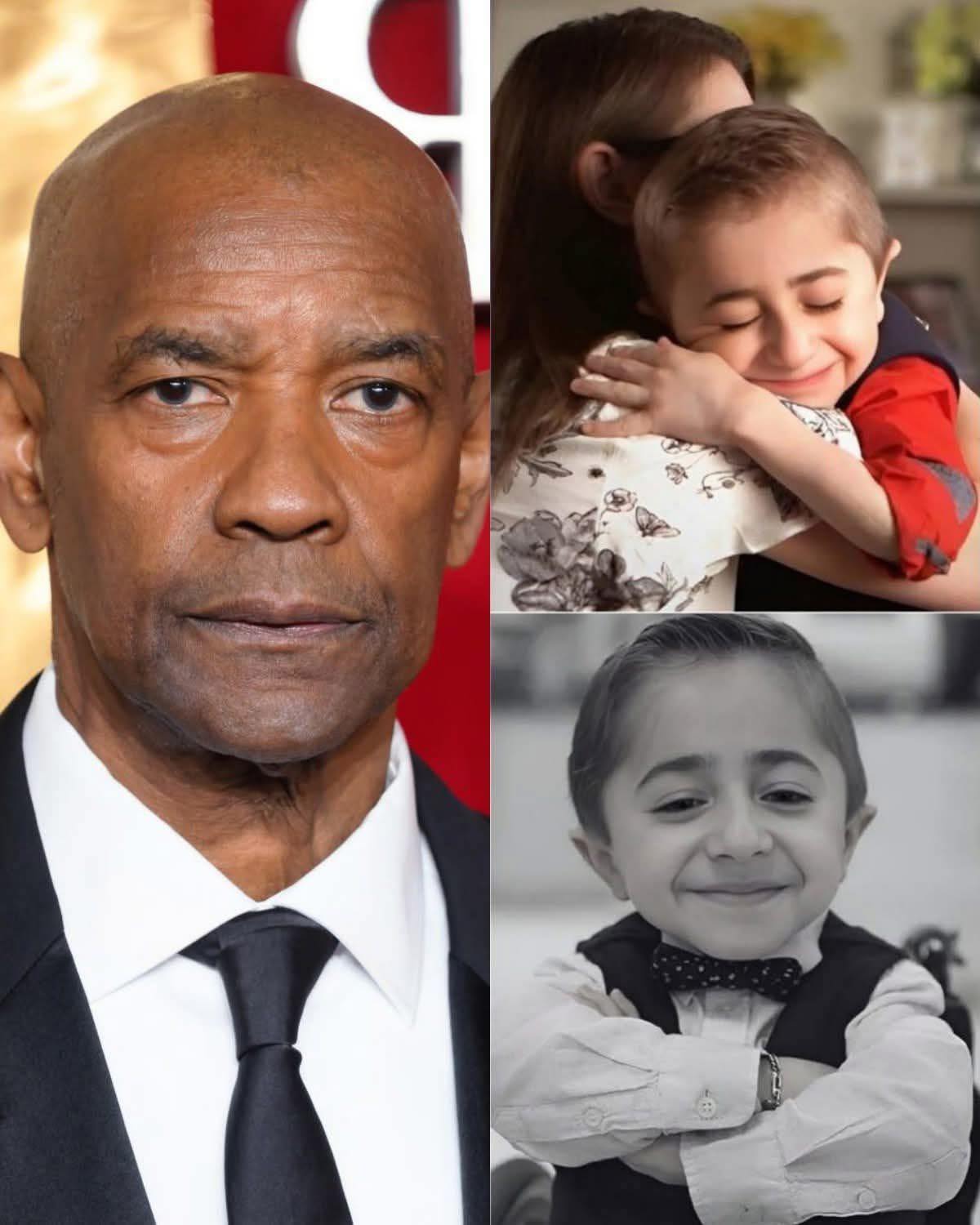
The world feels a little quieter after the loss of Kaleb, a young boy whose courage reached far beyond hospital walls and medical diagnoses. To millions of people, he was not simply a child battling illness — he became a symbol of resilience, hope, and emotional strength powerful enough to inspire strangers across the globe. His radiant smile, calm spirit, and determination in the face of unimaginable pain touched hearts far beyond the community that first came to know his story. Among those mourning his passing is legendary actor Denzel Washington, whose admiration for Kaleb reportedly reflected the same emotions now shared by countless others struggling to process the loss.
Kaleb’s life was shaped by a battle that began the moment he entered the world.
He was born with Osteogenesis Imperfecta, commonly known as brittle bone disease — a rare genetic disorder causing bones to fracture with little or sometimes no physical force at all. For most people, ordinary daily movements happen without thought: turning over in bed, coughing, reaching for something on a shelf, hugging a loved one. For Kaleb, even the smallest movements carried risk. Over the course of his short but extraordinary life, he endured more than 200 fractures. Every break brought intense pain, surgeries, casts, hospital stays, and recovery periods that would emotionally crush many adults.
Yet somehow, Kaleb refused to let suffering define him.
Instead of withdrawing from the world, he chose visibility. He stepped into public life not seeking pity, but purpose. Through his work as a national ambassador for Shriners Children’s, Kaleb transformed his personal struggle into a source of encouragement for other children and families facing similar diagnoses. He spoke openly about his condition with a level of calmness and wisdom far beyond his years. His message was never “feel sorry for me.” It was always something stronger:
I am more than what hurts me.
That quiet strength is what made people connect to him so deeply.
In a world saturated with negativity, outrage, and cynicism, Kaleb represented something painfully rare — genuine optimism untouched by bitterness. Even after surgeries, setbacks, or painful recoveries, his smile remained astonishingly sincere. People who watched his interviews or awareness campaigns often left feeling emotionally changed, not because his story was tragic, but because his attitude toward suffering felt almost impossible to comprehend.
And somehow, that spirit reached even people living worlds away from his own experience.
Reports surrounding Denzel Washington’s emotional response to Kaleb’s passing have resonated deeply because the connection between them symbolizes something universal. Washington, known not only for his legendary acting career but also for his strong faith and quiet humanitarian support behind the scenes, reportedly followed Kaleb’s journey for years. Those close to the situation suggest the actor viewed Kaleb’s resilience as a profound reminder of spiritual strength and grace under pressure.
The image of a world-famous Hollywood icon mourning a young boy with brittle bones speaks to a truth many people forget:
Real inspiration does not come from fame, wealth, or power.
It comes from witnessing someone face impossible circumstances without surrendering their humanity.
Kaleb’s passing has triggered an enormous wave of grief online. Thousands of strangers who never met him personally have shared stories describing how his positivity helped them through depression, illness, grief, or difficult moments in their own lives. Many describe watching his videos during hospital treatments, family crises, or emotional breakdowns and finding comfort simply in the way he carried himself through pain.
That impact has become known by many supporters as the “Kaleb Effect.”
Not because he performed miracles.
But because he reminded people that courage is often quiet.
It is waking up every day and choosing to keep smiling despite fear. Choosing kindness despite pain. Choosing hope even when life feels unfair.
Beyond the emotional inspiration he provided, Kaleb also changed lives in very practical ways. His openness about Osteogenesis Imperfecta helped bring international awareness to a disease many people had never even heard of before discovering his story. Through his advocacy work with Shriners Children’s, he helped increase visibility, funding, and public understanding surrounding specialized pediatric care for children living with rare orthopedic conditions.
That may ultimately become one of his greatest legacies.
Because while Kaleb could not choose the suffering he was born into, he chose what to do with it. He transformed private pain into public compassion. He turned hospital rooms into platforms for awareness and encouragement. He gave children and parents facing terrifying diagnoses proof that joy and purpose could still exist alongside fear.
And perhaps that is why his story affects people so deeply now that he is gone.
Kaleb represented the kind of emotional honesty the world desperately craves but rarely sees. Vulnerability without self-pity. Strength without cruelty. Hope without denial of pain.
As people continue mourning him, many are reflecting not only on the tragedy of losing someone so young, but on the extraordinary amount of meaning he packed into the years he was given. Some people live long lives without ever changing another human being. Kaleb changed millions before reaching adulthood.
That is not ordinary.
That is legacy.
And even now, after his passing, his influence continues moving outward — through donations supporting pediatric care, through families finding strength during medical battles, through children with rare conditions feeling less alone after hearing his story.
In the end, Kaleb taught the world something profound:
Strength is not the absence of fragility.
Sometimes true strength is continuing to love life while fully aware of how easily it can hurt you.
His bones may have been fragile.
But his spirit never was.
And long after the grief settles, the memory of the little boy who faced unimaginable pain with a smile will continue reminding people everywhere that even the smallest voice can leave an echo powerful enough to reach the entire world.