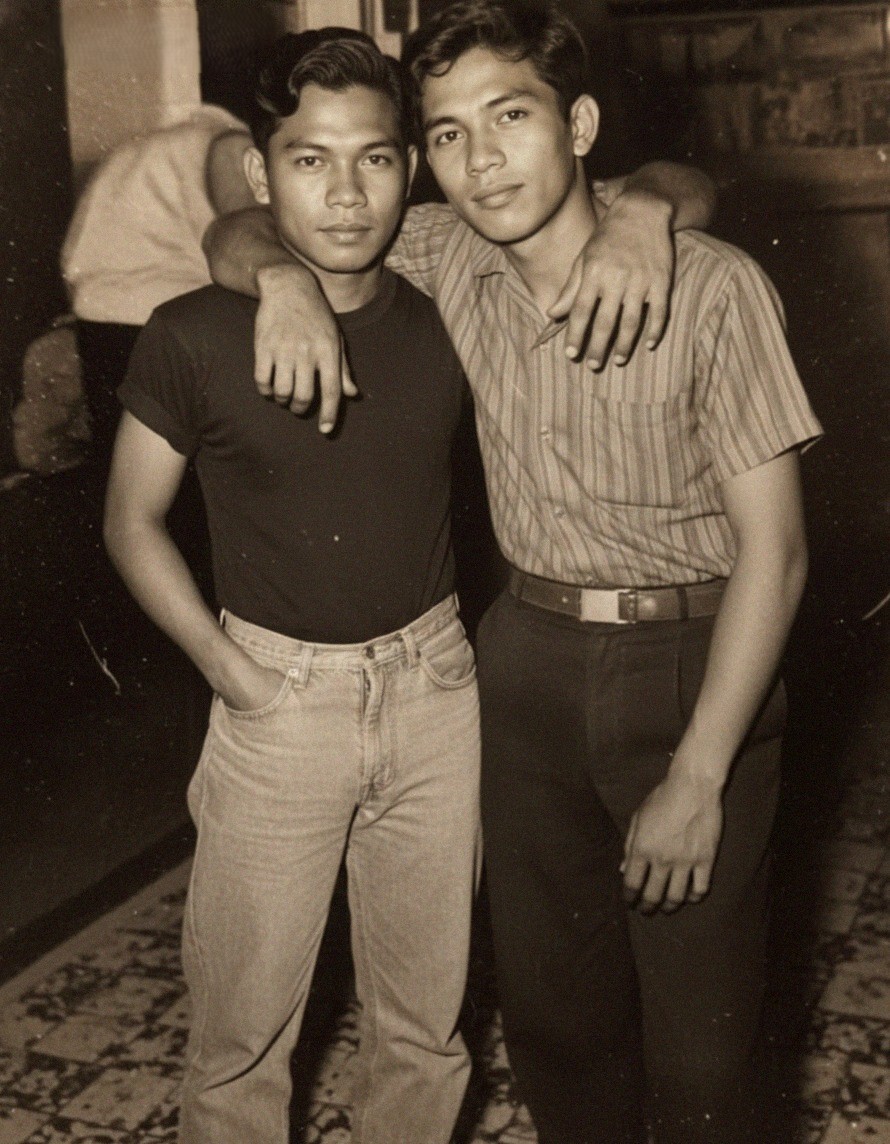
Time is often described as cruel — a silent thief that steals youth from our faces, strength from our bodies, and eventually even the people we once believed would remain beside us forever. Most friendships fade slowly under that weight. Schoolmates disappear into separate states, separate marriages, separate lives until memories become little more than fragments tucked away in old photographs and forgotten drawers. But for Robert and Michael, time turned out to be something far less powerful than anyone imagined. Beneath nearly six decades of silence, distance, heartbreak, and aging, the bond between two boys from a tiny 1960s classroom had somehow remained alive, waiting patiently for the world to finally bring them back together again.
At seventy-three years old, Robert lived a life defined by routine and quiet solitude in the misty landscapes of the Pacific Northwest. Retirement from the military had stripped structure from his days, but not discipline. Every morning still began the same way: black coffee on the porch, newspaper folded carefully beneath weathered hands, silence interrupted only by birdsong and the distant hum of traffic. Years of service had permanently reshaped his body. A severe training injury from the Arizona desert in 1984 left him walking with a noticeable limp that worsened during cold weather, each uneven step carrying the memory of decades spent pushing himself through pain without complaint.
His sons were grown now, scattered across different cities with families and responsibilities of their own. Robert loved them deeply, but like many aging parents, he quietly wrestled with the loneliness that often arrives once children stop needing you every day. Since losing his wife Margaret years earlier, the house had become painfully still. Some evenings he caught himself speaking aloud simply to hear another voice fill the rooms.
Thousands of miles away, Michael’s life carried a different kind of quiet.
He still lived in the modest home he purchased with his late wife during the 1970s — a small house filled with decades of accumulated memories and the lingering scent of engine oil that seemed permanently absorbed into the walls. Michael had spent most of his life working as a mechanic, and even retirement failed to separate him fully from machinery. His garage remained crowded with vintage parts, half-restored carburetors, rusted tools, and projects he insisted he would finish “one day.”
Arthritis had twisted his hands badly over the years, swelling the knuckles that once rebuilt engines with astonishing precision. Yet despite the physical pain, he still spent hours tinkering quietly in the garage because fixing old machines gave him something many elderly people lose with time:
Purpose.
But hidden deep inside a dusty kitchen drawer rested something far more important than any tool or engine part.
An old class photograph from 1961.
The picture captured two boys frozen forever in childhood — one restless and grinning wildly with his tongue sticking out at the camera, the other sitting beside him laughing with exhausted affection already visible in his face. Those boys were Robert and Michael, inseparable best friends growing up in a struggling steel town where childhood bonds formed quickly because everyone understood life could change without warning.
Back then, they were known throughout school almost as a single unit.
Robert was loud, impulsive, always moving.
Michael was steadier, calmer, the kind of kid who carried extra pencils for classmates and split his lunch when someone forgot theirs. Teachers constantly separated them during lessons because together they became unstoppable chaos. Yet beneath the mischief existed something profoundly loyal. They promised one another they would someday stand beside each other at their weddings and grow old together no matter what life became.
Then the steel industry collapsed in 1966.
Robert’s father lost his job almost overnight, and the family fled to Oregon searching desperately for work before bills swallowed them completely. In the modern world, distance feels temporary. But during the 1960s, moving across several states often meant relationships vanished forever. Letters were mailed to outdated addresses. Phone calls became expensive luxuries. Families relocated repeatedly chasing employment. Gradually, silence replaced connection until years turned into decades.
Still, neither boy truly forgot the other.
Life simply buried the memory beneath responsibilities, grief, careers, and survival.
The miracle that reunited them began accidentally generations later.
Michael’s nineteen-year-old grandson Tyler had been rummaging through the attic searching for old baseball equipment when he stumbled across the 1961 class photograph tucked inside a cracked cardboard box. Amused by the sight of his serious grandfather as a skinny little boy wearing church clothes, Tyler snapped a picture and uploaded it to a local alumni group online.
Hundreds of miles away, Robert’s granddaughter Ellie happened to scroll past the image while browsing social media late one evening.
And suddenly she froze.
There, near the center of the photograph, sat a familiar mischievous expression she had known her entire life — the younger version of her grandfather sticking his tongue out exactly the same way he still did during family pictures decades later. Ellie immediately carried her phone into the living room where Robert sat half-asleep in his recliner beneath the television glow.
The moment his fading eyes focused on the screen, something extraordinary happened.
Recognition arrived instantly.
Not slowly.
Not uncertainly.
Instantly.
Years of military discipline, aging, widowhood, and emotional restraint vanished beneath one overwhelming realization:
Michael was still alive.
Their first phone call lasted nearly four hours.
Neither man wanted to hang up because both sensed instinctively how much life had already been lost between them. Memories poured out chaotically — schoolyard fights, baseball games, teachers they hated, girls they once chased awkwardly through hallways. Half-remembered jokes resurfaced with shocking clarity. Every few minutes one of them would suddenly shout, “You remember that?” before dissolving into laughter so hard they could barely breathe.
Eventually they agreed to meet halfway between their homes at a small community center.
And despite both being elderly men, the anticipation made them feel like nervous teenagers again.
Michael spent nearly an hour choosing his clothes that morning, finally settling on his best button-down shirt and even applying cologne he hadn’t touched in years. His hands shook violently while driving to the meeting place. Robert arrived thirty minutes early leaning heavily on his cane, heart hammering against his ribs harder than it had in decades.
Then they saw each other.
Across a sterile beige room inside a quiet community center, two old men locked eyes and suddenly became boys again.
Their bodies had changed beyond recognition.
Gray hair.
Thin frames.
Wrinkled faces carved by grief, work, and time itself.
But the souls behind their eyes remained untouched.
Robert’s lips trembled first.
“Mike,” he whispered.
For several seconds neither moved, almost afraid the moment might disappear if approached too quickly. Then Michael reached slowly into his coat pocket. Observers later assumed he might pull out a letter or some emotional keepsake. Instead, he removed something heartbreakingly simple:
A red apple.
Using an old pocketknife, he split it cleanly down the middle exactly the same way he used to during elementary school lunches more than fifty years earlier. Then he handed half to Robert without saying a word.
That gesture shattered everyone in the room emotionally.
Because it meant something profound:
The decades of silence never erased the foundation of who they were to one another.
They spent hours sitting side by side sharing the painful missing chapters of their lives. They spoke quietly about wives lost to illness, children raised mostly through hard work and exhaustion, careers that consumed entire decades, and the strange loneliness that arrives during old age when the world gradually grows quieter around you. Robert apologized repeatedly for letters that never arrived while explaining how constantly his family moved during his father’s desperate search for work. Michael admitted he carried resentment for years believing his best friend simply forgot him.
But by sunset, something beautiful became clear to both of them.
Time had stolen many things.
Yet it had failed to destroy the friendship itself.
Soon, they created a new ritual.
Every Sunday morning, they met at the same local café where staff quickly learned to prepare two black coffees and reserve the quiet corner booth near the window. Together they became inseparable again — two elderly men laughing too loudly, finishing each other’s sentences, arguing over baseball statistics and vintage car engines like stubborn teenagers trapped inside aging bodies.
Their families merged naturally too.
Grandchildren gathered around fascinated by the sight of seventy-three-year-old men behaving like mischievous schoolboys. Ellie and Tyler watched their grandfathers debate the best stone-skipping techniques by the river or complain endlessly about how “modern cars aren’t built properly anymore.” The friendship became something larger than nostalgia. It became a living lesson for younger generations about loyalty, memory, and the endurance of human connection.
The story of Robert and Michael eventually spread far beyond their families because it touched something universal inside people.
Everyone carries someone they once loved deeply and lost to time.
A childhood friend.
A first love.
A person who helped shape who they became before life scattered everyone in different directions.
Robert and Michael became proof that not all bonds disappear simply because silence grows between them.
Some connections remain alive quietly beneath the surface for decades, waiting patiently for the right moment to return.
Now, every Sunday morning, two old men still sit beside the café window sharing black coffee and stories they’ve told each other a hundred times already.
And sometimes, before leaving, Michael still pulls a red apple from his coat pocket — just in case.