The human body is a biological signaling masterpiece, continuously transmitting information about its inside condition through minute external changes. While we frequently rely on pricey imaging or sophisticated blood panels to assess our health, one of the most trustworthy measures of cellular vitality has been at your fingertips. Influential people like Dr. David Sincir have led recent conversations about longevity and anti-aging, which have given the rate and quality of fingernail growth—a frequently disregarded indicator of human health—new attention. The science behind the connection between keratin production and biological aging is intriguing and firmly rooted in clinical truth, even though the notion that your nails can foretell your exact date of expiry is an exaggeration.
The idea of cellular turnover is central to this phenomenon. In essence, your fingernails are specialized structures made of keratin, a hardened protein. Your body’s metabolic efficiency and ability to regenerate itself are directly reflected in the rate at which this protein is generated and propelled forward from the nail matrix. Because cellular reproduction is strong and quick in our youth, children and young people frequently find themselves repeatedly cutting their nails. But as we approach thirty, a slight but noticeable change starts to take place. Fingernail growth tends to slow down by a tiny percentage each year after the third decade of life, according to a seminal study that started in the late 1970s. This slowing acts as a biological clock, offering a glimpse into what scientists refer to as “biological age,” which is a gauge of your body’s true state in relation to the number of candles on your birthday cake.
The body must be viewed as a resource-allocation machine in order to comprehend why this is important. The body has the extra energy and cellular resources needed to sustain fast growth in “peripheral” systems like hair and nails when it is in a state of high vitality. The body may put essential organ function ahead of the quick synthesis of keratin if internal stresses increase or systemic aging advances. Thus, a slow-growing nail is an important indicator that the body’s regeneration engines may be slowing down, even though it isn’t a clear evidence of a short life. A low-tech, non-invasive method of tracking one’s own aging process in real time is to monitor this rate.
The physical structure of the nail is more than just its rate of growth; it is a vivid representation of interior health. Since the nail bed is one of the few locations where the body’s microvasculature is readily apparent, medical experts have long employed the “nail exam” as a diagnostic shortcut. When systemic problems develop, they frequently leave a lasting impression on the nail as it grows out, producing a chronological record of health occurrences.
Nail clubbing is one of the most important indicators to be aware of. This happens when the nails curl over the edges and the tips of the fingers grow, frequently resembling the back of a spoon. Clinically, clubbing is a serious warning sign that has been connected to persistently low blood oxygen levels, which frequently result from underlying pulmonary or cardiovascular diseases. In a similar vein, an instantaneous picture of the circulatory system can be obtained from the color of the nail bed. Leukonychia, or pale or white nails, is a common sign of anemia or even early-stage liver disease. On the other hand, cyanosis, or a bluish tint to the nails, is an obvious indication that the body is having trouble supplying oxygenated blood to its extremities and calls for an urgent medical examination.
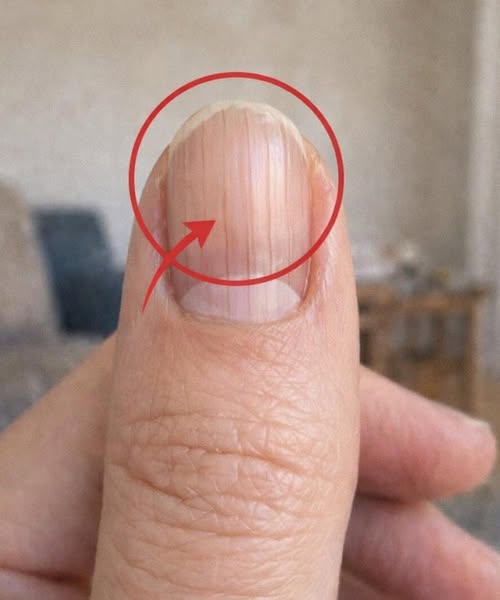
Systemic wellbeing is also revealed through surface integrity and texture. Small, pin-prick holes on the nail’s surface are known as pitting, and they are often linked to autoimmune reactions, particularly psoriasis or alopecia areata. On the other hand, melanonychia—dark, vertical streaks—may be the most concerning visual indication. These streaks are usually benign, but occasionally they may be a sign of subungual melanoma, a dangerous type of skin cancer that appears beneath the nail. The body uses these visual cues as a warning before more excruciating or crippling symptoms appear, so they are more than merely aesthetic peculiarities.
But it’s crucial to counterbalance this biological surveillance with some real-world context. Not every blemish, crack, or chip is a sign of impending disaster. As the body’s first line of defense, the nails are frequently subjected to the environment, harsh chemicals, and physical stress. Instead of being an indication of systemic failure, brittle or peeling nails are more likely to be caused by environmental variables such frequent hand washing in hot water or the use of acetone-based polish removers. Furthermore, long before a true clinical shortage is established, small nutritional deficiencies, especially a lack of biotin, iron, or zinc, might show up in the nails. In many situations, the nails are merely requesting a change in lifestyle rather than a medical procedure.
Seeing patterns throughout time is the real key to using your nails as a longevity tool. It doesn’t matter if you hit your palm on a desk and get a single white spot. On the other hand, a consistent shift in the base color of all ten nails or an abrupt, significant decrease in the frequency with which you need to reach for the clippers are warning signs. We can go from a condition of passive aging to one of proactive health management by changing our attitude and seeing our nails as a dashboard of biological signs.
Personalized, preventative care is becoming more and more prevalent in modern medicine. The first step in that journey is learning the language of your own body. Your fingernails are a very accurate indicator of how your body is handling the stresses of the present, even though they can’t tell you how many years you have left. Your cellular vitality, vascular health, and dietary status are all reflected in them. By focusing on these minor aspects, you are not merely being conceited; rather, you are engaged in a type of biological awareness that enables you to identify any problems early and maximize your journey toward a longer, healthier life. Remember that your hands are a living report card of your inner energy the next time you glance down at them. Keep yourself informed, keep an eye out, and treat your nails like the essential health indicators they are.