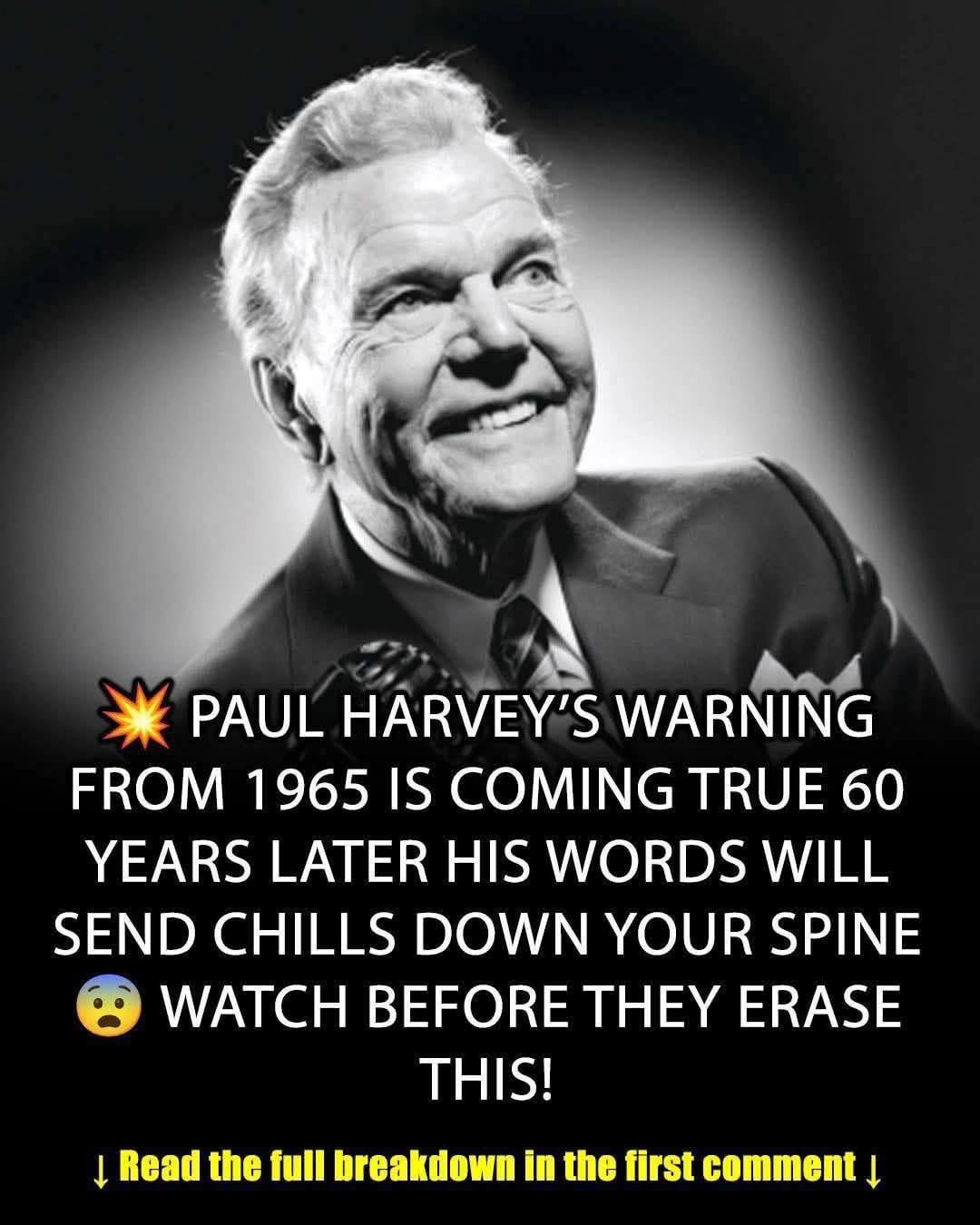
The radio glowed softly in the corner of the room like a small artificial sun, filling the house with warmth that felt larger than the machine itself. Somewhere between the hum of static and the clink of dishes from the kitchen, Paul Harvey would begin to speak, his voice rolling through the air with that unmistakable mixture of calm authority and quiet urgency. In the 1970s, when the future still seemed comfortably distant, he talked about machines that could “think,” voices traveling instantly across continents, and societies transformed by technology in ways ordinary people could barely imagine. Most listeners smiled politely or laughed outright. It sounded fascinating, dramatic — maybe even entertaining — but not entirely real.
After all, the future he described felt too strange to arrive within our lifetimes.
Yet now those once-impossible ideas vibrate constantly inside our pockets. Tiny devices answer questions in seconds, carry entire libraries, connect strangers across oceans instantly, and listen closely enough to predict what we want before we even ask. Artificial intelligence writes, speaks, creates images, and shapes conversations at speeds that would have sounded like science fiction when Paul Harvey first warned audiences about the accelerating power of technology. The world he described did not arrive dramatically with explosions or flying cars. It slipped quietly into everyday life until suddenly it was everywhere.
And that may be the most unsettling part.
Because what Paul Harvey feared most was never technology itself. It was complacency.
He warned repeatedly, in ways both subtle and direct, that societies rarely collapse because people are uninformed. More often, they collapse because people stop paying attention. They grow distracted. Comfortable. Passive. They hand over responsibility slowly, one convenience at a time, until participation in democracy, community, and even independent thought begins to erode quietly beneath the surface.
Listening to those broadcasts now can feel almost eerie. Not because he predicted every invention perfectly, but because he understood something timeless about human nature. He recognized how easily convenience can numb curiosity. How quickly constant entertainment can replace reflection. How people surrounded by endless information can still drift into dangerous forms of disengagement.
Back then, gathered around radios in living rooms filled with cigarette smoke, family photographs, and fading afternoon light, listeners could not fully grasp the world racing toward them. A mother folding laundry. A father half-asleep in an armchair after work. A child sprawled on the carpet drawing absentmindedly while that deep baritone voice carried stories through the room. It felt comforting, ordinary, almost intimate. Yet beneath the warmth of those moments, Paul Harvey was quietly preparing audiences for a future they could not yet see.
That is part of what makes his words linger decades later.
He had a way of wrapping hard truths inside gentle storytelling. He rarely sounded hysterical or apocalyptic. Instead, he spoke with the calm tone of someone trying to wake people carefully rather than frighten them. Tomorrow always sounded close when he spoke — not distant and abstract, but pressing gently against the walls of the present.
And now, looking around at a world shaped by algorithms, instant outrage, artificial intelligence, and nonstop digital noise, it becomes difficult not to hear echoes of those warnings everywhere.
Social movements erupt online overnight.
News spreads globally within minutes.
People argue with strangers more often than neighbors.
Technology mediates relationships, politics, entertainment, work, memory, even identity itself.
The future arrived exactly the way he implied it might: gradually enough that people barely noticed the transformation while living through it.
That is why listening to Paul Harvey today can send an unexpected chill through modern audiences. Not because he sounded mystical or supernatural, but because he understood that the greatest changes in history often happen quietly while ordinary people remain convinced life is still mostly the same.
And perhaps even more importantly, he believed the future was never fully decided.
That idea sits at the center of his legacy far more than any technological prediction. He constantly urged listeners to remain curious, skeptical, informed, and involved. He warned against surrendering personal responsibility to governments, corporations, or crowds. He believed history was shaped not only by powerful leaders or catastrophic events, but by the small daily choices made by ordinary people who either stayed engaged or drifted into indifference.
That message feels startlingly relevant now.
In an era where artificial intelligence can answer questions instantly and endless information floods every screen, the temptation to disengage becomes even stronger. People can begin mistaking access to information for wisdom itself. They scroll endlessly without reflecting. They react instantly without investigating. They consume outrage as entertainment while feeling increasingly powerless to change anything at all.
Paul Harvey seemed to understand that danger long before smartphones or social media existed.
The real power of his broadcasts was never simply that he “predicted the future.” Plenty of people speculate about tomorrow. What made him different was his insistence that listeners still had agency inside it. He did not speak as though history were a machine carrying helpless people toward inevitable outcomes. He spoke as though the future remained unwritten — fragile, changeable, dependent on whether ordinary citizens chose awareness over comfort.
And maybe that is why his voice still resonates across generations.
Because beneath the nostalgia of old radios and familiar cadences lies something much more urgent: a reminder that technological progress alone does not guarantee wisdom, compassion, or freedom. Those things still require participation. Attention. Courage. Thoughtfulness.
The glow of the radio may be gone now, replaced by cold blue screens and instant digital voices. But the deeper question Paul Harvey asked remains exactly the same:
Are we shaping the future consciously — or merely sleepwalking into it?