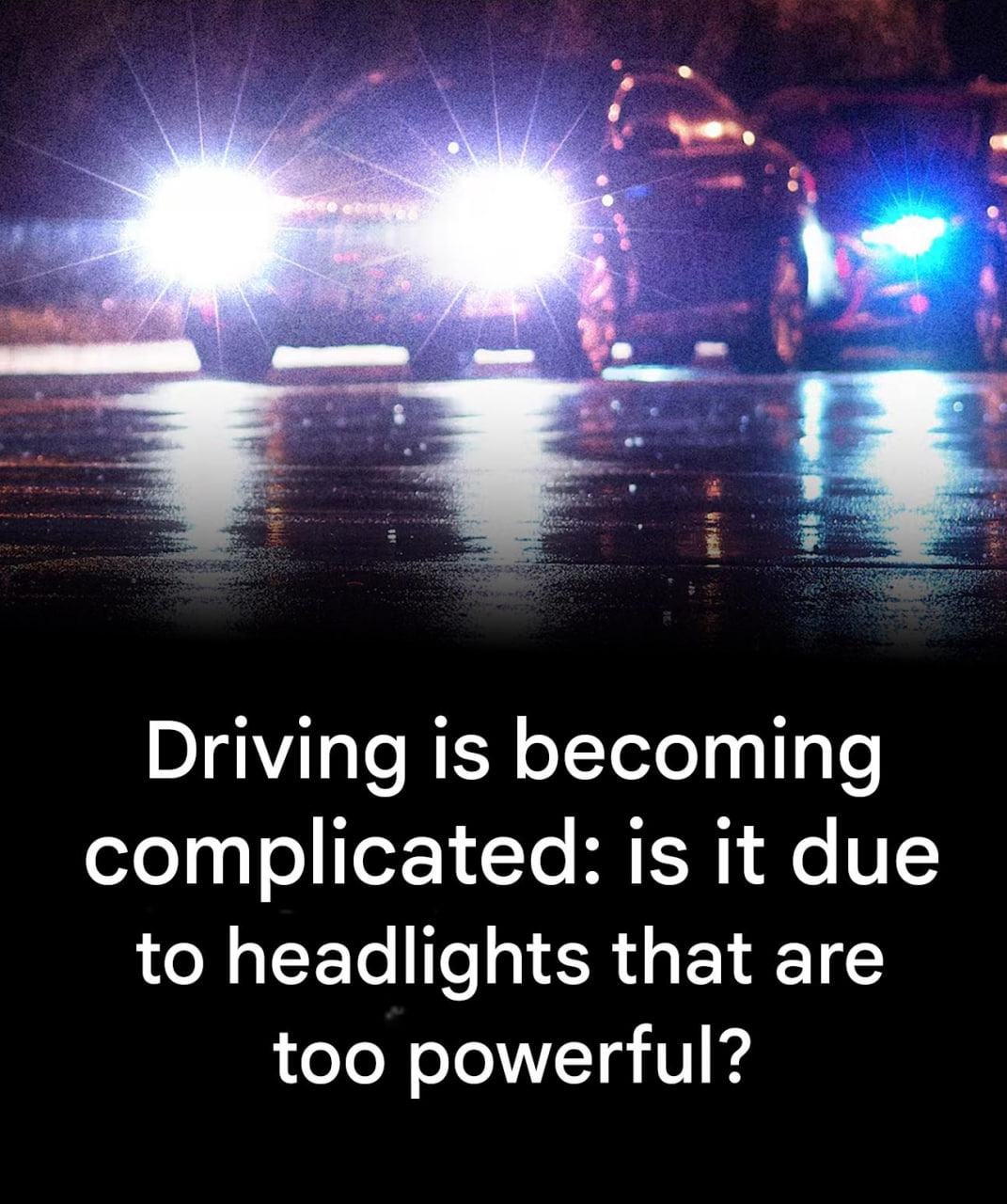
The glare hits like a flashbang. For one disorienting second, the road seems to vanish completely beneath a wall of white light. Your hands tighten instinctively on the steering wheel. You blink harder, squint, maybe even slow down without realizing it. And somewhere in that uncomfortable moment, the same question crosses millions of minds every night: are modern headlights actually getting brighter, or are our eyes simply struggling more than they used to?
The unsettling truth is that both can be true at once.
Modern headlights, especially LED systems, really are different from the softer yellowish lights older generations of drivers grew up with. LEDs produce a whiter, sharper, more concentrated beam designed to illuminate farther and more clearly. From a safety perspective, they help drivers see road signs, pedestrians, curves, and hazards earlier than older halogen lights ever could. But for oncoming traffic, that same crisp brightness can feel overwhelming, especially in darkness, rain, fog, or fatigue.
The problem is not just raw intensity.
Color temperature plays a major role too. Cooler white-blue light scatters differently through the eye than warmer yellow light, creating harsher glare and making recovery slower after exposure. When that beam strikes directly at eye level — often from taller SUVs, trucks, or poorly aligned headlights — the effect becomes even worse. Your vision briefly saturates, contrast disappears, and for a split second your brain loses detail about the road ahead.
That momentary blindness is exactly what makes night driving feel more stressful now for so many people.
And aging quietly amplifies the issue.
As people get older, the eyes naturally become more sensitive to glare. The lens inside the eye stiffens and scatters incoming light more aggressively, making bright headlights bloom and spread across vision instead of staying contained. Recovery from sudden brightness also slows with age. Even perfectly healthy eyes can struggle more at 50 or 60 than they did at 25, especially during long nighttime drives.
But modern cars are part of the equation too.
Headlights are often misaligned without drivers realizing it. A vehicle carrying heavy cargo in the trunk can tilt upward slightly, raising beam height directly into the eyes of oncoming traffic. Dirty headlights, scratched covers, and lifted suspension systems can worsen glare dramatically. Even a windshield that looks “clean enough” may contain invisible smears and fine dust that scatter bright light into painful halos at night.
That is why the experience can feel so strangely personal.
One driver barely notices the glare, while another feels almost attacked by it. Fatigue, stress, dry eyes, astigmatism, rain, and road conditions all combine differently from person to person. Sometimes the issue is not your eyesight failing, but several small modern factors colliding at once.
The good news is that night driving does not have to become a constant battle.
Small adjustments genuinely help more than people realize. Keeping the windshield spotless inside and out reduces light scattering immediately. Checking headlight alignment ensures your own vehicle is not blinding others or limiting your visibility. Many cars also include manual beam-level adjustments that drivers rarely use, even though they are designed specifically for situations involving heavy passengers or cargo.
Eye behavior matters too.
Looking slightly toward the right edge of your lane instead of directly into approaching headlights helps preserve night vision while still keeping the road visible. Briefly shifting focus to lane markings rather than staring into the glare allows your eyes to recover faster. Regular eye exams are important as well, since conditions like astigmatism can dramatically worsen nighttime glare long before people notice problems during daytime driving.
And technology itself is slowly improving the situation.
Newer adaptive headlight systems can automatically adjust brightness and beam direction based on traffic, steering angle, weather, and road conditions. Some advanced systems selectively dim portions of the beam so drivers keep maximum visibility without blinding oncoming cars. In theory, future lighting technology may eventually make roads both brighter and less painful at the same time.
Until then, millions of drivers will keep experiencing that same tense moment each night — the instant when modern headlights turn darkness into a wall of white uncertainty.
But understanding why it happens changes the feeling slightly.
The problem is not simply “bad eyes” or “crazy bright cars.” It is a complicated mix of evolving technology, aging vision, vehicle design, road height, alignment, fatigue, and human perception all interacting in real time at highway speed.
And once you realize that, the glare feels a little less mysterious — and a little easier to manage.