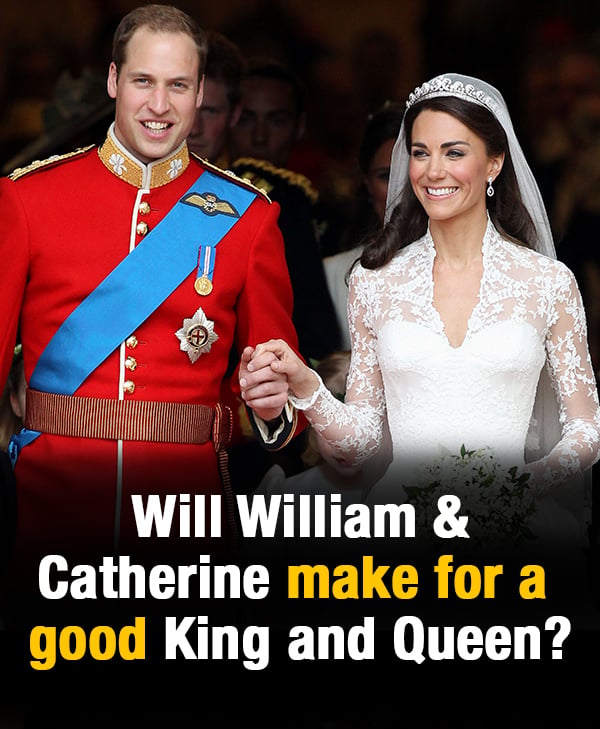
Royal stories have always been sold as fairy tales.
Palaces glowing beneath camera flashes. Weddings watched by millions. Carefully choreographed balcony appearances designed to project stability, dignity, and continuity. For generations, the monarchy survived partly because it understood something powerful: image can feel stronger than reality when repeated often enough.
But shows like Reign Check are pulling apart that illusion piece by piece.
Rather than treating royalty as untouchable spectacle, the podcast approaches the modern monarchy as something far more complicated — a centuries-old institution trapped between tradition, celebrity culture, politics, media warfare, and public skepticism. The result feels less like reverent royal coverage and more like an autopsy of power conducted in real time.
Hosted by commentator Amanda Matta and journalist Michael Panter, the show blends sharp analysis with dark humor and cultural commentary, turning royal headlines into something surprisingly human. Palace statements become psychological case studies. Public appearances become exercises in image management. Behind every polished photograph lies a deeper question about control, loyalty, survival, and relevance.
And nowhere is that tension clearer than in the lingering shadow of Diana, Princess of Wales.
Decades after her death, Diana still feels emotionally present inside almost every conversation about the modern monarchy. Her story reshaped how the public understands royal life: not as pure privilege, but as a system capable of isolation, manipulation, emotional damage, and relentless media exposure. Reign Check repeatedly returns to the idea that the monarchy never fully escaped the consequences of Diana’s era. Instead, it continues orbiting them.
Because Diana changed the rules.
Before her, the royal family largely controlled distance. Mystery protected them. Public emotion remained restrained. Diana shattered that formula by becoming intensely visible and emotionally accessible. People did not simply admire her; they identified with her pain, loneliness, and vulnerability. That emotional connection permanently altered expectations surrounding the monarchy, forcing future royals into a media environment where image alone could no longer guarantee loyalty.
The podcast argues that many current royal tensions still flow directly from that transformation.
The fractured relationship between Prince William and Prince Harry becomes especially compelling through this lens. Rather than reducing their conflict to tabloid drama, the show explores deeper pressures shaping both brothers differently. William represents continuity, duty, and institutional survival. Harry increasingly embodies rebellion against the machinery surrounding royal life itself.
And at the center of much public fascination sits the competing narratives around Catherine, Princess of Wales and Meghan, Duchess of Sussex.
The podcast examines how media framing transformed both women into symbolic opposites — Kate as stability and tradition, Meghan as disruption and modernity — often flattening their humanity in the process. Discussions move beyond celebrity gossip into broader conversations about race, class, gender expectations, press manipulation, and institutional self-preservation.
What makes Reign Check addictive is that it refuses easy answers.
It neither blindly worships the monarchy nor lazily dismisses it. Instead, the hosts treat the royal family as a living institution struggling to maintain relevance inside a world increasingly skeptical of inherited power. That tension creates endless contradictions. The monarchy depends on mystique while surviving through publicity. It claims political neutrality while carrying enormous symbolic influence. It projects timeless continuity while constantly adapting behind the scenes to survive public opinion.
The transition from Elizabeth II to Charles III becomes particularly significant in this context.
Queen Elizabeth II represented consistency almost beyond human scale. For many people, she seemed less like an individual monarch and more like a permanent feature of British identity itself. Her reign stretched across generations, wars, cultural revolutions, and technological transformations. Stability became her mythology.
King Charles III inherited something far more fragile.
Unlike his mother, Charles entered the throne already carrying decades of public controversy, media scrutiny, and complicated emotional associations tied to Diana’s legacy. Reign Check frequently explores whether the monarchy under Charles can maintain the same symbolic authority in an age where institutions face constant interrogation online.
Because modern royal coverage no longer operates through carefully filtered newspaper headlines alone.
Social media shattered the monarchy’s ability to fully control narratives. Every gesture, expression, appearance, and rumor now undergoes immediate global analysis. Viral commentary competes with palace press offices in shaping public perception. Podcasts like Reign Check thrive precisely because audiences increasingly want interpretation rather than official messaging.
And perhaps that is the most fascinating idea running beneath the show:
The monarchy may still wear crowns and stage ceremonies, but it now survives inside the same chaotic attention economy as every other public institution.
That means relevance must constantly be earned.
Not assumed.
By blending cultural criticism with humor and historical perspective, Reign Check turns royal coverage into something larger than celebrity fascination. It becomes a study of how power adapts under pressure, how myths survive in media-driven societies, and how institutions built on symbolism respond when the public stops automatically believing the story.
Because beneath the glittering palaces, polished speeches, and carefully staged photographs lies a simpler reality the podcast keeps returning to again and again:
The monarchy is not just a family.
It is a performance.
And every generation rewrites the script differently.