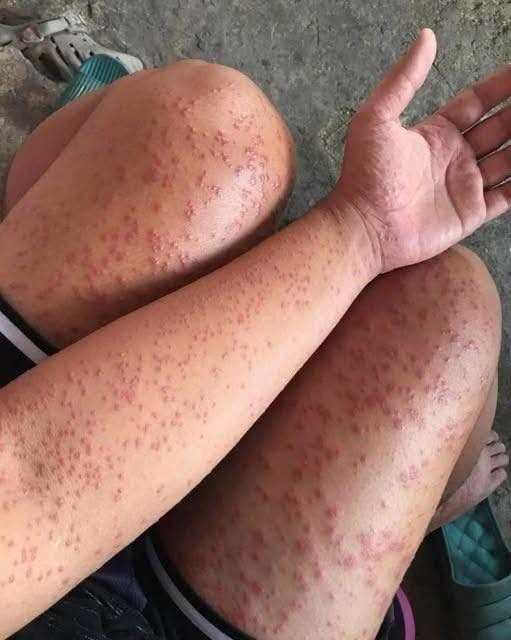
In the peaceful haven of our homes, we frequently think of our skin as a straightforward barrier of defense, a canvas that periodically reacts to the outside world with little irritations or transient imperfections. When we see a red area, an itchy lump, or a little swelling, we write it off as a passing inconvenience that will undoubtedly go away by morning. Nonetheless, the human body has an intricate and occasionally aggressive mechanism for alerting others to an impending internal disaster. What many consider to be a trivial rash or a straightforward case of bed bugs may really be the first signs of anaphylaxis, a systemic breakdown. The skin serves as a visual warning sign for a deeper, more hazardous fight taking place within the respiratory and circulatory systems in this high-stakes, potentially fatal allergic reaction. Ignoring these indicators can be a deadly error as well as a sign of poor judgment.
Urticaria, sometimes referred to as hives, is the most frequent dermatological sign of this internal crisis. These show up as elevated red or pink welts that can burn, itch, or spread terrifyingly quickly throughout the body and limbs. Hives on their own are frequently controllable and indicate that the body has come into contact with something it doesn’t like. However, the problem has gone from being a little annoyance to a vital struggle for existence when these welts appear in conjunction with even the smallest alteration in your breathing. Now, the skin is more than simply irritated; it is an indication that the immune system has gone into overdrive and is fighting the body it is supposed to defend. The body releases a barrage of chemicals when it reaches this hyperreactive state, which can narrow the airways and lower blood pressure.
The clearest indication that time is running out is breathing difficulties. This may begin as a mild constriction in the chest, a sensation that the room’s air has suddenly become thinner, or a wheezing-like rasp in the throat. Some people report feeling as though their lips are starting to expand and tingle or that their tongue is getting too big for their mouth. These are the physical indicators of an airway that is gradually being blocked; they are not only adverse effects. In addition to these breathing difficulties, a fast heartbeat, lightheadedness, or a sudden surge of disorientation may indicate that the brain is not getting enough oxygen. Any combination of these symptoms and hives is a blatant sign that several bodily systems are malfunctioning at the same time. The riskiest thing to do at this time is to wait and see whether it passes.
For people who have never seen such a powerful systemic reaction, the threat is almost hard to anticipate due to the variety and frequency of its triggers. For many, the culprit—hidden traces of peanuts, shellfish, milk, or eggs that the body perceives as a deadly threat—can be discovered on a dinner plate. For others, it might be a novel drug, an antibiotic, or a typical analgesic that was intended to treat pain but instead sets off a chain reaction of inflammation. A single wasp or bee sting may deliver a dosage of venom that throws the immune system into a spiral, making even the outdoors a minefield. The fact that many individuals live their whole lives without being aware of these sensitivities until they are suddenly gasping for oxygen in the middle of the night and wondering why their skin is covered in scorching welts is perhaps the most terrifying.
The human propensity to underestimate the gravity of the situation is one of the biggest barriers to survival in these situations. Many anaphylaxis patients have died because they thought they were merely dealing with a rash, and we live in a culture that pushes us to ignore pain. They believe that their symptoms will subside if they lie down or take a cold shower. However, if the respiratory system is affected, the illness can worsen quite quickly. In just a few minutes, an airway can totally collapse, resulting in shock, unconsciousness, and cardiac arrest. The determination to act decisively before the body loses its capacity to fight back may frequently make the difference between a full recovery and a terrible end in a matter of seconds.
The protocol must be prompt and unyielding if you or a loved one ever wake up to the sight of expanding hives along with a fight for breath. It is imperative that emergency services be called right away. This is the time for those who are aware of their allergies and have an EpiPen or other epinephrine auto-injector. The injector is a life-saving device that may momentarily reverse airway constriction and buy vital time for medical personnel to arrive, thus using it should never be a cause for reluctance. To help sustain blood flow to the heart and brain, the patient should be maintained laying down with their legs up while they wait for assistance. Because the reaction might occasionally seem to plateau before returning with much greater intensity, they must be continuously watched.
Differentiating between a systemic emergency and a localized skin irritation is crucial. A common insect bite or a simple contact allergy may result in a painful localized rash, but it usually has little effect on breathing or heart rate. The red line that alters everything is the existence of respiratory distress. The secret to personal safety is to recognize this difference. The human body is incredibly strong, but when its internal systems are used against each other, it becomes vulnerable. You may empower yourself with the information you need to live by knowing that a small red spot on your skin can be a sign of a potentially fatal respiratory emergency.
In the end, we have to learn to honor the signals our bodies give us. Sometimes the enigmatic lines and welts that develop on our skin are a frantic cry for assistance from the heart and lungs, rather than merely superficial problems. The only way to deal with the unexpected in the complicated world of human health is to be knowledgeable and act quickly. In the middle of the night, what could appear to be a small annoyance could actually be an outward sign of a serious interior reaction that needs to be addressed right away. You may make sure that a frightening incident stays a narrative rather than a tragedy by keeping an eye on the mix of skin changes and breathing patterns. The only thing that can actually save a life in the event of an unexpected anaphylactic crisis is knowledge, which is the ultimate defense.