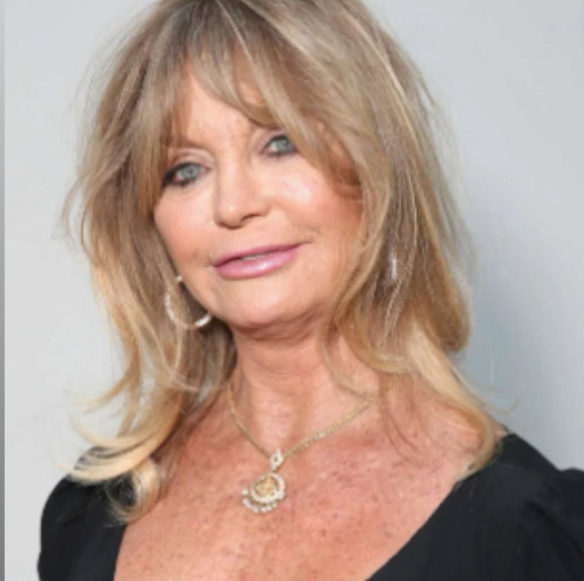
The screening wasn’t even finished when the emotional weight of the room became impossible to ignore. Inside a darkened Los Angeles theater, unfinished visual effects flickered across the screen, sound levels still rough in places, edits not yet polished into their final form. Under normal circumstances, those imperfections would have distracted everyone watching. But that night, none of it mattered.
Because something far more personal was unfolding in front of Goldie Hawn and Kurt Russell.
Before the lights even rose, Goldie Hawn was already crying openly. Kurt Russell sat beside her gripping her hand tightly, both of them visibly shaken by what they had just witnessed. It was not simply pride in their daughter’s performance. It was something deeper, more destabilizing. Watching Kate Hudson disappear completely into a role that carried echoes of longing, vulnerability, love, and emotional inheritance forced them to confront parts of their daughter — and perhaps even parts of themselves — they had never fully seen before.
The experience stopped feeling like a film screening and became something closer to emotional revelation.
The unfinished cut playing onscreen followed Kate Hudson’s character, Claire, a woman chasing connection and meaning through music while performing in a Neil Diamond tribute act. But beneath the plot itself lived something far more intimate. Claire’s story carried the ache of people trying to be loved fully while carrying years of invisible emotional history inside them. The character’s loneliness, resilience, humor, and hunger for connection struck with unusual force because Hudson played her with almost dangerous openness.
She did not simply act emotional scenes.
She seemed to surrender to them.
At one point during the film, Hudson launched into a haunting Patsy Cline number that reportedly transformed the atmosphere inside the theater entirely. Goldie Hawn later described feeling stunned in a way she had not experienced since she was young and first fell in love with movies herself. The room seemed to disappear around her. The distinction between performance and truth blurred. Watching her daughter inhabit the emotional core of the music so completely felt almost overwhelming.
For actors who have spent lifetimes inside Hollywood, genuine surprise becomes increasingly rare. They understand performance techniques, editing tricks, emotional manipulation through music and cinematography. They know how movies are built piece by piece behind the curtain.
Which is exactly why moments that break through all of that knowledge hit so powerfully.
Goldie Hawn reportedly felt transported back to the earliest days of her own relationship with cinema — before fame, before awards, before decades of experience taught her how films function technically. She experienced something simpler and more vulnerable again: awe.
And beside her sat Kurt Russell, a man famous for his emotional restraint.
Throughout his career, Russell has rarely been known for extravagant public praise, especially within his own family. People close to him often describe him as deeply loving but careful with words, someone who expresses affection more through loyalty and consistency than grand declarations. Which is why his reaction after the screening stunned even those who knew him best.
At one point, he reportedly called Kate Hudson “possibly the greatest actress of all time.”
The statement carried weight far beyond celebrity compliment.
Because Kurt Russell is not Kate Hudson’s biological father. He entered her life when she was very young and chose, day after day, to become a father to her through action rather than obligation. Over decades, their relationship became one of Hollywood’s most quietly admired family bonds — not built through publicity, but through visible love and unwavering presence.
That history made his praise feel almost sacred.
It was not simply an actor complimenting another actor. It was a father witnessing a child step fully into her own artistic power. A man who had watched her grow from childhood suddenly recognizing the depth of what she was capable of emotionally and artistically.
And perhaps what affected them most was not technical brilliance alone, but risk.
Great performances often emerge when actors stop protecting themselves emotionally. Hudson’s work in the film reportedly carried that kind of exposure — the sense that she allowed real vulnerability, fear, longing, and emotional truth onto the screen without hiding behind charm or image. That level of openness can feel almost frightening to witness from someone you love.
Because art like that does not just entertain.
It reveals.
The film’s emotional atmosphere deepened further through its music and romantic storyline, with Hugh Jackman providing a grounded emotional counterbalance onscreen. His presence reportedly helped anchor the film’s tenderness and emotional sincerity, allowing Hudson’s character to unfold within a relationship dynamic that felt aching and human rather than performative.
But beneath the romance and music, another story quietly unfolded inside the theater itself: a family confronting the emotional reality of one another in ways ordinary life rarely allows.
Sometimes art reveals truths families sense but never fully articulate aloud.
Watching Kate Hudson onscreen, Goldie and Kurt were not only seeing a fictional woman named Claire. They were seeing years of hidden emotional labor, inherited sensitivity, resilience, heartbreak, humor, and creative hunger transformed into performance. Parents often believe they know their children completely until moments arise revealing depths that existed quietly beneath everyday familiarity all along.
That realization can feel beautiful and heartbreaking at the same time.
By the end of the screening, the tears filling the room no longer belonged only to the movie’s story. They belonged to memory. To pride. To the strange grief parents sometimes feel when they suddenly realize their child has become fully themselves beyond anyone’s protection or understanding.
And perhaps that is what made the moment feel so rare.
For a brief stretch of time inside that unfinished theater, technical flaws disappeared, celebrity vanished, and something almost sacred emerged instead: art, family history, love, and vulnerability aligning perfectly enough to leave even lifelong performers speechless in the dark.