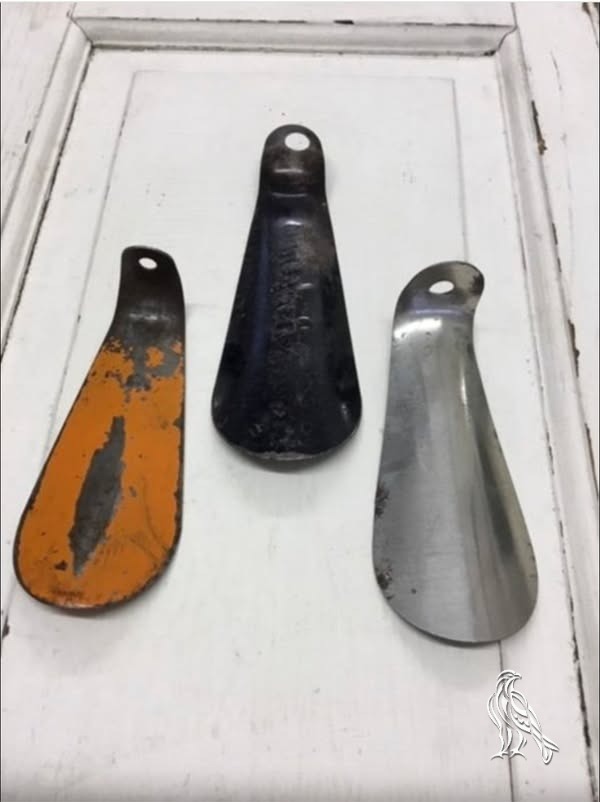
The internet stared at the strange object with absolute confidence and complete confusion at the same time. Photos spread rapidly across social media, pulling thousands of people into a surprisingly passionate mystery. Some insisted it was an ancient medical instrument. Others swore it belonged in a medieval kitchen, a forgotten religious ceremony, or perhaps even a bizarre weapon from another century. The object’s curved shape and aged appearance made it seem far more mysterious than it really was.
The theories grew more dramatic by the hour.
Comment sections filled with arguments, jokes, and increasingly absurd guesses. Amateur historians appeared. Self-proclaimed antique experts debated one another with total certainty. Some people became convinced the object had ceremonial importance because it looked too oddly specific to serve an ordinary purpose. Others argued it must belong to some obscure trade long erased by modern technology.
Then the answer finally arrived.
It was a shoe horn.
Not a sacred relic. Not a lost instrument of forgotten science. Just a simple tool designed to help people slide their feet into shoes more easily.
The reveal was almost comically anticlimactic after all the speculation. Yet the more people laughed about mistaking a shoe horn for something mysterious, the more another realization quietly surfaced beneath the humor: this ordinary object carried far more history and significance than most people had ever considered.
Because the shoe horn is one of those rare inventions so practical, so elegantly simple, that it has survived centuries with barely any need for improvement.
Long before modern sneakers, cushioned soles, or flexible materials made footwear easier to slip on, putting on shoes could be surprisingly difficult and uncomfortable. Well-made shoes were expensive possessions intended to last for years, sometimes decades. Their stiff leather construction protected feet but also made them difficult to enter without damaging the heel or crushing the back structure over time.
That is where the shoe horn quietly entered human life.
Its purpose was deceptively simple: reduce friction while guiding the heel gently into the shoe. But that tiny act solved multiple problems at once. It protected expensive footwear from collapsing or cracking. It spared people the awkward struggle of forcing shoes on by hand. And for older adults, injured individuals, or anyone with limited mobility, it transformed a frustrating daily task into something manageable and dignified.
The tool itself evolved through generations without ever truly abandoning its original design.
Early shoe horns were often carved from actual animal horn, which is where the name originated. Others were made from bone, wood, ivory, or metal depending on the owner’s wealth and region. Wealthy households sometimes commissioned beautifully decorated shoe horns engraved with intricate patterns or family crests, turning an everyday object into a subtle symbol of status and refinement.
Over time, materials changed with technology. Brass, steel, polished silver, and eventually molded plastic made shoe horns more affordable and widely available. Long-handled versions appeared to help people avoid bending over entirely. Compact travel-sized models slipped easily into luggage or coat pockets. Yet despite centuries of innovation in nearly every other area of life, the core concept remained almost untouched.
A curved surface. A smooth glide. One careful step.
That simplicity is part of what makes the object strangely beautiful once people stop overlooking it.
Modern culture often celebrates complexity. Devices become smarter, louder, faster, more connected. New products constantly promise to revolutionize ordinary routines through apps, batteries, sensors, or upgrades. In that world, the shoe horn feels almost rebellious in its quiet usefulness. It asks for no attention. It never demands updates. It solves the same human problem today that it solved hundreds of years ago.
And it solves it remarkably well.
There is something deeply human about objects like that — tools so woven into everyday life that people stop seeing them entirely until suddenly confronted with them out of context. Remove the shoe horn from the doorway where it quietly belongs, place it under dramatic lighting on the internet, and people suddenly struggle to recognize it at all.
Yet for generations, it has participated silently in countless ordinary moments.
Busy mornings before work. Elderly hands carefully preparing for the day. Parents helping children with stiff new shoes. Travelers dressing quickly in hotel rooms before early flights. Tiny rituals repeated millions of times with the assistance of an object nobody thinks to praise.
That invisibility may actually be the greatest proof of its success.
The best tools often disappear into routine so completely that people only notice them when they are missing. A good shoe horn does not call attention to itself. It simply makes life slightly easier, preserving both footwear and comfort with quiet efficiency.
And perhaps that is why the internet’s confusion over the object became unexpectedly meaningful.
For a brief moment, millions of people paused long enough to examine something ancient, ordinary, and deeply functional — an object that had survived centuries not because it was flashy or revolutionary, but because human beings still need exactly what it offers.
One small, graceful assist into the next step forward.