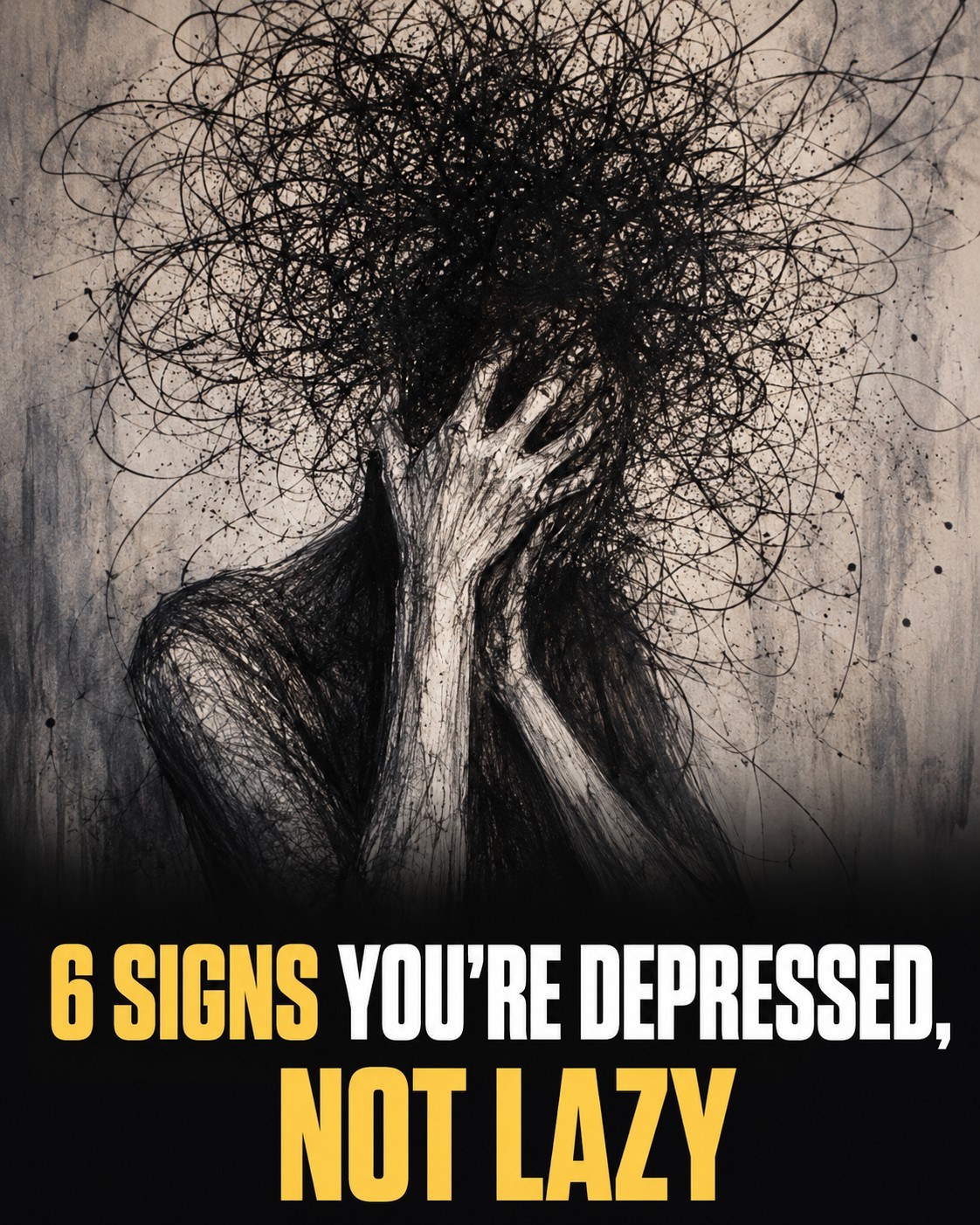
You tell yourself you’re being lazy. That you just need more discipline, more motivation, more willpower. So you make lists you never finish. You promise yourself tomorrow will be different. You stare at the dishes in the sink, the laundry on the floor, the unanswered messages glowing quietly on your phone, and somehow even the smallest task feels impossibly heavy.
Then guilt arrives.
Not dramatic guilt — just a constant ache underneath everything. The feeling that everyone else seems able to live normally while you are secretly failing at things that should be easy. You watch other people wake up, make plans, answer texts, clean their rooms, laugh naturally, move through life without needing to negotiate with themselves for every tiny action.
Meanwhile, getting out of bed can feel like climbing a mountain no one else can see.
What makes it even harder is that depression does not always look the way people expect. Many imagine it as obvious sadness, constant crying, or total collapse. But often it hides beneath functioning routines so convincingly that even the person experiencing it struggles to recognize what is happening.
You still go to school. Still show up at work. Still answer when someone speaks to you. Maybe you even laugh at jokes at the right moments. From the outside, your life may appear completely ordinary.
Inside, though, something feels disconnected.
The world begins losing color slowly, almost too gradually to notice at first. Hobbies that once excited you now feel exhausting before you even begin them. Music no longer hits the same. Conversations feel distant. Future plans that once made you hopeful suddenly feel blank or meaningless. Sometimes you sit alone in your room feeling absolutely nothing at all, and that numbness becomes more frightening than sadness itself.
Because at least sadness still feels alive.
Depression often whispers cruel explanations for these changes. It tells you that you are weak, lazy, dramatic, ungrateful, or broken. It convinces you that everyone else manages life better because they are somehow stronger than you are.
But mental exhaustion is not a moral failure.
When the brain becomes overwhelmed, even basic tasks can start feeling enormous. Showering. Replying to a message. Folding clothes. Making food. Things other people complete automatically can suddenly require intense emotional effort. Not because you do not care, but because your mind is running low on the energy required to function normally.
And many people continue blaming themselves while silently suffering through it.
That self-criticism often becomes part of the illness itself. You start judging your inability to function, which creates more shame, which drains more energy, which makes functioning even harder. The cycle feeds itself quietly in the background of everyday life.
One of the loneliest parts of depression is how invisible it can feel.
You may desperately want someone to notice something is wrong while simultaneously hoping nobody asks questions. You become skilled at pretending. Smiling in public. Saying “I’m just tired.” Telling people you’ve been busy. Acting normal long enough to survive social situations before collapsing emotionally once you’re alone again.
Sometimes people experiencing depression even begin doubting themselves because nothing obviously “bad” happened.
They think:
“Why do I feel this way when my life looks fine?”
“Other people have it worse.”
“I should be grateful.”
“I have no reason to feel empty.”
But depression does not always require a dramatic tragedy to exist. Sometimes it grows slowly through chronic stress, burnout, loneliness, unresolved pain, pressure, exhaustion, or biological factors completely outside a person’s control.
And the longer people dismiss what they’re feeling, the heavier it often becomes.
That is why listening to those internal warning signs matters so much. When everyday life starts feeling emotionally unbearable, when joy disappears for weeks or months, when exhaustion never fully lifts, when isolation feels safer than connection, the answer is not harsher self-hatred.
It is care.
Real care may mean resting without guilt. It may mean telling someone the truth instead of pretending you’re fine. It may mean reaching out to a trusted friend, parent, teacher, counselor, therapist, or mental health professional even when part of you insists you are overreacting.
You do not have to wait until everything completely falls apart before asking for help.
That is one of the most dangerous myths depression creates — the idea that your suffering must become catastrophic before it deserves attention. But healing often begins much earlier, in small moments where someone finally admits:
“This doesn’t feel normal anymore.”
“I don’t want to carry this alone.”
“I think I need support.”
And needing support does not make you weak.
It makes you human.
The exhausted version of you sitting in silence right now is not a failure of character. It may simply be a person who has been carrying too much for too long without enough compassion directed inward. Brains can become overwhelmed just like bodies can become injured. Neither deserves shame for needing treatment, care, or recovery.
Most importantly, the numbness you feel now is not guaranteed to be permanent.
Depression has a way of convincing people that the emptiness they feel today will last forever. But minds can heal. Energy can return. Joy can slowly come back in ways that initially seem impossible to imagine. The future does not have to remain as heavy as the present feels right now.
Sometimes the first step toward that future is simply stopping the war against yourself long enough to recognize that what you’re experiencing may not be laziness at all.
It may be pain asking to be heard.