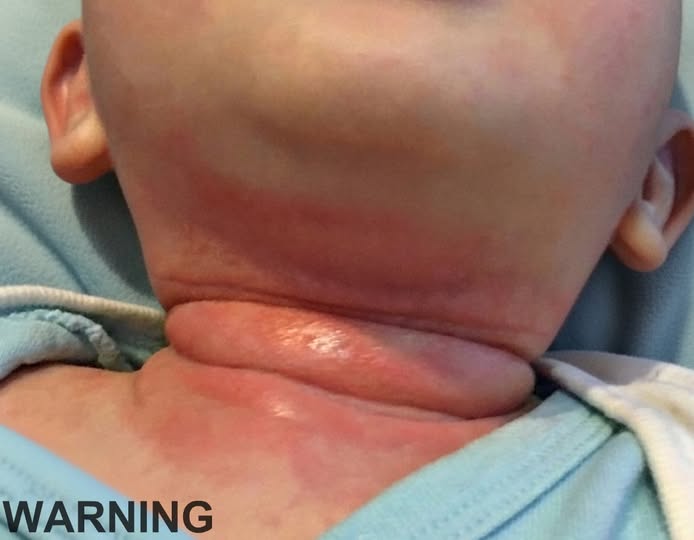
A baby’s neck folds can become far more irritated than most parents anticipate, and that is precisely what occurred in this instance. Initially, it appeared to be typical chafing, a slight redness where heat, moisture, and friction tend to accumulate. Babies are inherently prone to this type of discomfort, particularly those with sensitive skin folds. Sweat, drool, milk residue, and tight clothing can all create a moist environment that makes it difficult for the skin to remain intact.
However, things can swiftly alter once that barrier of protection starts to crumble.
Intertrigo and similar conditions frequently begin as mild discomfort but provide the ideal environment for microorganisms to proliferate. Warmth and wetness promote the rapid growth of bacteria and yeast, most often Candida. In a couple of hours, skin that was merely red can become raw, inflamed, and painful. In more serious circumstances, it may develop into cellulitis, a more serious infection that would need immediate medical attention.
Because of this, medical professionals stress how quickly baby skin can degenerate. A baby’s skin is thinner, more sensitive, and less able to protect itself from irritation or illness than that of an adult. Little alterations, like a little peeling, more redness, or a faint smell, can indicate that something more serious is growing behind the surface.
The warning indications in this instance were increased discomfort, areas that seemed wet or seeping, and spreading redness. Over-the-counter creams were insufficient at that stage. To prevent the infection and promote healthy skin healing, medical intervention was required.
The good news is that, if detected early, these kinds of conditions are very controllable. The secret is to act fast and be aware of what to look out for. Mild irritation can be kept from developing into something more serious with careful attention.
Keeping the region dry and clean is a basic step that is frequently more crucial than using several products. Clean the folds with a gentle cloth and lukewarm water, then gently pat dry; rubbing might exacerbate discomfort. Reducing retained moisture can also be achieved by letting the skin breathe whenever possible.
Unbeknownst to many, clothing choices have a significant impact. Anything that traps heat, such as synthetic materials or tight collars, might make the issue worse. Looser fits and soft, breathable materials lessen friction and keep the skin dryer and cooler.
Knowing when home care is insufficient is equally crucial. It’s time to consult a healthcare professional if the redness spreads, doesn’t go away in a day, or is accompanied by peeling, discharge, or an odd odor. Antifungal, antibacterial, or anti-inflammatory treatments can halt the progression before it gets worse.
It is always important to take seriously any fever, increased fussiness, or indications that the infant is in pain. These may suggest that the problem has progressed and may need more aggressive treatment.
The lesson is that not all rashes are benign, not that all rashes are harmful. Many start out innocently and finish just as quickly. However, the transition from mild to severe discomfort can happen remarkably quickly when conditions let it to continue.
The parents’ experience in this case brings to light something that many caretakers discover the hard way: “sensitive skin” can occasionally serve as a stand-in for something that need more attention. Their infant made a full recovery, but it was necessary to acknowledge that the illness had progressed beyond mild irritation.
That awareness turns into the most useful instrument going ahead. Recurring episodes can be avoided and minor issues can be kept from becoming excruciating by identifying early changes, promptly modifying care, and understanding when to seek assistance.
Ultimately, it’s more important to react quickly than to react flawlessly. Timing is crucial when it comes to newborns, and observing those early, tiny indicators can make all the difference.