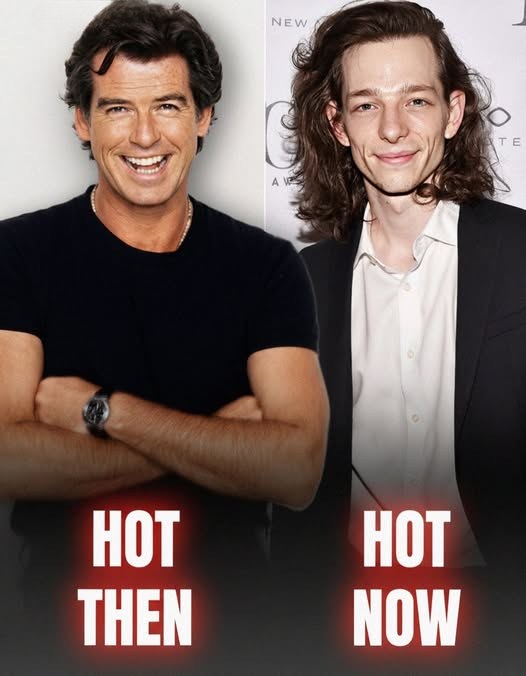
The Evolution of Male Beauty Standards: From “Sexiest Man Alive” to “Hot Rodent Boyfriends”
Men’s and women’s beauty standards have never been set in stone, but in the age of social media, the pace and peculiarity of change feel more dramatic. Traditional heartthrobs coexist with contemporary, internet-coined styles that feel almost sarcastic, even strange, in what was once characterized by clean-cut Hollywood masculinity.
It is simpler to see this trend when the last few decades are compared side by side. It’s not just about who is deemed “attractive,” but also about the qualities that society values in a person’s face, body, and even personality.
The Classic Hollywood Heartthrob Era
Male attractiveness in popular media was still somewhat simple in the 1990s and early 2000s. The ideal strongly favored symmetry, self-assurance, and a refined form of masculinity.
A rough, physical attractiveness that was frequently combined with emotional depth was embodied by characters such as Patrick Swayze. His parts in movies like Ghost and Dirty Dancing promoted a strong, romantic, and expressive masculinity.
At the same time, performers like George Clooney came to represent charm on a worldwide scale. Not only was Clooney attractive, but he was also thought to be intelligent, witty, and self-assured. He was frequently portrayed in media narratives as the “perfect balance” of attractive and sensible.
In a similar vein, Richard Gere embodied an older, more sophisticated form of sex appeal. He was already fifty years old when he was crowned Sexiest Man Alive in 1999, indicating that charm and presence were more important factors in attractiveness than youth.
The notion that traditional attractiveness was linked to athleticism, grooming, and public image was reinforced by even earlier retroactive titles, such as those connected to John F. Kennedy Jr.
Square jawline, toned physique, self-assured posture, and a generally “heroic” appearance dominated the public imagination throughout this reasonably constant period of beauty standards.
The Transition: Vulnerability, Complexity, and Unusual Appeal
These norms started to change as Hollywood entered the late 2000s and early 2010s. The concept of attractiveness became more emotionally nuanced and less inflexible.
Celebrity conventions were completely questioned by actors such as Keanu Reeves. Reeves gained widespread admiration for his modest public presence in addition to his roles in John Wick and The Matrix. Instead of overt splendor, his attraction came to be associated with humility, mystery, and emotional restraint.
Concurrently, actors like Adam Driver popularized a new form of masculinity. At first, Driver’s unusual characteristics—long face, deep voice, and powerful on-screen presence—were seen as going against typical Hollywood conventions. However, his appeal increased as viewers started to place a higher value on emotional nuance and sincerity than just symmetry.
In a similar vein, Timothée Chalamet stands for a more flexible, contemporary ideal. His appearance, which deviates from traditional masculine stereotypes, includes a slender build, delicate features, and androgynous styling. His ascent implies that ambiguity and tenderness are now characteristics of mainstream beauty rather than exceptions to it.
The Disintegration of “Attractive” through Social Media
However, social media sites like Instagram, TikTok, and X (previously Twitter) have caused the largest change. Instead of a single dominant standard, there are now rapidly rising and falling micro-trends that are frequently motivated by sarcasm, humor, or communal reinterpretation.
The so-called “hot rodent boyfriend” craze is among the most peculiar examples. This term, which describes males who are deemed handsome despite (or because of) rodent-like traits including sharp noses, wide eyes, slender cheeks, or perhaps awkward proportions, is not formal or scientific.
This style is often linked to actors like Josh O’Connor and Mike Faist. Online descriptions of their attraction are more lighthearted, even ridiculous, than those of polished perfection. Fans frequently mix respect and amusement when describing them as “soft,” “angular,” or “goblin-like.”
Barry Keoghan is another well-known person whose growing fame is indicative of the same tendency toward nontraditional charm. In online culture, his appearance is frequently characterized as intense or odd, yet it is also quite alluring.
This lens has even been used to recontextualize performers, such as Thom Yorke, who has been retroactively labeled as handsome by online users in ways that deviate from conventional rock star aesthetics.
As a result of these movements, attractiveness is no longer a fixed category; rather, it is continuously redefined by online communities.
The Reasons Behind the Success of the “Hot Rodent” Look
Although the trend appears humorous at first, it actually represents more profound cultural changes:
Rejection of perfection: People are beginning to view very symmetrical, carefully manicured beauty standards as fake or unachievable.
Humor as attraction: Online culture frequently combines irony with appeal. It’s funny and affectionate to call someone a “rodent boyfriend.”
Relatability: Features that are flawed or unusual feel more human, making them more emotionally relatable.
Character above appearance: Rather than just physical characteristics, many of these actors are adored for their roles, personalities, or perceived vulnerability.
Even public conversations, such media personalities’ remarks on talk shows like Today with Hoda & Jenna, demonstrate how widespread knowledge of these phenomena has increased.
A More Comprehensive Cultural Change
The traditional heartthrob and the contemporary “internet boyfriend” are similar in that neither is really about appearance alone. Each represents the values of society at the time.
Stability, self-assurance, and classic masculinity were admired in the 1990s.
Individuality, emotional transparency, and even awkwardness are becoming more and more accepted in the 2020s.
This does not imply that previous standards have vanished. Swayze, Clooney, and Reeves continue to be cultural icons. However, a far greater range of appeal now coexists with them.
In conclusion, attraction is a moving target.
There isn’t really a single standard of beauty for males anymore. Rather, there are conflicting and overlapping aesthetics, some originating from meme culture and social media sarcasm, while others have their roots in Hollywood history.
From timeless luminaries like George Clooney and Patrick Swayze to contemporary celebrities like Timothée Chalamet and Josh O’Connor, male attractiveness has evolved from conforming to a single mold to simultaneously existing in various interpretations.
If anything, instability is the most recurring trend. The visual landscape is constantly changing, and what is deemed beautiful today can be out of style tomorrow.
In this way, criteria of beauty have not simply changed. They have increased in number.