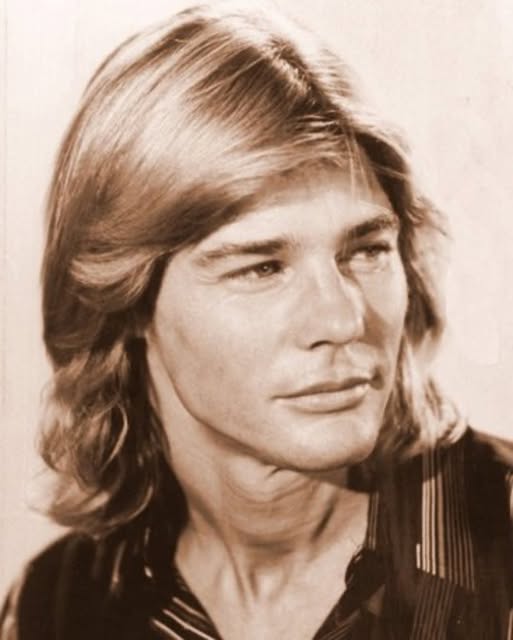
Young, restless, and unwilling to follow the script that life seemed to provide him, he started off as a sort of beautiful accident. He wasn’t motivated by ambition, at least not in the traditional sense, college couldn’t keep his interest, and structure didn’t fit him. It didn’t seem like the beginning of something planned when Hollywood discovered him. It was more like to recognition. It seemed as though the camera had just found a presence that was there all along, just waiting to be noticed. Jan-Michael Vincent was the one with the presence.
His remarkable appearance was not the only thing that set him out, though it did open doors. It was something more intangible, an unmanufacturable emotional transparency. Even in his quietness, he exuded a sense of desire and quiet passion on screen. He always exuded an air of untetheredness, as though he belonged more in open spaces than on studios and settings. His performances felt more like exposure than acting, whether he was portraying a rebel, a drifter, or a reluctant hero.
Vincent’s appeal came from the other direction in a field that frequently favors control and polish. He seemed erratic, almost brittle in his sincerity. The audience felt him, not just saw him. In the parts he played, there was a wounded nobility that suggested he valued freedom over structure and flight over permanence. In addition to creating a lyrical tension for his characters, it also alluded to a deeper aspect of the individual.
But there was a price for that same transparency. He was vulnerable off-screen due to the same traits that made him captivating. The pressures of publicity, expectation, and excess increased along with his career. Hollywood, which at first appeared to be a perfect fit, turned into a more complex setting that highlighted both his advantages and disadvantages.
The collapse was relentless rather than abrupt. Addiction started to spread, undermining the steadiness and self-control needed to maintain a career. Violence, legal issues, and a string of catastrophic auto accidents that caused psychological and physical harm were among the incidents that followed. The story, which had previously been about charisma and potential, changed into something darker and more challenging to witness. The industry that had welcomed him started to pull away, not out of cruelty but rather due to the practical constraints of a dependable system.
He had serious injuries that ultimately resulted in the loss of a portion of his leg. His voice, which had once been expressive and silky, had become gruff due to years of stress. At first glance, it appeared to be a total collapse—the kind of thing Hollywood uses as a warning. The golden boy was destroyed by internal factors rather than external rivalry.
However, Vincent’s story is made more memorable by what transpired following the fall than by the fall itself. He didn’t completely vanish. In contrast to what many had anticipated, he did not disappear into oblivion. Rather, he withdrew into a more subdued life and finally made his home in Asheville, away from the limelight that had previously characterized him. He led a more modest but meaningful existence there, devoid of glitz and expectation.
In that stage of life, heroism takes on a different form that isn’t honored with accolades or headlines. It’s the bravery to carry on after a loss, to live without the identity that once defined you, and to reconstruct a version of yourself after so much has been taken away. In the conventional, cinematic sense, Vincent’s final years were not characterized by redemption. There was neither a spectacular return nor a tidy conclusion. However, endurance was present. There was survival.
His narrative defies simple interpretation. It lacks a convincing plot and a clear moral. Rather than a neat ending, it leaves behind a succession of questions that feel more human. To what extent can someone lose themselves before they are no longer the same? When the external indicators of success—beauty, celebrity, and recognition—diminish or disappear, what’s left? And even when everyone has stopped looking, is there a calm dignity in just carrying on?
The picture of Jan-Michael Vincent, who was youthful, passionate, and full of possibilities, is fixed in time for those who remember him at his peak. However, the whole story is more nuanced, with layers of both suffering and genius. It’s not only about what he gained or lost, but also about the space between—the brittle, frequently painful truth of being human in a society that loves its narratives to be tidy and comprehensive.
Ultimately, his existence remains unfinished and imperfect, yet it is impossible to ignore, like the fading shine of an old film reel.