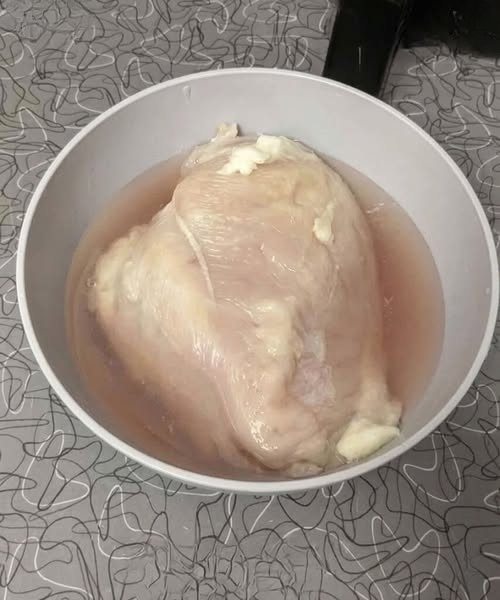
Most of us have encountered this scenario at least once: the kitchen is silent, it’s late at night, and all of a sudden the craving strikes. You hesitate when you see leftover steak or chicken from dinner in the refrigerator. It appears to be fine. It has a pleasant scent. But you can’t help but wonder if it’s really safe to eat.
Freshness and flavor are only two aspects of food safety, therefore this question is more important than most people realize. It has to do with how bacteria function in specific situations and how rapidly food can become dangerous without evident warning indicators.
Comprehending the “Danger Zone”
The temperature range between 40°F (4°C) and 140°F (60°C) is referred to by food safety specialists as the “danger zone.”
This range is crucial because it provides the perfect conditions for germs to grow quickly. Under ideal circumstances, harmful bacteria like Salmonella, E. coli, and Staphylococcus aureus can multiply rapidly within this window, frequently doubling in number every 20 minutes.
This is particularly worrisome because prepared food is not always safe. Even if food was cooked all the way through, it can still become dangerous if it lingers in the danger zone for too long.
Why eating chicken is particularly dangerous
Chicken is frequently regarded as one of the most dangerous leftovers.
This is due to several factors:
When handling and preparing poultry, pathogens like Salmonella are more likely to be present.
Even after cooking, contamination can re-enter the food through utensils, cutting boards, hands, or surfaces.
Not only do some bacteria survive, but they also create toxins that persist long after warming.
This final point is especially crucial. Many bacteria can be killed by heat, but some of the poisons they create are heat-stable, so reheating the meal might not make it safe again.
What is “too long”?
Guidelines for food safety are generally uniform in this regard:
Meat that has been cooked, especially chicken:
Safe for a maximum of two hours at room temperature
If the temperature is high (above around 90°F/32°C):
Safe for a maximum of one hour
The risk of bacterial development greatly increases beyond these limits.
It’s also critical to realize that appearance and odor are not trustworthy markers of safety. Food might have hazardous quantities of bacteria or poisons despite having a pristine appearance.
Throwing stuff away is always the safest option when in doubt.
Proper storage and refrigeration
The secret to keeping leftover food safe is proper storage.
To lower the risk:
After cooking or serving, refrigerate the food within two hours (or sooner in hot weather).
To ensure consistent and rapid cooling, store leftovers in shallow, airtight containers.
Cooked chicken and other meats should only be kept in the fridge for three to four days.
Freeze it if you won’t be eating it within that time range; freezing completely inhibits the growth of bacteria.
Good storage practices can keep leftovers safe and useable while also significantly lowering the risk of foodborne illness.
How about reheating?
Food can be made safer by reheating it, but only in certain situations.
Reheating correctly:
should maintain the food’s temperature at a steaming hot level.
should guarantee uniform heating rather than merely surface warmth.
Reheating has its limitations, though. If the food is kept out for an extended period of time, it may kill active bacteria, but it cannot consistently eliminate toxins that have already been generated. Timing is crucial before refrigeration because of this.
When in doubt, discard it.
When it comes to food safety, a basic guideline is:
It is best to throw away food if you are unsure of how long it has been left out.
You shouldn’t take a chance if
The food has been at room temperature for over two hours (or heated for an hour).
It was left in a warm setting.
You are unable to verify how long it has been left out.
It exhibits spoiling symptoms, such as an odd texture, sliminess, and an unpleasant odor.
The discomfort of squandering leftovers is not nearly as bad as food poisoning.
In conclusion
Cooked beef leftovers can be completely safe, but only under certain situations.
Bacteria grow quickly in the “danger zone” (40°F–140°F/4°C–60°C).
Poultry, including chickens, are particularly vulnerable to contamination.
Food shouldn’t be left out for more than two hours (or one hour in the heat).
It’s crucial to refrigerate within safe time restrictions.
Although it helps, reheating doesn’t always remove all dangers.
It is always safer to throw away food when unsure.