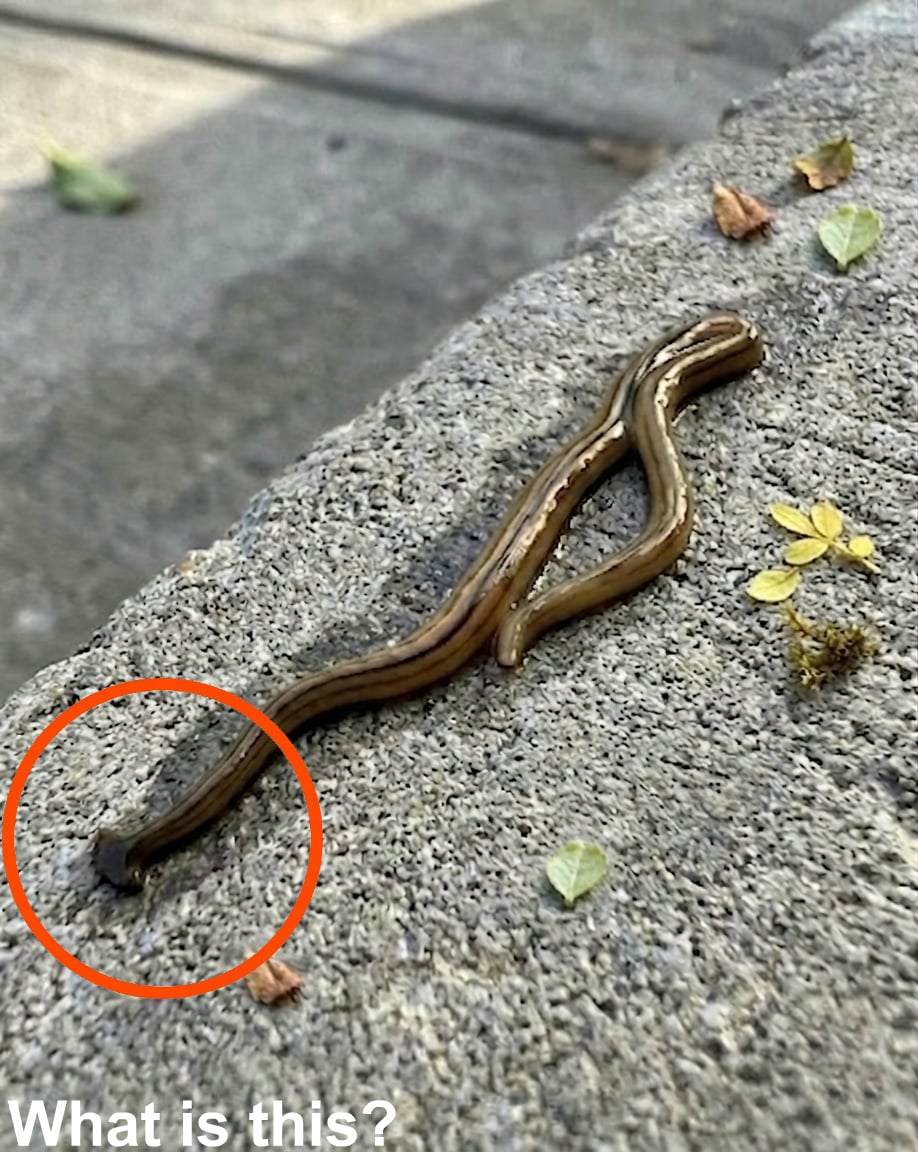
Early in the morning, it felt like nothing more than a quiet step outside for fresh air. The world was still, the kind of calm that makes everything seem harmless. But then—something on the ground caught your eye. At first, it looked like a worm. Ordinary. Forgettable. Until it moved.
Not like a normal worm. Too smooth. Too deliberate. Almost controlled, as if it knew exactly where it was going. And then you noticed the head—flat, stretched wide, shaped in a way that didn’t feel natural. Something about it triggered instinct before logic: this isn’t right.
What you encountered has a name: the Hammerhead worm. And it’s not just strange-looking—it’s a predator. These land flatworms feed on earthworms, which are crucial for keeping soil healthy and fertile. That’s what makes the encounter more unsettling: it’s not just an odd creature passing through, but something that can quietly disrupt the balance of your own yard.
Their movement adds to the unease. They glide rather than crawl, leaving a faint trail of mucus behind, almost like something out of place in an otherwise familiar environment. And unlike typical worms, they don’t behave passively—they actively hunt.
There’s also a reason experts warn people to keep their distance. Hammerhead worms can produce toxins as a defense, and handling them with bare hands isn’t recommended. Even more surprising, cutting them doesn’t solve the problem. In many cases, they can regenerate, meaning one can turn into multiple.
If you ever come across one again, the safest approach is simple: avoid direct contact. If removal is necessary, use gloves or tools, and follow proper disposal methods recommended in your area (often involving salt or vinegar, rather than cutting).
What makes moments like this linger isn’t just the creature itself—it’s the realization. That something so unusual, almost alien in appearance, was sitting quietly in a place you thought you understood. A reminder that even in the most ordinary corners of daily life, there are things we rarely notice… until suddenly, we do.