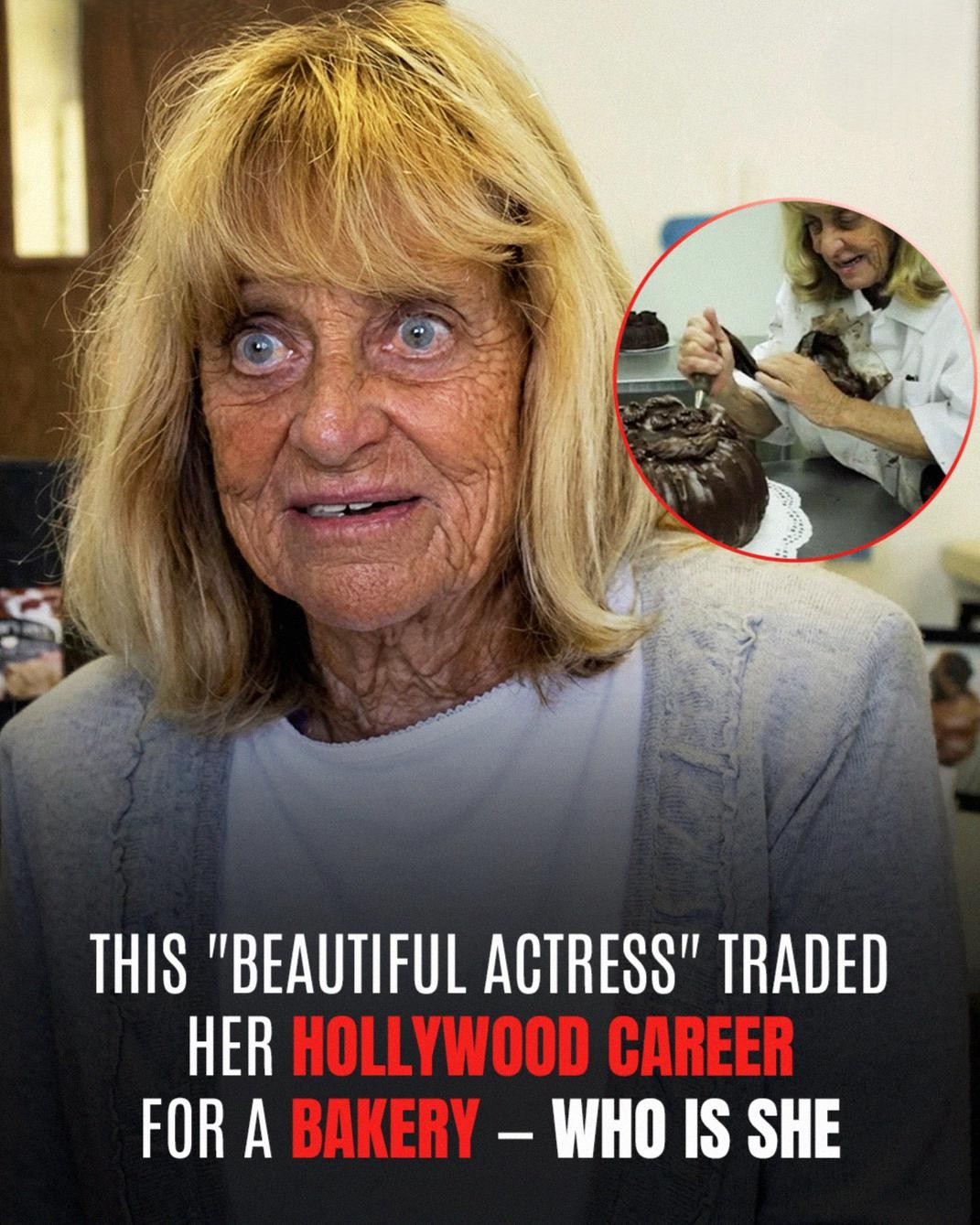
The glitz and glamor of Hollywood often promise a lifetime of fulfillment, but for some of the industry’s most memorable faces, the true spotlight is found far away from the cameras and red carpets. For Joy Harmon, an actress whose presence on screen was as brief as it was legendary, the transition from film star to master baker was not just a career change but a profound reinvention of the self. While the world remembers her for a single sultry five-minute sequence that defined a cinematic era, those who knew her best remember a woman whose hands were more at home covered in flour than holding an Oscar. Her passing at the age of eighty-six has reignited a global conversation about legacy, resilience, and the courage it takes to walk away from fame in search of a life that truly tastes like home.
Joy Harmon first burst onto the cultural radar in the late 1950s and early 1960s, possessing a radiant beauty that seemed tailor-made for the technicolor dreams of the time. She appeared in various films and television shows, carving out a respectable career in a competitive industry. However, it was her performance in the 1967 classic Cool Hand Luke that elevated her to the status of a permanent icon. In a scene that lasted less than five minutes, Joy Harmon played a character known simply as “the Girl” or Lucille, who captivates a chain gang of prisoners while washing a car in the sweltering heat. It was a moment of pure cinematic magic, a masterclass in screen presence that required no dialogue to leave an indelible mark on the psyche of an entire generation. To this day, fans recall that scene with a sense of reverence, citing it as one of the most unforgettable moments in the history of the silver screen.
Yet at the very height of her recognition, Joy Harmon did something that few in her position would ever consider: she stepped back. By 1973, she had accepted her final acting credit and quietly exited the Hollywood machine. To the public, it seemed like a sudden disappearance, but for Joy, it was the beginning of a long-gestating second act. Long before she was a household name, Joy had a secret passion she often shared with coworkers on set—she was a prolific baker known for bringing homemade treats to film crews and cast members during long days of shooting. While others were focused on their next big role, Joy was perfecting the chemistry of a perfect cake. This hobby became the foundation of what would eventually become her true legacy.
The transition from Hollywood star to entrepreneur began in the humble confines of her own kitchen. She founded Aunt Joy’s Cakes, a business built on the authentic recipes she had spent decades refining. What started as a small operation providing desserts for friends and neighbors quickly grew into a sought-after brand within the entertainment industry she had once inhabited. In a poetic twist of fate, Disney Studios became one of her first major clients. The woman who once graced studio screens was now supplying the very sets that had shaped her early career. Her bakery became known for meticulously crafted cookies, cakes, and chocolate-dipped treats, each made with the same care she once brought to her performances.
Joy’s commitment to her craft remained unshaken even as she entered her eighties. In the weeks leading up to her passing, she faced a difficult battle with pneumonia that required hospitalization and rehabilitation. Yet even as her health declined, her spirit remained anchored in purpose. In a detail that has stunned and inspired her fans, Joy was reportedly still working and managing her bakery just twenty-four hours before her final hospitalization. She believed she would recover and return to the ovens she loved so deeply, holding onto that sense of purpose until her final moments. She died peacefully on April 14 at her home in Los Angeles, surrounded by the family that had always been her greatest source of meaning.
The tributes that have followed reflect the dual nature of her legacy. Some mourn the loss of a cinematic icon—the woman who could hold a frame with nothing more than a glance and a garden hose under the summer sun. Others remember a different Joy: kind, grounded, and deeply connected to simple joys. Her family recalls a woman who loved animals, who spent quiet afternoons feeding peacocks, squirrels, and chickens that wandered near her home. It is a portrait of a life that came full circle—from the artificial glow of studio lights to the warm, lived-in light of a kitchen filled with the smell of baking and laughter.
Joy Harmon’s story stands as a quiet rebuttal to the idea that a first act must define an entire life. She showed that it is possible to be an icon and still choose anonymity, to be remembered for seconds on screen yet build decades of meaning beyond it. She left behind children and grandchildren who remember her not as a film legend but as the center of their family. Her legacy lives not only in film archives, but in the business she built, the people she nourished, and the lives she quietly touched with generosity.
In the end, Joy Harmon’s life was not just about five minutes of fame, but about a lifetime of reinvention. She moved through each chapter with grace—starlet, mother, entrepreneur, baker—never allowing herself to be frozen in time by the role the world first noticed her for. Her final bow was not on a soundstage, but in the quiet rhythm of a life still devoted to creating something warm and lasting. And in that sense, she leaves behind something far more enduring than celebrity: a reminder that the most meaningful legacies are often the ones built far away from the spotlight.