The drive from my parents’ house back to Boston was a blur of white static and blinding snow, but the storm outside was nothing compared to the wreckage inside my chest. I was thirty-eight years old, and for fifteen years my life had been a performance of daughterly devotion that slowly and systematically drained me. A migraine throbbed behind my eyes, the kind that makes the world feel sharp and merciless, but the clarity it brought was the first honest feeling I had experienced in over a decade.
Only hours earlier, I had been carrying a tray of dessert toward the dining room when I heard my mother’s voice—casual, sharp, cutting through the festive noise. She was speaking to my aunt, laughing about the latest four-thousand-dollar transfer I had sent.
“She doesn’t deserve a thank you,” my mother said. “She owes us—we fed her for eighteen years.”
I froze in the hallway, the tray suddenly feeling like lead in my hands. In that single devastating sentence, fifteen years of sacrifice were redefined—not as love, but as a debt of existence. I had begun helping them at twenty-three, just starting to find my footing in life. My father had been injured, and my mother had sat me down in tears, telling me they were weeks away from losing the family home. What was meant to be temporary became permanent. I paid their mortgage, medical bills, renovations, and “emergencies” that slowly turned into luxury vacations and country club memberships. I became their personal ATM, driven by a deep, misplaced guilt that I could never repay the gift of my upbringing.
That night, lying in my childhood guest room under a quilt my mother had made, I didn’t cry. Instead, I reached for my phone, logged into my banking app, and canceled the recurring transfer scheduled for January. With a final shaking breath, I closed the joint account entirely. The silence afterward was the loudest thing I had ever heard.
When I finally returned to my apartment in Boston, I requested a full audit from my financial advisor. I needed to see the damage in black and white. When the files arrived, I sat at my kitchen table staring at the numbers until they blurred. Over fifteen years, I had sent them $860,000. It was staggering and sickening. I hadn’t just helped them survive—I had funded a life I could no longer afford for myself.
The irony was bitter. Months earlier, I had lost my high-paying corporate job during layoffs. I hadn’t told them because I couldn’t bear the thought of being the daughter who let her parents struggle. To keep the money flowing, I drained my retirement accounts, sold my car, and moved from my beautiful condo into a cramped, damp basement studio. I worked nights at a hotel front desk and freelanced eighteen hours a day just to ensure their SUV payments were on time. And through all of it, they never once asked if I was okay.
The fallout was immediate. When the January transfer failed, my phone didn’t ring with a “Happy New Year” or concern. It lit up with demands. Their messages were cold and accusatory, blaming bank errors and negligence. When I finally answered and told them the truth—that the money was gone and wasn’t coming back—they shifted instantly into rage. They accused me of abandoning them in old age, calling me selfish and ungrateful.
I stayed calm, my voice exhausted but steady.
“I didn’t abandon you,” I said. “I finally stopped abandoning myself.”
I emailed them every bank statement, tax record, and credit card bill I had paid on their behalf. I told them they were welcome to come see me if they wanted to discuss the “debt” my mother insisted I owed.
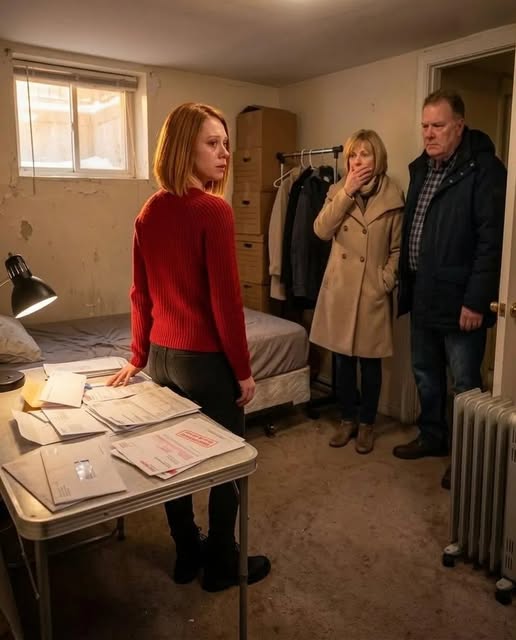
On New Year’s Eve, I heard a heavy knock on my basement door. They arrived expecting confrontation in a home that matched the “successful daughter” image they had built in their minds. Instead, they stepped into a room of cardboard boxes, a single mattress on the floor, and a daughter who looked a decade older than her age.
My mother’s eyes scanned the peeling walls and empty space. My father stood near the door, his hands shaking. The silence was thick with damp air and truth.
I laid everything out on a folding table. I showed them my empty retirement accounts. I showed them the debt I had taken on while they enjoyed a paid-off home, new furniture, and cruises. I told them that while they lived comfortably, I had been left with almost nothing but stress and exhaustion.
For the first time in my life, they had no defense. No tears. No manipulation. My father sat in a folding chair staring at the $860,000 total until he finally whispered that they hadn’t realized the cost. They had seen it as surplus—not as my life being slowly drained.
They left that night, and my apartment finally felt like it could breathe.
In the weeks that followed, something shifted. My father texted that they were selling their luxury SUV and cutting expenses. He didn’t ask for money—he asked if I needed help moving somewhere better. Months later, a letter arrived from my mother. It was a real apology—the first without expectation or manipulation. She admitted she had been wrong to treat a child’s love as a transaction.
But the most important realization didn’t come from them. It came that first night after they left, sitting alone in my small basement apartment. For the first time since I was twenty-three, I didn’t owe anyone anything.
I was broke. I was starting over. I was sleeping on a mattress on the floor. But my life finally belonged to me.
The debt had been paid—not in money, but in the courage to say no. I was no longer the daughter repaying her existence. I was a woman finally free to live her own.