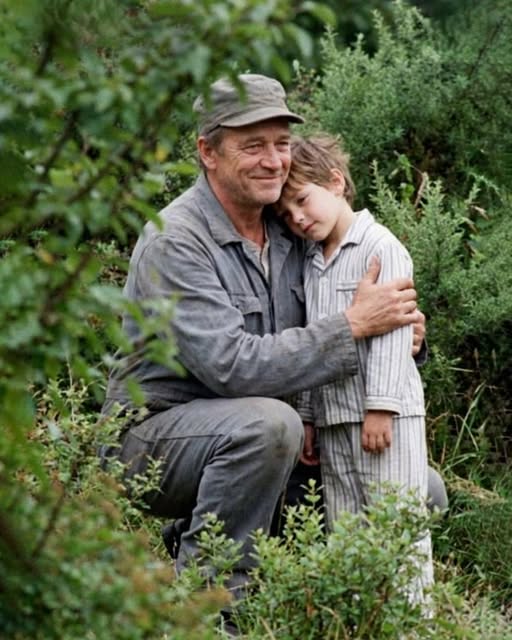
In the carefully maintained world of Ridgeview Estates, I am the kind of man people look past without ever really seeing. I’m fifty-six, working as a janitor and maintenance worker in a neighborhood where a single car in a driveway can cost more than I’ve earned in years. My home is a cramped metal storage room behind the maintenance office—barely wide enough to stretch my arms out without touching both walls. A cot, a mop bucket, and a silence that feels permanent are all I really have left.
I wasn’t always like this. I had a wife who used to fall asleep beside me with a soft, steady snore, and a daughter who believed no day was complete without glitter shoes. But everything ended in a single night—black ice, a drunk driver, and a crash that took them both from me. After that, I stopped being part of the world and became something that just moved through it quietly, trying not to be seen.
In Ridgeview Estates, people filled in the gaps about me with rumors. They decided I was dangerous, maybe even a former convict. I never corrected them. Grief has a way of making you silent, and silence tends to invite suspicion. So I kept my head down, did my work, fixed what was broken, and expected nothing more than the next shift.
That routine shattered one freezing December morning. The air was so cold it felt sharp enough to cut as I walked my usual path with a broom in hand. That’s when I heard it—a faint, trembling sound that didn’t belong to the wind. I followed it into the frozen shrubs and found a small boy, no older than five, curled up in the dirt. He had no shoes, only thin pajama pants and a jacket left open against the cold. His skin was blue, his body shaking, and he wasn’t really crying—he was overwhelmed, trapped in a panic too deep for words.
When I stepped closer, he reacted like the world itself was too much, covering his ears and shutting down completely. I recognized it instantly. My own daughter had been autistic, and I knew what sensory overload looked like when it took over a child’s entire system. So I didn’t rush him. I sat down at a distance where I wouldn’t scare him and took off my jacket, sliding it gently toward him. I spoke softly, telling him he was safe. I matched my breathing to a slow rhythm and let it fill the space between us. Eventually, he noticed. Eventually, he reached for the jacket and pulled it around himself.
That small moment hit me harder than I expected—like something long frozen inside me had finally cracked.
I called 911 and stayed with him until help arrived. The paramedics told me his name was Micah and that his mother had been desperately searching for him. When they took him, he turned back and reached out toward me, silent but certain, like something in him had decided I was safe. I thought that was the end of it. I went back to work, ate alone, and tried to forget how much that moment had stirred in me.
I was wrong.
That night, someone began pounding on my metal door. A woman’s voice was shouting before I even opened it. When I finally did, I was face to face with Micah’s mother, Elena—terrified, furious, and convinced by the neighborhood rumors that I had done something wrong. She accused me of being dangerous, of possibly trying to take her child.
The old version of me would have lowered my head and taken the blame just to end the confrontation. But something in me held steady this time. I told her everything—what I saw, how I found him, how I stayed with him. And then I told her about my own daughter, and what it means to recognize a child in distress. I told her I knew what it was like to lose a child and that I would never take someone else’s.
Her anger broke. Not instantly, but visibly—like it had nowhere left to stand. She looked around my small, cold room and saw the cot, the heater, the photograph of a life I no longer had. And she realized she had filled in all the empty spaces with other people’s fear.
She apologized, shaken and ashamed. And then she told me something that changed everything: Micah hadn’t stopped crying when he got home. He had kept making the same small gestures, as if looking for me.
That was the beginning of something I didn’t expect. Elena didn’t disappear after that night. She came back. She asked me to walk with Micah sometimes, to be part of his routine. I agreed without fully understanding why.
Now, a few evenings a week, I walk the paths of Ridgeview Estates with a boy who trusts me without needing words. Micah often waits on the porch, and when he sees me, he comes down the steps and taps my sleeve with two fingers—a quiet greeting that says more than speech ever could. We walk slowly together, sometimes holding on to each other, sharing a silence that no longer feels empty.
Elena walks with us too now. She corrects the neighbors when they whisper, and she listens when I talk about things I usually keep buried. The same people who once saw me as nothing now see something else entirely.
I used to be invisible here. Just a shadow moving through a gated world that didn’t want to notice me.
Now I’m Harold—the man who stayed in the bushes, who helped a lost boy, and who was finally seen again. And for the first time in years, the silence around me doesn’t feel like emptiness. It feels like something closer to peace.