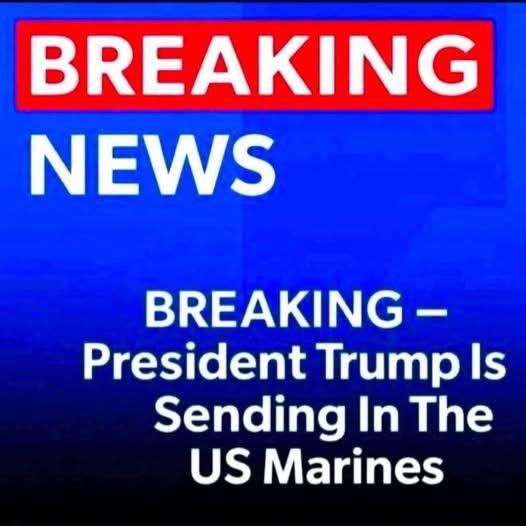
The humid air of Florida has long been associated with ocean breezes and a thriving tourism industry, but recently a heavier, more uncertain mood has begun to take hold. The quiet arrival of personnel from the United States Marine Corps at detention facilities has sparked a deeper national debate—one that touches on a core democratic principle: that the military is meant for external defense, not domestic enforcement. Even if their duties are limited to logistics and administrative support, their presence inside detention centers carries symbolic weight far beyond the tasks they perform.
For migrants held in these facilities, as well as advocates and nearby communities, the sight of military uniforms can feel deeply unsettling. To individuals already facing uncertainty about their legal status, the presence of soldiers may not signal order, but rather intensify feelings of fear and vulnerability. What was once understood as a civilian administrative process begins to resemble something more rigid and security-driven, altering the emotional and psychological environment within these spaces.
Supporters, however, frame the move as a practical response to an overwhelmed system. Agencies like U.S. Immigration and Customs Enforcement have long struggled with overcrowding, staffing shortages, and procedural delays. From this perspective, bringing in the logistical capabilities of the military is a way to stabilize operations—ensuring that facilities run more efficiently and that basic needs are met. Proponents argue this is not about enforcement, but about support in a system under strain.
Still, the broader concern goes beyond efficiency. The central question is whether this is a short-term solution or the beginning of a longer-term shift. Critics warn that once the boundary between military and civilian roles begins to blur, it may become increasingly difficult to restore. Temporary measures, they argue, often evolve into permanent practices. If military involvement becomes normalized in immigration management, it could reshape how government authority is exercised in domestic contexts.
Trust plays a crucial role in how this situation unfolds. Clear guidelines about what military personnel can and cannot do are essential. Without transparency, uncertainty can quickly lead to public suspicion. Independent oversight is equally important to ensure that the presence of the military does not lead to unintended consequences, including the erosion of civil liberties or changes in how detainees are treated.
Equally significant is how authorities engage with local communities. The arrival of military personnel in civilian areas can raise concerns if not accompanied by open communication. Residents and advocacy groups are more likely to respond constructively when they are informed, heard, and included in the conversation. Without that engagement, even well-intentioned actions risk being interpreted as signs of escalation rather than support.
As this situation continues to develop, the images emerging from these facilities remain open to interpretation. For some, they represent order and a government attempting to manage a difficult challenge. For others, they signal a troubling shift toward the militarization of domestic issues. The long-term impact will depend not just on outcomes, but on how the process is handled—whether it reinforces public trust or deepens existing divisions.
What happens next will likely shape how similar challenges are approached in the future. The decisions made now—about limits, oversight, and accountability—will determine whether this moment is remembered as a necessary intervention or a turning point in the balance between security and civil governance.