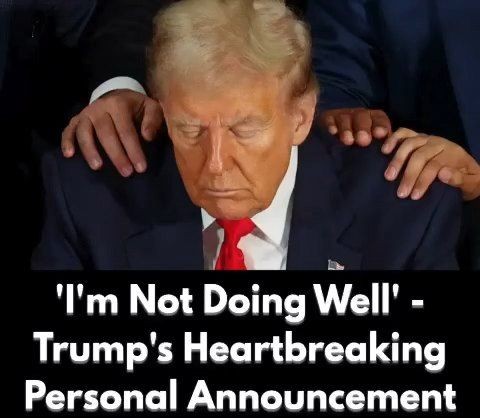
In the high-stakes arena of global politics—where strength is often measured by certainty and emotional restraint—a moment of introspection can send a powerful ripple through public discourse. Recently, Donald Trump moved away from his usual confident rhetoric and offered a rare glimpse into a more reflective and uncertain inner perspective. This shift has sparked widespread discussion among both supporters and critics about faith, legacy, and what ultimately defines a person’s life.
During a recent interview that went beyond typical political topics like elections and policy, he was asked about faith and the afterlife. Instead of delivering a rehearsed response, he expressed hesitation about his own spiritual outcome, admitting uncertainty about whether he would “get to Heaven.” For a public figure known for unwavering certainty in nearly every domain of his public life, this moment stood out as a striking contrast. It revealed a brief departure from political performance into personal reflection.
He then connected this spiritual uncertainty to his record in international affairs, suggesting that efforts to prevent conflict and promote peace may be one of the highest forms of moral achievement. He framed diplomacy as more than strategy, but as a form of responsibility tied to the value of human life itself. In this view, a leader’s legacy is shaped not only by political victories, but also by the lives preserved through decisions made in moments of global tension.
These remarks arrive against the backdrop of ongoing global conflict, including the war in Ukraine, where international negotiations remain deeply complex. References to communication with leaders such as Vladimir Putin and Volodymyr Zelenskyy highlight the difficult moral and strategic terrain of modern diplomacy. In such environments, even the pursuit of peace involves difficult compromises and heavy consequences, making leadership decisions both politically and ethically charged.
What drew public attention, however, was not just the content of the remarks, but the tone. The usual assertiveness was replaced—at least briefly—with hesitation and reflection. To some observers, this signaled genuine introspection and a more human side of a long-established public figure. To others, it appeared as a possible strategic softening of image. Regardless of interpretation, the moment disrupted the usual rhythm of political commentary and invited broader reflection.
At its core, the discussion raised a timeless question: how is a life truly measured? Is it defined by public achievements, political influence, and visible success, or by quieter decisions made away from attention—especially under moral pressure? Faith and leadership often pull in opposite directions: one demanding control and decisiveness, the other encouraging humility and surrender to something greater than oneself. When they intersect, they reveal the internal tension that even powerful leaders may experience.
In the end, the interview offered no definitive answers. Instead, it highlighted the complexity of legacy and the dual nature of public life—where every action carries both political impact and personal meaning. Whether this moment represents a lasting shift or a brief pause in a long political career remains uncertain. What it did reveal, however, is that even figures often seen through the lens of power and controversy are still shaped by the same existential questions that confront everyone: how one is remembered, and what truly gives life meaning.