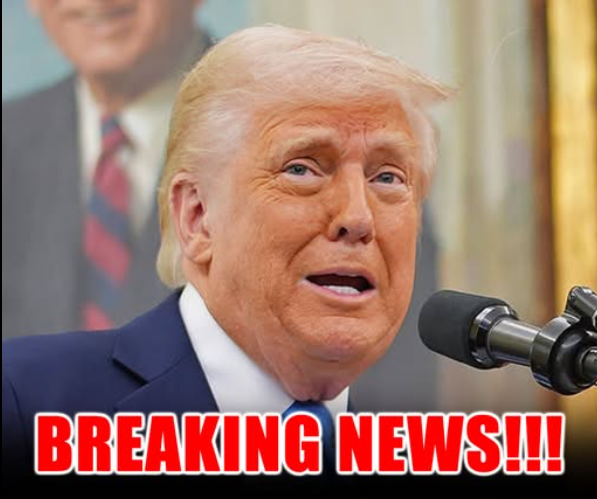
His voice didn’t tremble, nor did it hesitate. Instead, it grew firmer, more resolute, and filled with a sense of finality. In front of the cameras, the world watched as Donald Trump, the then-President of the United States, took a rare and bold step. He didn’t speak about the economy, nor did he address international conflicts, issues of foreign policy, or national security. No, Trump chose this moment to take direct aim at one of the cornerstones of American democracy: the press.
“Changes are coming,” he warned, his words echoing through the media outlets and captivating audiences across the nation. For many, it wasn’t just a statement; it was a threat. His critics, especially those in the press, quickly picked up on the implications. Leading press freedom groups, from The New York Times to the Reporters Committee for Freedom of the Press, swiftly denounced his remarks, recognizing the dangerous tone and the authoritarian overtones that his words carried. It wasn’t merely about frustration with the media anymore—it felt like a calculated move to intimidate, to silence, to threaten the very essence of free speech.
Trump’s comments, which followed a series of criticisms about media coverage of a failed military operation in Iran, were not the result of a slip of the tongue or a passing remark. These were carefully chosen words, crafted with the intention of sending a message. The language was anything but accidental—deliberate, pointed, and aimed squarely at journalists, many of whom had spent years questioning his leadership, policies, and statements. They had crossed him in his eyes, and now, in return, he was offering retaliation, insinuating that there would be “changes” for the media in store. A statement like that, when made by the leader of the free world, carried profound weight.
What made Trump’s comments all the more chilling was not just the suggestion of retaliation, but the deeper meaning behind it. He wasn’t simply criticizing the media for being biased, as he had done many times before. No, this time, he was laying the groundwork for something far more insidious: the idea that power and influence could be used to punish the press for their coverage, especially coverage he deemed unfavorable. By doing so, he pushed beyond the usual partisan complaints and moved into a more dangerous territory—the suggestion that the government could and should intervene when it felt that its image, its narrative, or its policies were being attacked.
This shift in rhetoric did not go unnoticed by the press advocacy groups. The Committee to Protect Journalists and many others immediately condemned Trump’s remarks, warning of the implications such statements could have on the freedom of the press. When a sitting president frames the media as an enemy, not as a necessary check on power, but as an adversary to be defeated or controlled, it sets a dangerous precedent. Journalists, who already face immense pressure in their daily work, are further threatened by such rhetoric. The message, whether explicit or implied, was clear: any reporter, any outlet, that crosses the line in the eyes of the president could face repercussions.
But the true danger wasn’t just in what Trump said that day. What was far more insidious was the cumulative effect of this kind of language over time. In the days, weeks, and months following such remarks, the space for independent journalism gradually shrinks. Reporters and newsrooms, who were already facing growing pressure from political factions and even their own management to toe a specific line, were now faced with an additional layer of fear—fear that, should they push too hard, their reporting might not only be discredited but actively punished. This wasn’t just about journalists losing access to power or influence; it was about an erosion of trust in the system itself.
As Trump continued to fuel this toxic narrative, the chilling effect spread well beyond Washington. Press freedom advocates and organizations who had long fought to ensure journalists could do their work without fear of reprisal noted a disturbing shift. It wasn’t just about what the president said—it was about the broader culture that was being cultivated. It was about a nation where journalists, who should be free to question, investigate, and challenge those in power, were now operating in an increasingly hostile environment. The longer such rhetoric persists, the greater the risk that future generations of reporters may find themselves self-censoring, second-guessing, and doubting whether the pursuit of truth is worth the cost.
It wasn’t just a matter of political rhetoric anymore. It was a matter of survival—of protecting the very principles that made journalism a cornerstone of American democracy. As Trump’s rhetoric continued to unfold, it raised a stark question: what happens when the space for independent journalism—one of the last bastions of accountability in a democratic society—is gradually squeezed out, piece by piece, until it is no longer able to function as a true check on power?