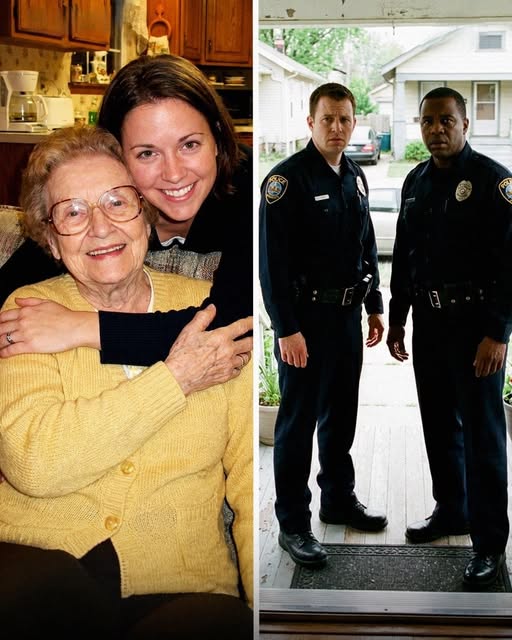
For three years, my life moved in a quiet rhythm defined by small acts of care, shared silence, and the gentle creak of a porch swing in the evenings. It all began with something simple—almost unremarkable at the time. My neighbor, Mrs. Whitmore, an eighty-two-year-old woman, was struggling one afternoon with a growing pile of unopened mail. Her hands trembled slightly as she tried to sort through years of bureaucratic papers and forgotten notices, the kind that accumulate quietly over a long life. I offered to help, thinking it would take an hour or two at most. I had no idea that this small gesture would grow into something that would reshape both of our lives.
What started as sorting envelopes turned into a deep and steady friendship—one that felt less like an arrangement and more like something essential for survival. We were two women bound together by different forms of loss. I had lost my daughter and my marriage, both taken by a painful mix of illness and grief that left my world unbearably quiet. Life after that felt like drifting through an empty space, where days passed but meaning did not. Mrs. Whitmore, on the other hand, carried her own sorrow. She had living children—two daughters and a son—but they only seemed to remember her when inheritance or obligation came into play, treating her home more like an asset than a life still being lived.
Over time, something natural and deeply human formed between us. I became, in every meaningful sense, the daughter she had always needed. And she became the grounding presence I didn’t realize I was searching for. I learned the smallest details of her world: her preferred Earl Grey tea steeped precisely for four minutes, the way she liked her blanket folded, the exact moment in conversation when silence became too heavy for me to carry alone. She, in turn, learned how to read my quiet moods without a single question, often replacing my sadness with stories from her past that made the air between us feel lighter.
We spent hundreds of evenings together. The house filled with the scent of old books, soft floral notes from her gardenias, and the comforting rhythm of shared routines. It became a kind of sanctuary from everything we had both lost. So when she passed away peacefully in her sleep, it didn’t feel like the loss of a neighbor—it felt like the extinguishing of a light that had been keeping me steady in the dark.
Despite my grief, I handled her funeral with care and devotion, as if I were truly family—because in every way that mattered, I was. I made sure the hymns she loved were sung by a choir that understood their meaning. I brought the same small bakery cookies she used to sneak into my kitchen, placing them quietly at the reception as a tribute only I would fully understand. Her biological children arrived dressed in expensive black clothing, their expressions carefully controlled, as though grief were something to be performed rather than felt.
Even during the service, I noticed their attention drifting—not toward memories of their mother, but toward her possessions. Their eyes lingered on her antique watch, her belongings, the details of what she had left behind. By the time guests gathered for the reception, they were already whispering in corners, their conversations focused less on mourning and more on division. It was clear that, for them, the grieving process had already turned into a calculation.
The next morning shattered whatever fragile calm remained.
A violent knocking echoed through my home, urgent and unforgiving. When I opened the door, I was met by two stern police officers and Mrs. Whitmore’s eldest daughter, Cynthia. Her expression carried something sharp and triumphant, as though she had been waiting for this moment. She accused me, loudly and without hesitation, of stealing a diamond necklace—a family heirloom she claimed her mother would never have allowed out of her possession.
I was stunned. The accusation felt so absurd that for a moment I could only stand there in disbelief. But I had nothing to hide. Confident in my innocence, I allowed them to search my home immediately. I believed that truth would naturally defend itself.
That belief collapsed in an instant.
An officer reached into my funeral purse—the same one I had carried the day before—and pulled out a small velvet pouch. Inside was a diamond necklace, glinting coldly under the light. My entire body went numb. The room tilted as shock and humiliation crashed over me. Cynthia stood there watching me fall apart, her expression twisted into something disturbingly satisfied.
Within minutes, I was being escorted to a patrol car. Neighbors watched through curtains as I was led away, handcuffed for a crime I hadn’t committed. The shame of that moment burned into me more deeply than I could have imagined.
At the police station, everything felt worse. The air was heavy with doubt, and every fact seemed to work against me. I had access to the house. I had been the last person close to her. The stolen item was literally found in my possession. Even as I spoke, I could hear how weak my defense sounded.
But in the middle of panic, something clicked in my memory. I suddenly remembered the funeral reception—the way I had been moving constantly, speaking to guests, helping where I could. I remembered setting my purse down briefly in a quiet corner of the room and stepping away for a while without paying attention to it.
I asked, almost begged, for security footage from the funeral home.
Something in my voice must have convinced them, because eventually we were taken to a small viewing room where a grainy monitor displayed the reception hall. I watched myself on the screen, moving through the crowd, distracted and grieving. Then I saw it—the moment I had stepped away from my purse.
And then I saw her.
Cynthia.
She appeared on the screen with cautious, deliberate movements. She looked around carefully before approaching my unattended bag. She opened it, placed something inside, and walked away just as quickly, blending back into the crowd as if nothing had happened.
The truth became undeniable in that moment.
It had not been theft. It had been a setup.
When Cynthia was brought into questioning, her confidence shattered almost immediately. Under pressure and faced with undeniable evidence, she confessed. The entire accusation had been part of a calculated plan. She and her siblings had discovered that their mother had changed her will months earlier. A significant portion of her estate had been left to me—the person who had actually cared for her consistently, not just in obligation, but in love.
They had been left something, but not what they expected. And instead of accepting that, they tried to erase me from the equation entirely. The false accusation was designed to destroy my credibility, making me legally and socially vulnerable enough to challenge the inheritance.
But the plan failed.
I was fully cleared of all charges. Cynthia was arrested for filing a false report, perjury, and tampering with evidence. Her siblings soon faced civil consequences that threatened to undo the very inheritance they had tried to protect.
A few days later, I returned to Mrs. Whitmore’s home. The porch swing moved slightly in the wind, as if still remembering our conversations. Everything felt different, but also strangely familiar.
Not long after, her estate lawyer visited me and handed me a sealed envelope. Inside was a letter written in her handwriting. She had anticipated everything—not in paranoia, but in clarity. She had known her children well enough to prepare for exactly this outcome.
In her letter, she told me the inheritance was not payment, but freedom. She said I had given her three years of companionship when she felt invisible, and in return, she wanted me to have the chance to rebuild my own life. She encouraged me not to let bitterness define me, and not to let the actions of others erase the meaning of what we had shared.
As I sat on her porch afterward, the weight of everything slowly settling around me, I finally understood something deeply true.
Family is not defined by blood or obligation. It is defined by presence. By consistency. By showing up when it matters most.
Mrs. Whitmore had seen me when I felt unseen by the world, and in her final act of care, she ensured that truth would not only be acknowledged—but protected.
As the sun set over the quiet street, I sat in her rocking chair, no longer just a neighbor passing through someone else’s life, but a woman finally stepping into her own.